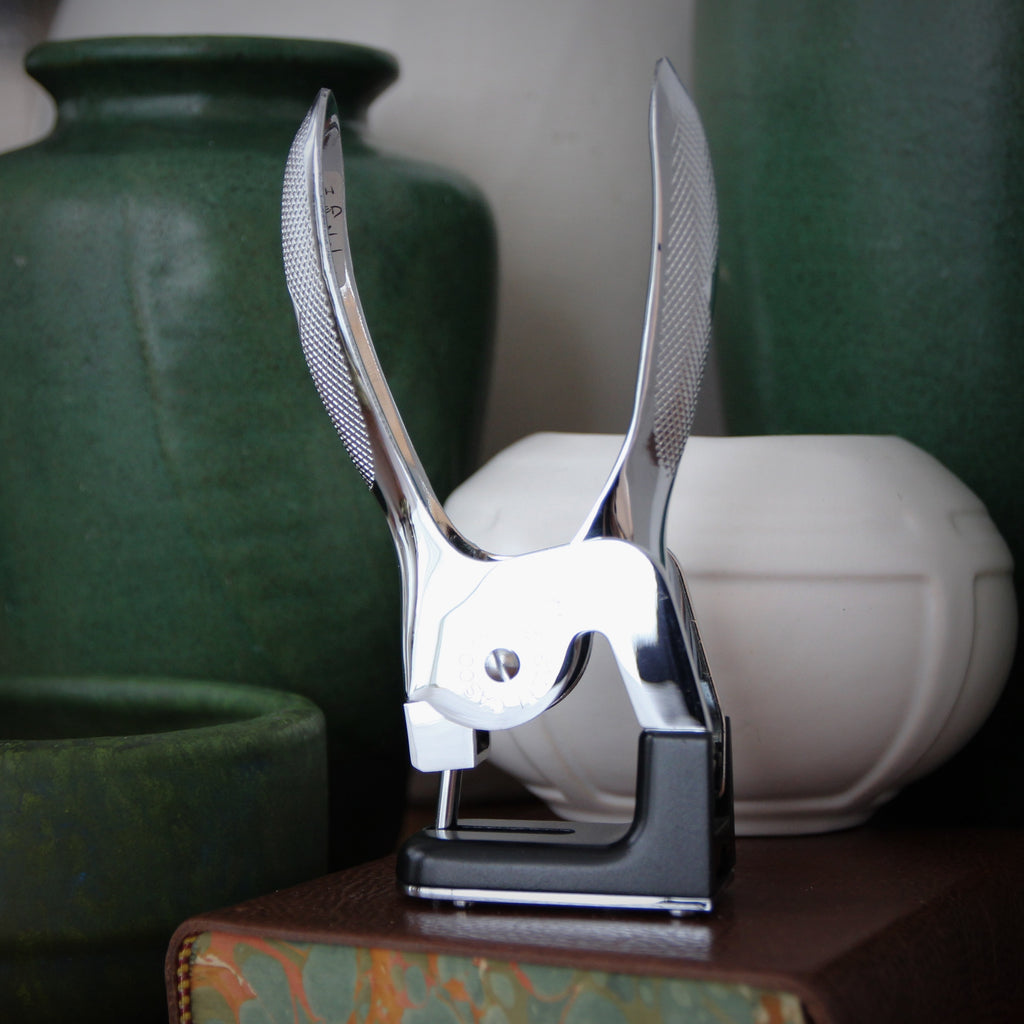
Interestingly, while I very much dislike smoking, I have usually really liked smokers. Maybe it's their conviviality, their "lust for life," or—how do you say it—their joie de vivre. In an ideal world, I would have many friends who are healthy, former smokers. I have also always liked the accoutrements of smoking—ashtrays, tobacco jars, smoking sets. When I found this Spanish cigar cutter, I didn't have to think long before buying it. It's handsome. It's useful. It's beautifully-made. And it is a part of the mysterious culture of the (horrid) art of smoking. Please click on the photo above to learn more about it. Though our Greenwich Village store is now permanently closed, LEO Design is still alive and well! Please...
"A little closer. Closer. Good. Hold it. Say "cheese!" Very good!"
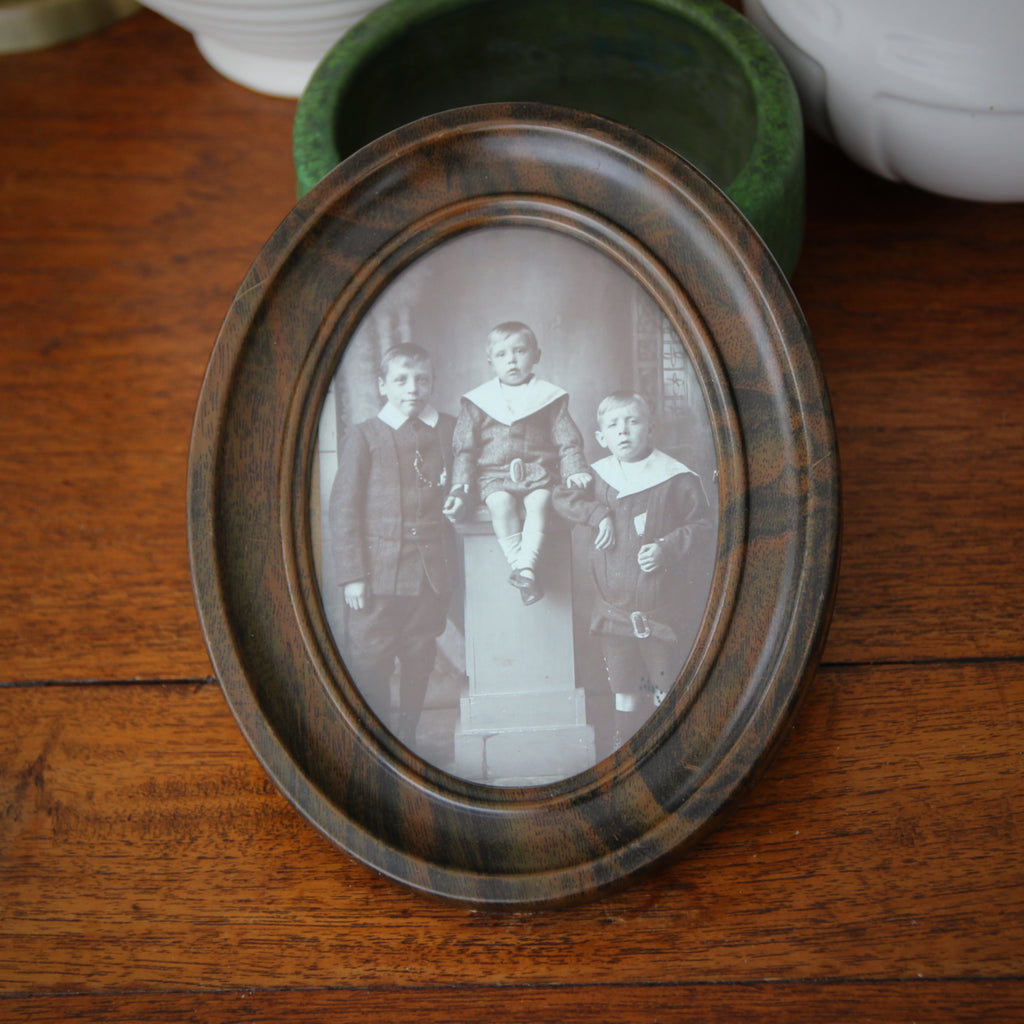
Oh, those sibling group photos! Once a staple of family gatherings and grandparents' visits; Now, thanks to the camera phone, possibly a daily occurrence. But, in 1920, when this pressed tin frame was made, such family photos were quite rare indeed. Kids were dressed in their Sunday Best and—as was the custom at the time—people rarely smiled for the photographer. Photo day was serious and commemorative. A photo was rare and meant to last.
This pressed tin frame is finished with an applied faux woodgrain and has a convenient hook on the back for hanging upon the wall.
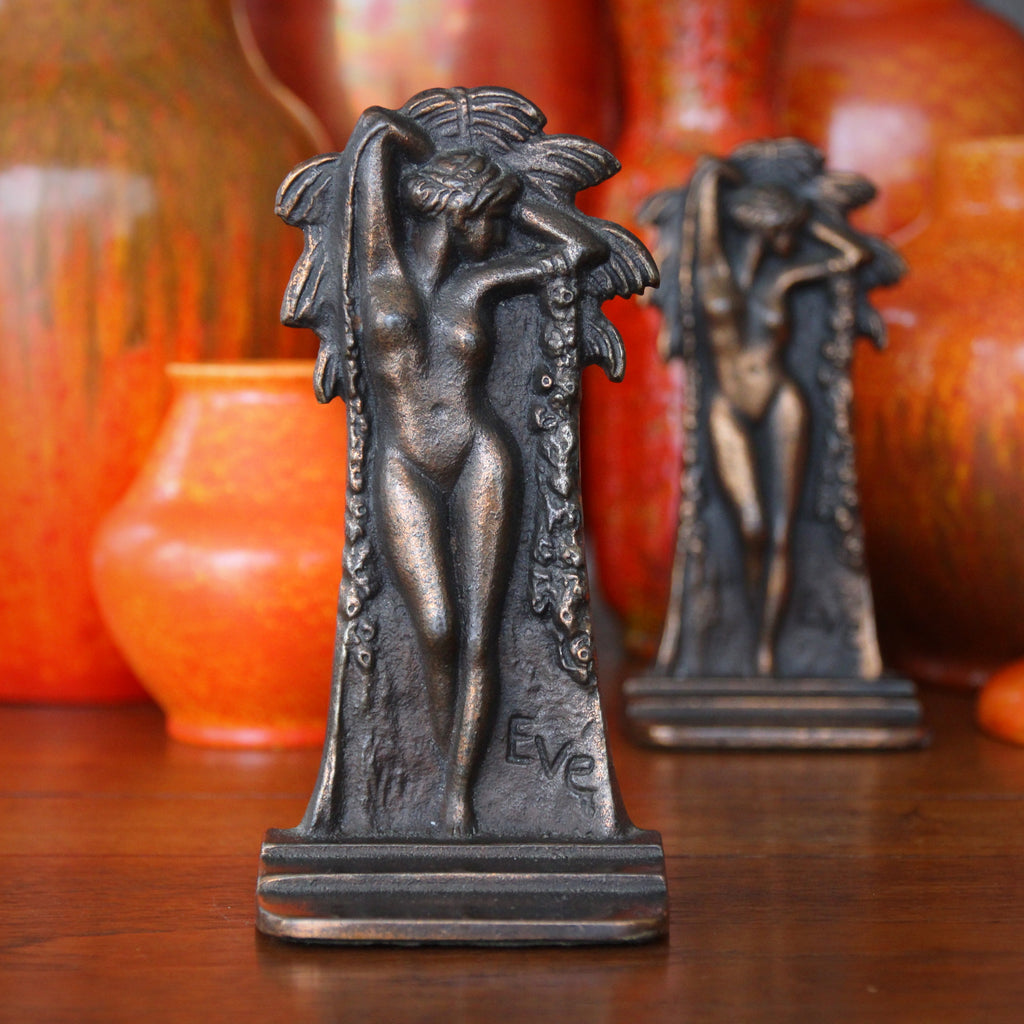
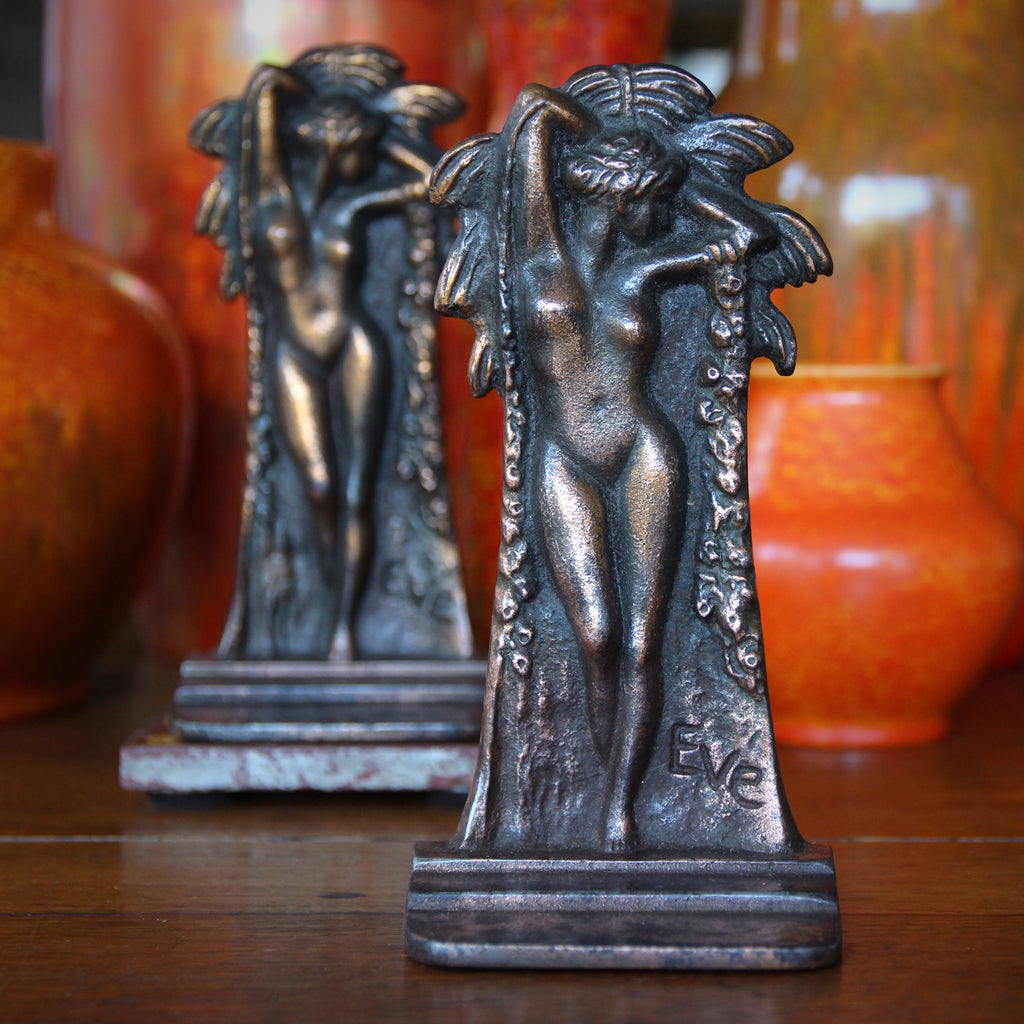
Before eating from the forbidden "Tree of Knowledge," Adam and Eve had a pretty sweet life. No hunger, no work, no trouble, no shame. And a beautiful garden, to boot. But such wasn't to last—and here we are now.
This pair of cast iron Art Deco Bookends, made in the 1920's, show Eve luxuriating before a date palm tree in the Garden of Eden. Let them bring some stylish "Biblical Literacy" to your desk, den or bookshelf.
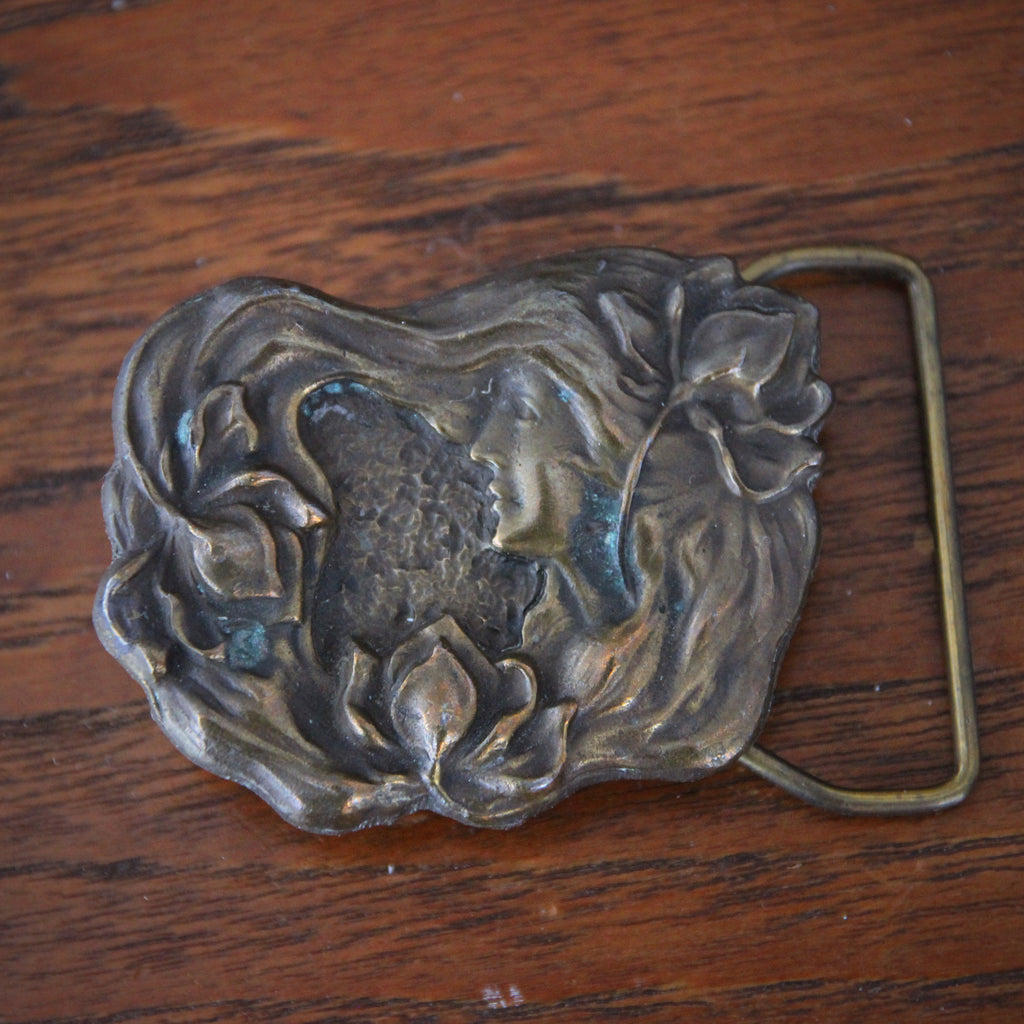
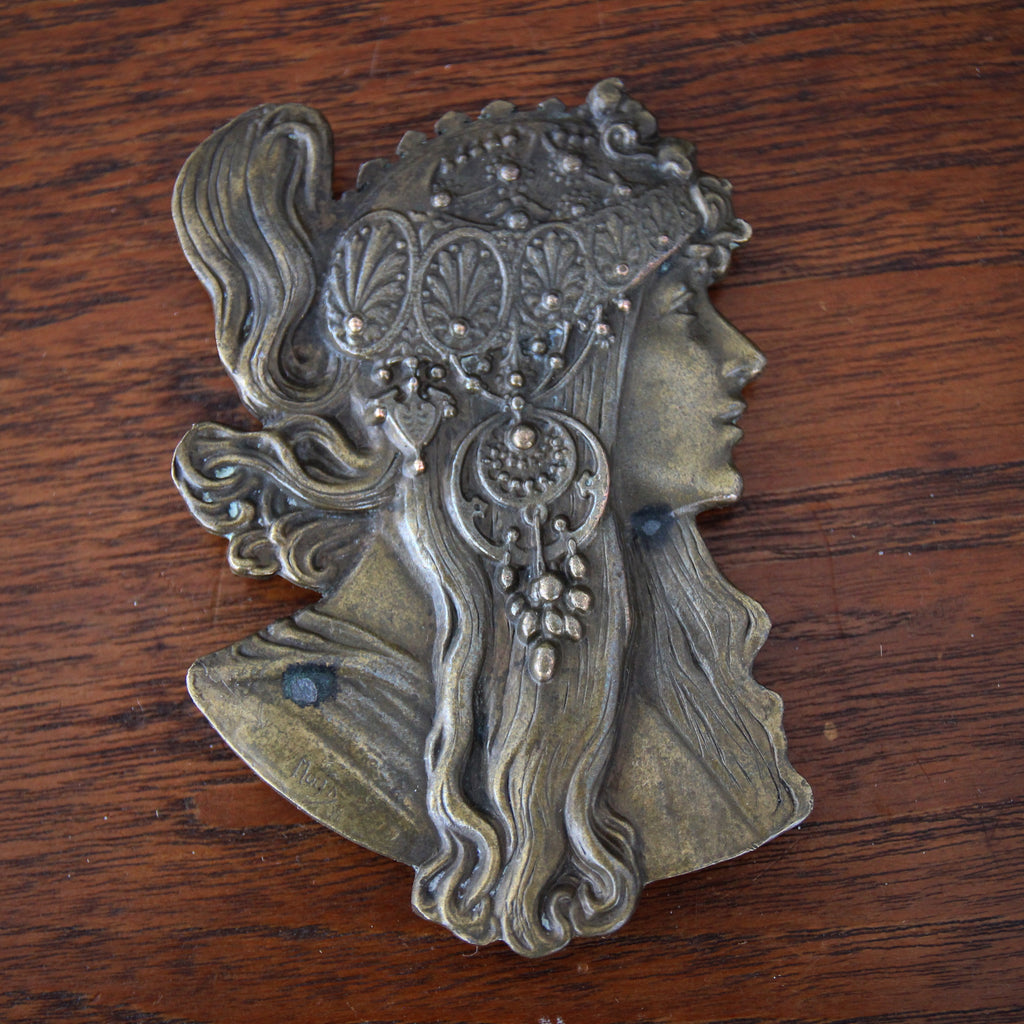
Today we present another bronze belt buckle, likewise crafted in the Art Nouveau Revival of the Rock & Roll Seventies. It depicts a Bohemian maiden, framed by her flowing locks, and decorated with scrolling botanical decoration.
Alfons Maria Mucha was born in 1860 in Moravia—then a part of the Austro-Hungarian Empire, now part of the Czech Republic. He is a giant amongst artists of the Art Nouveau Movement. Although he was a fine arts painter, he is most recognized for his graphic arts which were perfectly suited to the new technology of modern, high-volume lithographic printing. Fine art posters, theatrical flyers, consumer packaging and advertising campaigns were all graced with Alfons Mucha's beautiful images (giving him tremendous popular exposure). Many of his works were portraits of women, presented in Byzantine dress and accessories. They were usually surrounded by swirls of hair, art nouveau botanicals, and Byzantine decorative motifs—all part of Mucha's drive to recognize and promote a...
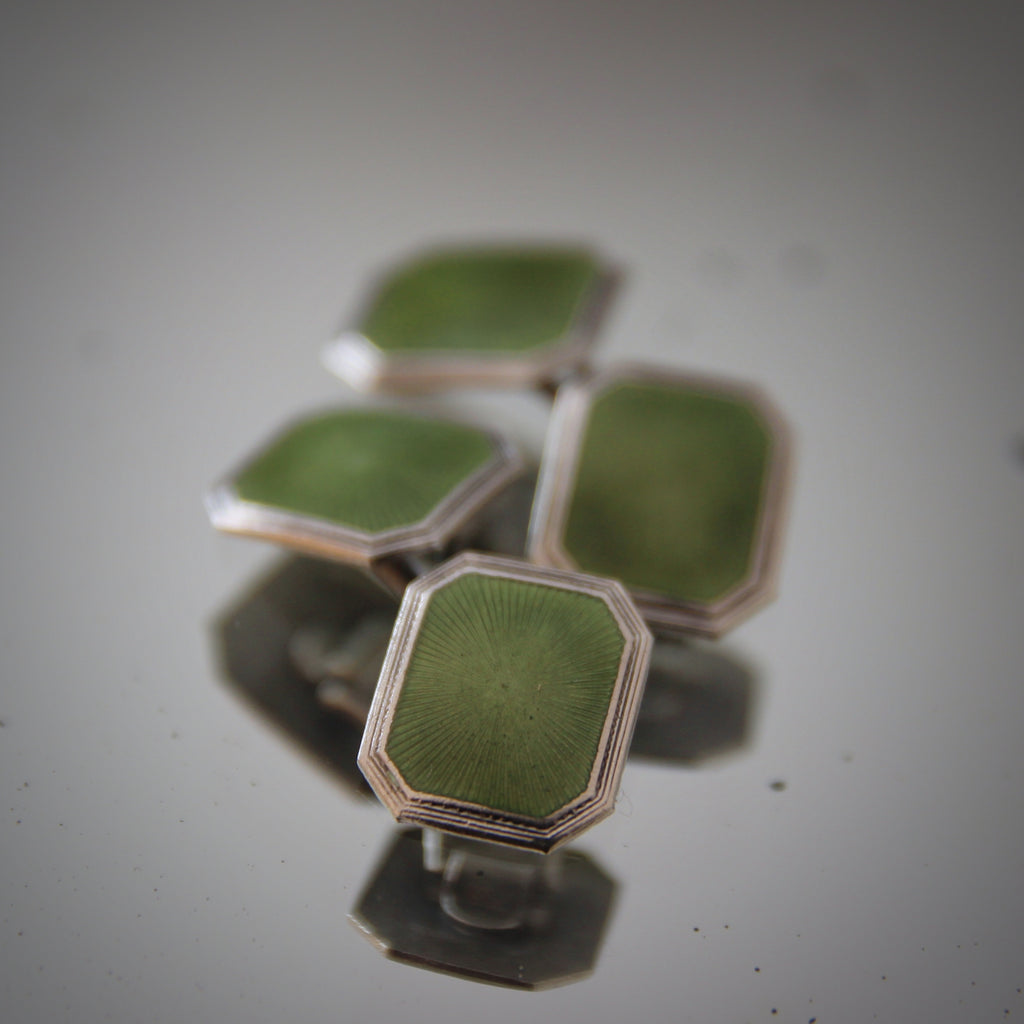
I am an avid shopper for cufflinks—traveling around the world, perusing the collections of private collectors and vintage jewelry merchants. I do not go out of my way to seek-out women's jewelry, though, in truth, I stumble across a lot of it while inspecting cufflinks. When I see a piece I like, I will often pick it up.
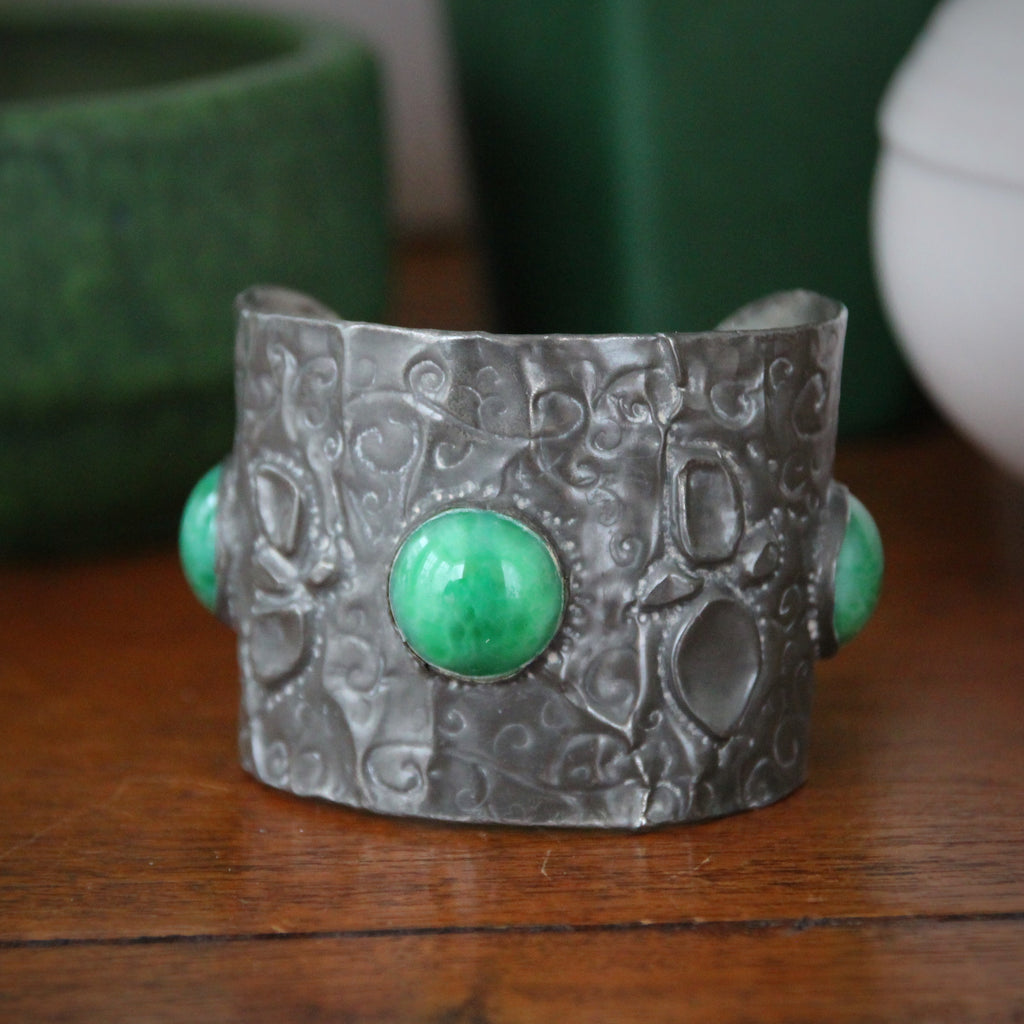
This English Arts & Crafts hand-hammered pewter cuff is punctuated with three jade glass cabochons. This type of craftwork was popular in the British Arts & Crafts period, mostly creating pin-on brooches. I have never seen another wrist cuff such as this. Please click on the photo above to learn more about it.
WASHINGTON, 1 April — Assistant White House Press Secretary, M. Jess Kidden, reported to Reuters this morning that a year-old puppy had been left behind in the White House, possibly abandoned by the outgoing first family. Members of the junior White House staff discovered the canine sleeping in a crate in the former Executive Chef's office. Facts are scarce, Kidden admitted, since none of the permanent household staff wishes to come forward with testimony, fearing they might be targeted for political retribution. What is known is that an unnamed foreign ambassador quietly hand-delivered the Russian Wolfhound puppy during the summer of 2020. A handwritten tag attached to the crate read, "Thank you for everything. I'll miss you. VP" Advisors soon...
Charles Dickens published The Old Curiosity Shoppe as a weekly series in 1840 and 1841. It proved so successful—on both sides of the Atlantic—that frantic New Yorkers stormed the pier when the final installment arrived by ship from England. They all wanted to know: "Will Little Nell Live?" The story concerns 13 year old Nell, a kind and loving girl who was orphaned after her parents died in poverty. She is taken-in by her grandfather and they live in an antiques shop. She is a lonely girl; her only friend is Kit, a good boy who works in the shop, whom Nell teaches to write. Kit secretly falls in love with Nell and commits himself to keeping her safe. But...
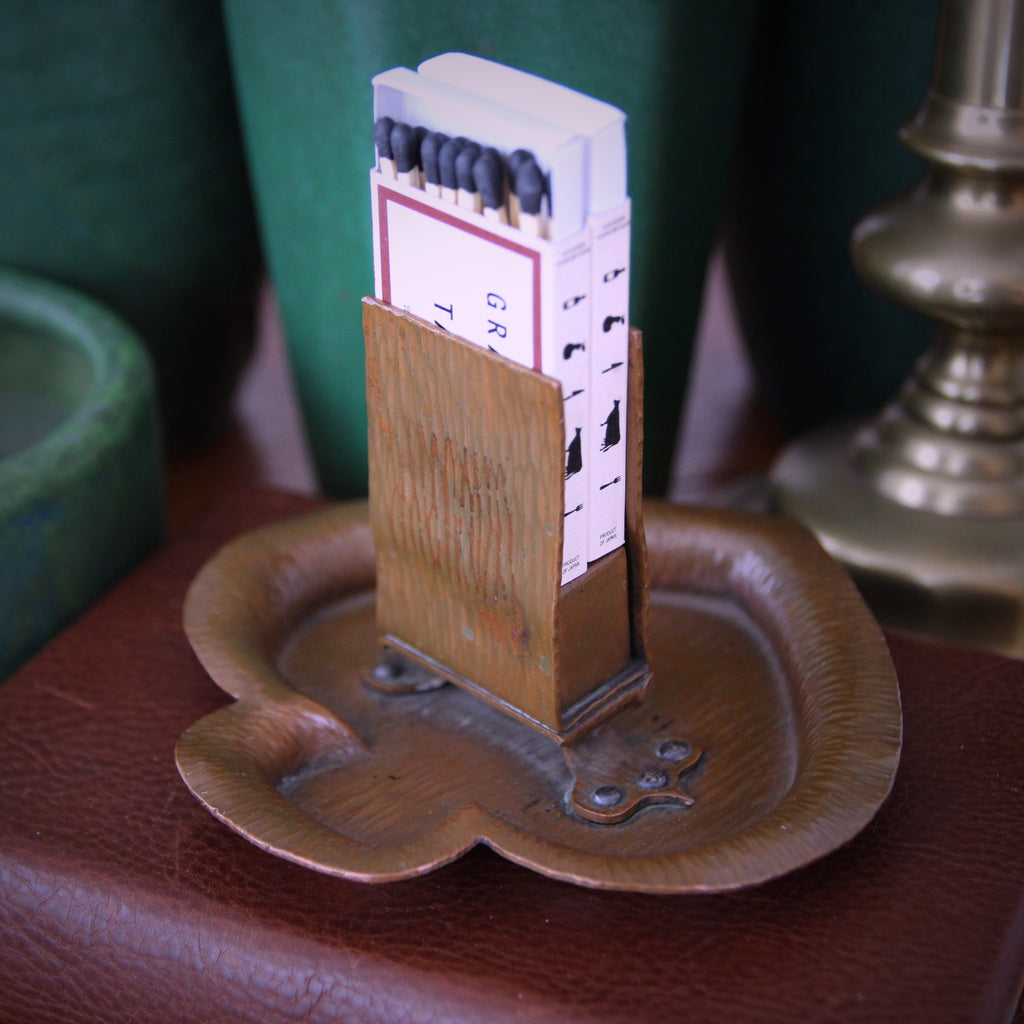
Once the province of weekly male bonding, "Poker Night" seems to have gone the way of craps games and bowling leagues. Cigars, blue talk and midnight sandwiches are less popular today than they were 80 years ago. Which makes this copper match holder even more interesting. Made around 1910, it might have been part of a larger "smoking set" with an ashtray and cigarette holder. And the tiny silver rivets hint at a sophisticated past, while the striated hand-tooled texturing remind us that a talented person craft this handsome piece, one stroke at a time.
Emmanuel College, part of the University of Cambridge, was founded in 1584 during the reign of Queen Elizabeth. The original buildings were a Dominican Friary, which her father, Henry VIII, had confiscated after "dissolving" the monasteries (an act of revenge on a Church which would not permit Henry's penchant for "dissolving" wives). The new school was founded to develop Anglican preachers. The Catholic chapel was stripped and converted into a dining hall. In 1677, a new chapel was built by the illustrious British architect, Sir Christopher Wren. Some of the original Dominican features exist to this day, including a large fish pond (now home to a raft of ducks) and one of the oldest bathing pools in Europe (originally used...
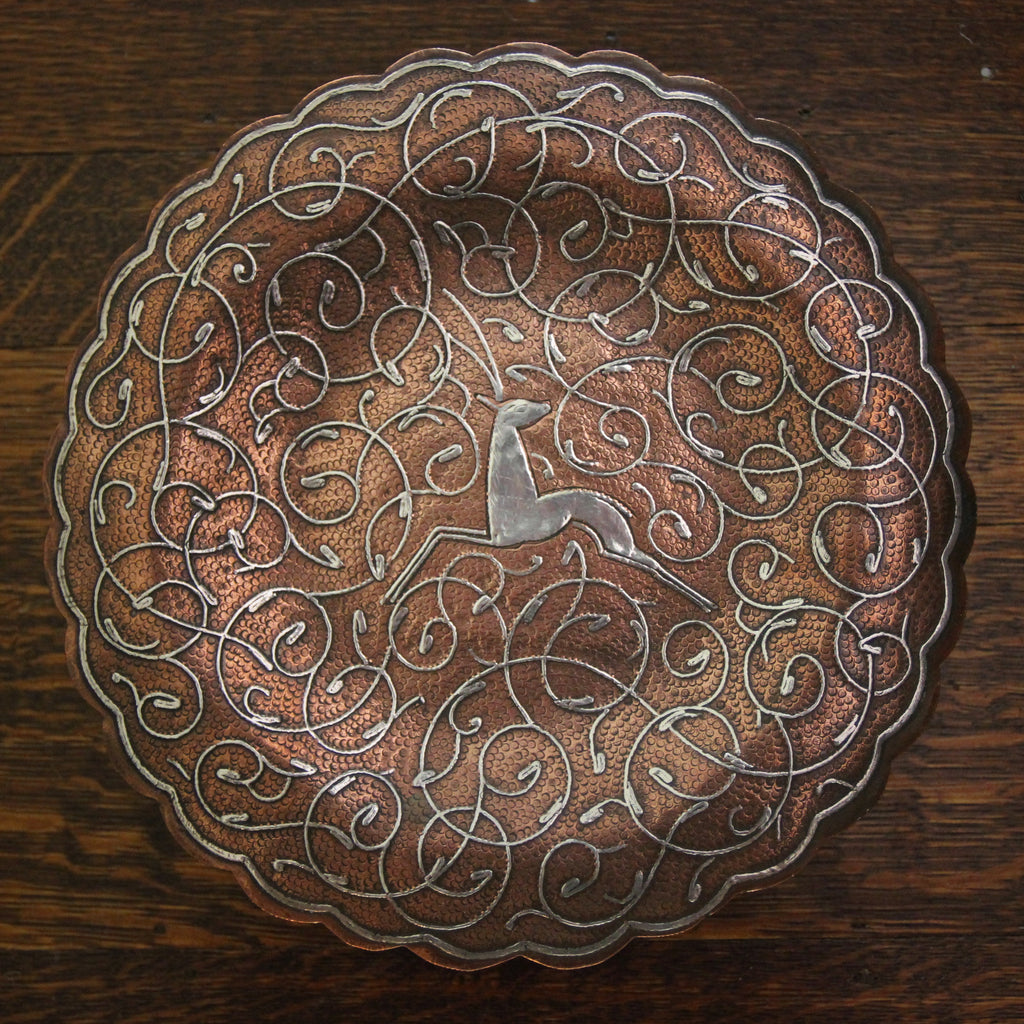
This handsome plate ticks many boxes. First there's the hand-hammered rosy copper, always a favorite of mine. And then the plate is "damascened"—that is, bonded with delicate elements of inlaid silver, creating a delightful pattern. And that pattern, too, tips its hat to several period aesthetics. The stag amongst the foliage is a common medieval tapestry theme. The hammered copper lies at the heart of Arts & Crafts metalwork. And the silhouette of the stag is reminiscent of the works of the American Art Deco sculptor, Paul Manship.
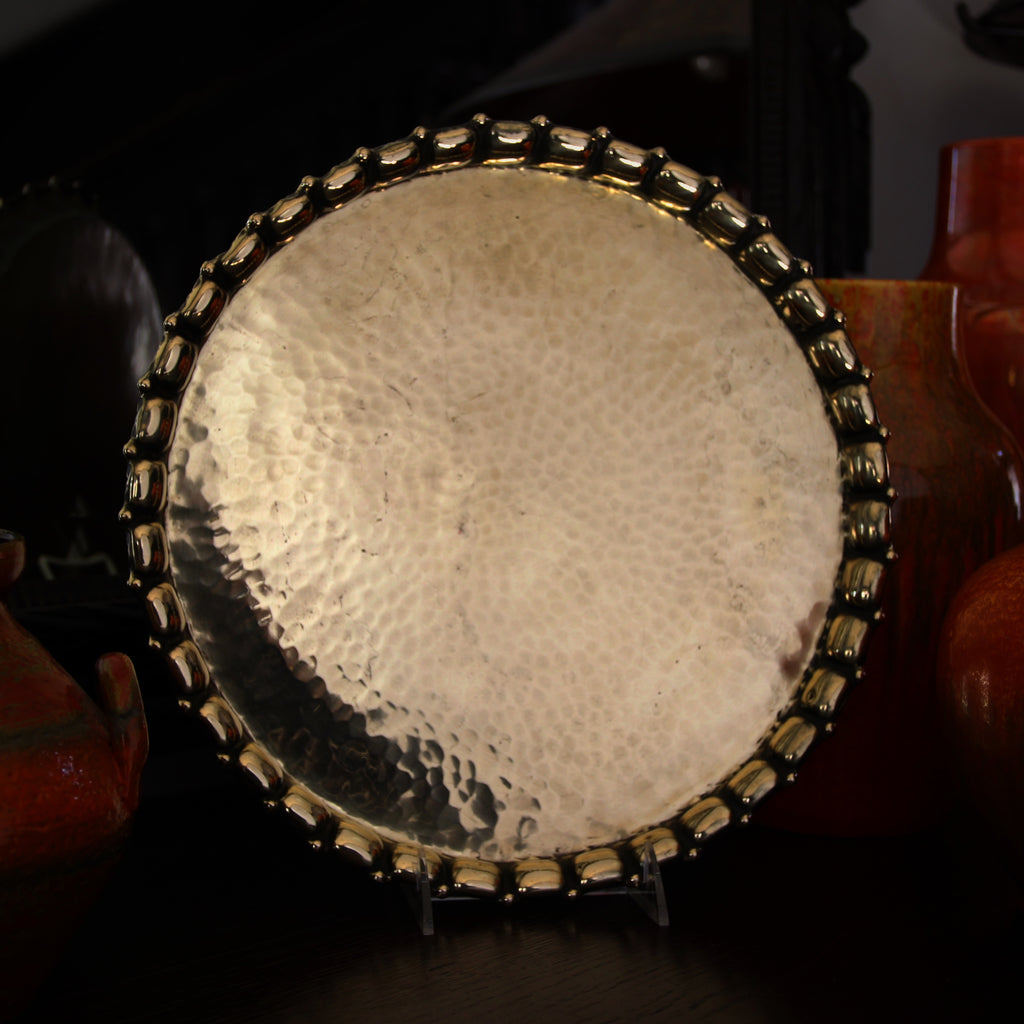
Hand-hammered brass, softly gleaming, makes for a handy and handsome drinks tray. It was made in Germany during the Jugendstil movement. The hammered "peening" softens the reflected light and the gallery of "pillows" around the edge will keep your glasses from sliding off. It would also make a useful "kitchen tray" to corral oil bottles and spice jars.
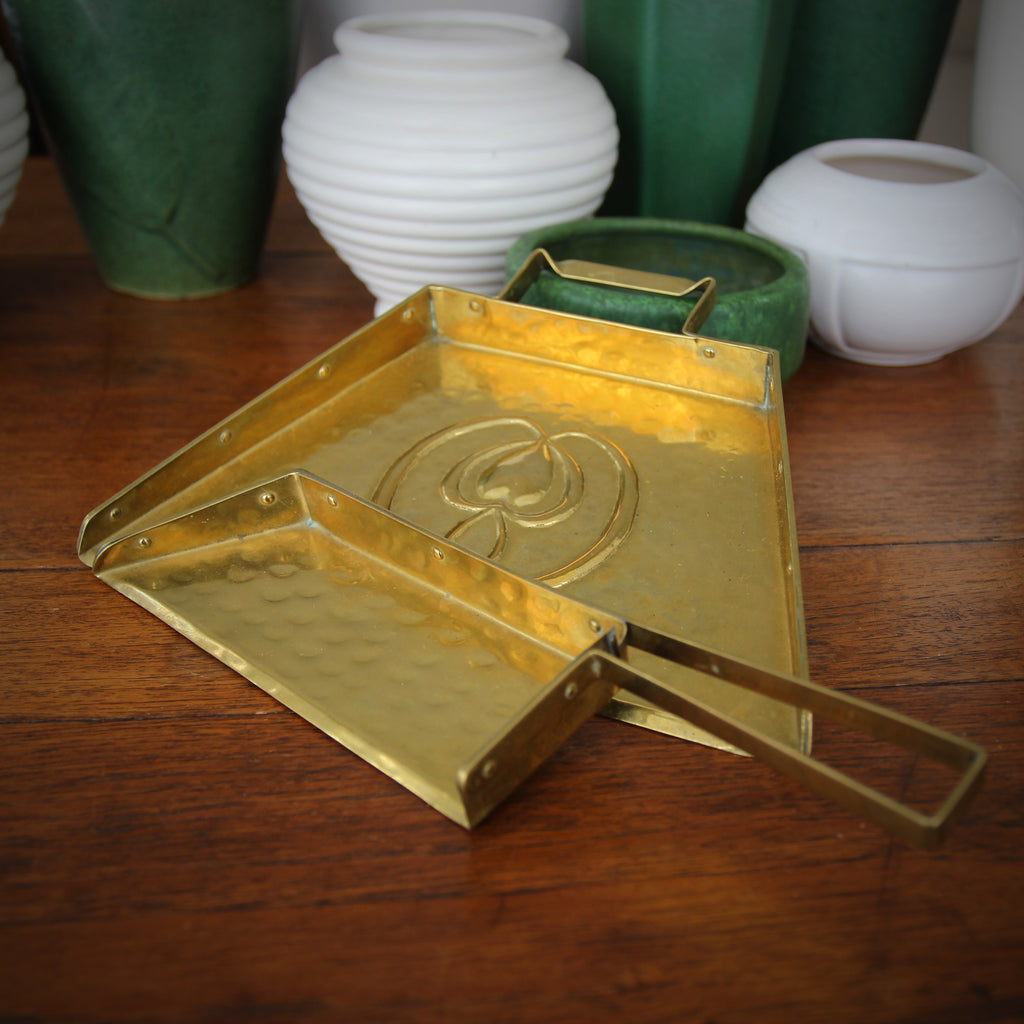
Commence your Spring Cleaning in-style—at least at your dining table. This English Arts & Crafts hand-hammered brass crumber set boasts a central botanical decoration as well as hand-riveted metal strapwork. Crumbers like this would be used to clean the dining table linens between courses.
Warm and softly-radiant, brass often reminds me of Spring. And this German Jugendstil hand-hammered brass tray is (a bit) reminiscent of the sun. It's modestly sized—perfect for tea-for-two or drinks for six. It would also be the perfect dresser or kitchen tray—holding bottles and jars.
As a "Three-Quarter Irish-American" (and proud holder of dual passports), I guess I'm obligated to take a little pride in Saint Paddy's Day—despite my annual disgust at the day trippers vomiting green beer along the Fifth Avenue parade route. Most of all, I am proud to be the descendant of beleaguered immigrants who persevered—misunderstood, maltreated and despised (as waves of immigrants, sadly, always have been and continue to be). Today, Irish-Americans have fully taken-root in the New Country. But I still pray we remember what our forebears endured—and commit to helping those who arrive on American shores a century later.
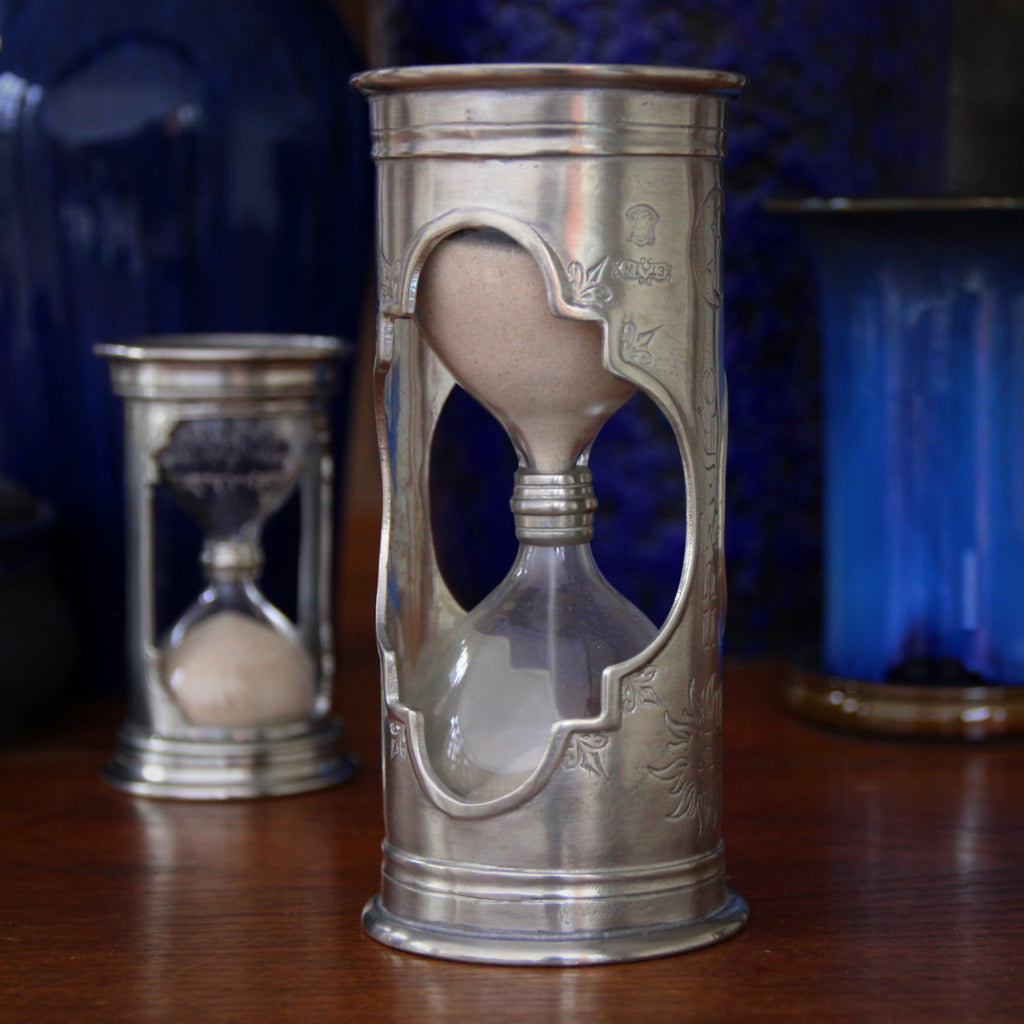
Late tonight (actually, early tomorrow morning)—after we're in bed—the clocks will "spring forward" to begin Daylight Savings Time. Don't forget to adjust your clocks before you head for bed. This Italian sand-cast pewter sandglass would make a handsome conversation starter on your desk, mantel or bookshelf. And it works, too! (Mostly.) It accurately indicates a range of time, more-or-less anywhere from 8 to 10 minutes (depending upon its mood). Like so many things Italian, what it lacks in precision it amply makes-up in style and beauty. Please click on the photo above to learn more about it. Though our Greenwich Village store is now permanently closed, LEO Design is still alive and well! Please visit our on-line store where we...
It's the third Monday in February, Presidents' Day! Or is it President's Day? Or, perhaps, Presidents Day? The answer will depend on the mood of the writer (and which state s/he inhabits). Congress established a federal holiday, called Washington's Birthday, in 1879, intended to honor only the first president. The holiday was initially observed on 22 February, the first president's actual birthday. Individual states have similarly made it a state holiday—sometimes calling it Washington's Birthday or Presidents Day or President's Day or Presidents' Day. In 1971, Congress "regularized" many federal holidays, placing them on a certain Monday of a given month (thus, creating more three day weekends and not having strange, mid-week disruptions to the workweek).
As we approach the anniversary of The Great Covid Hibernation, most people I know are more than ready to return to "normal life." We have places to go, friends to see, pounds to lose. Luckily, a rapidly increasing schedule of vaccinating is helping to dig us out of our national hole.
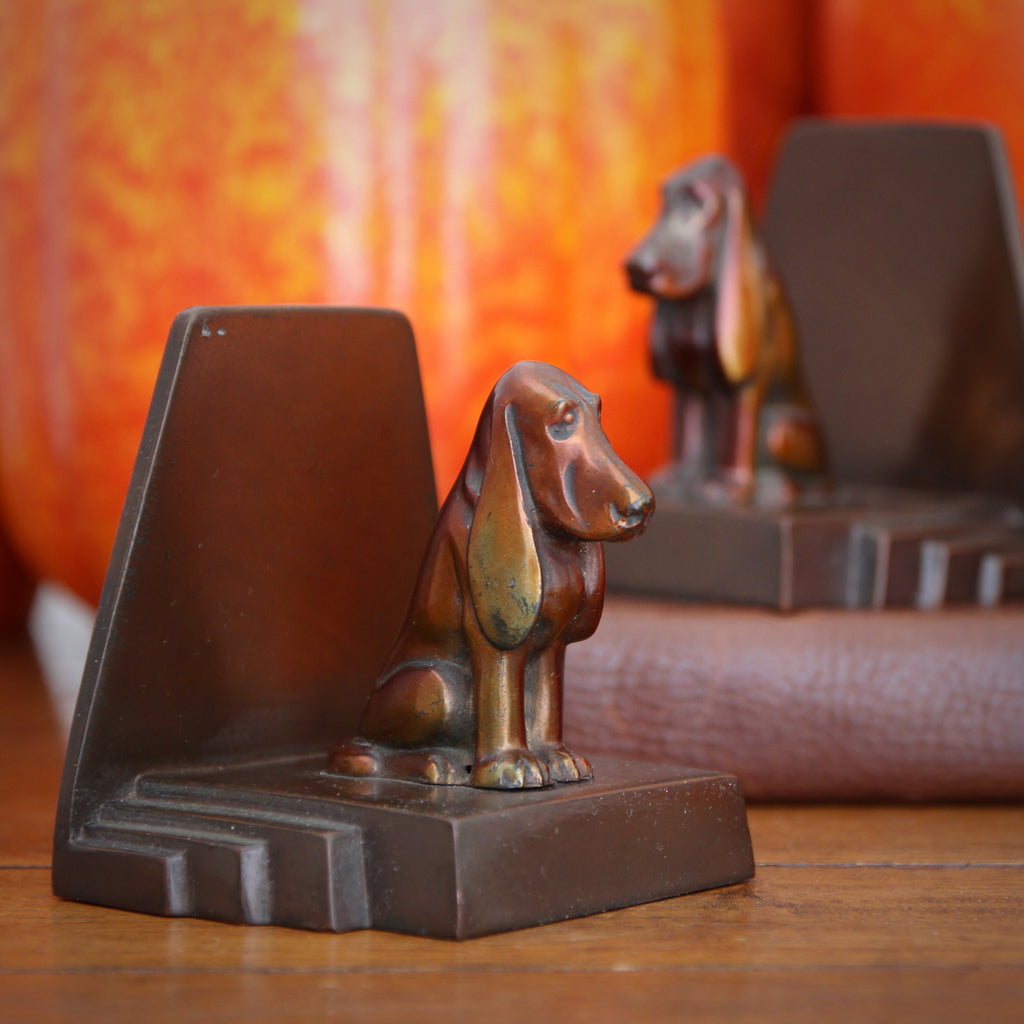
These Art Deco basset hounds, standing patiently atop their stepped bookend plinths, are biding their time, too. "Any day now," they seem to be saying. "Any day now...".
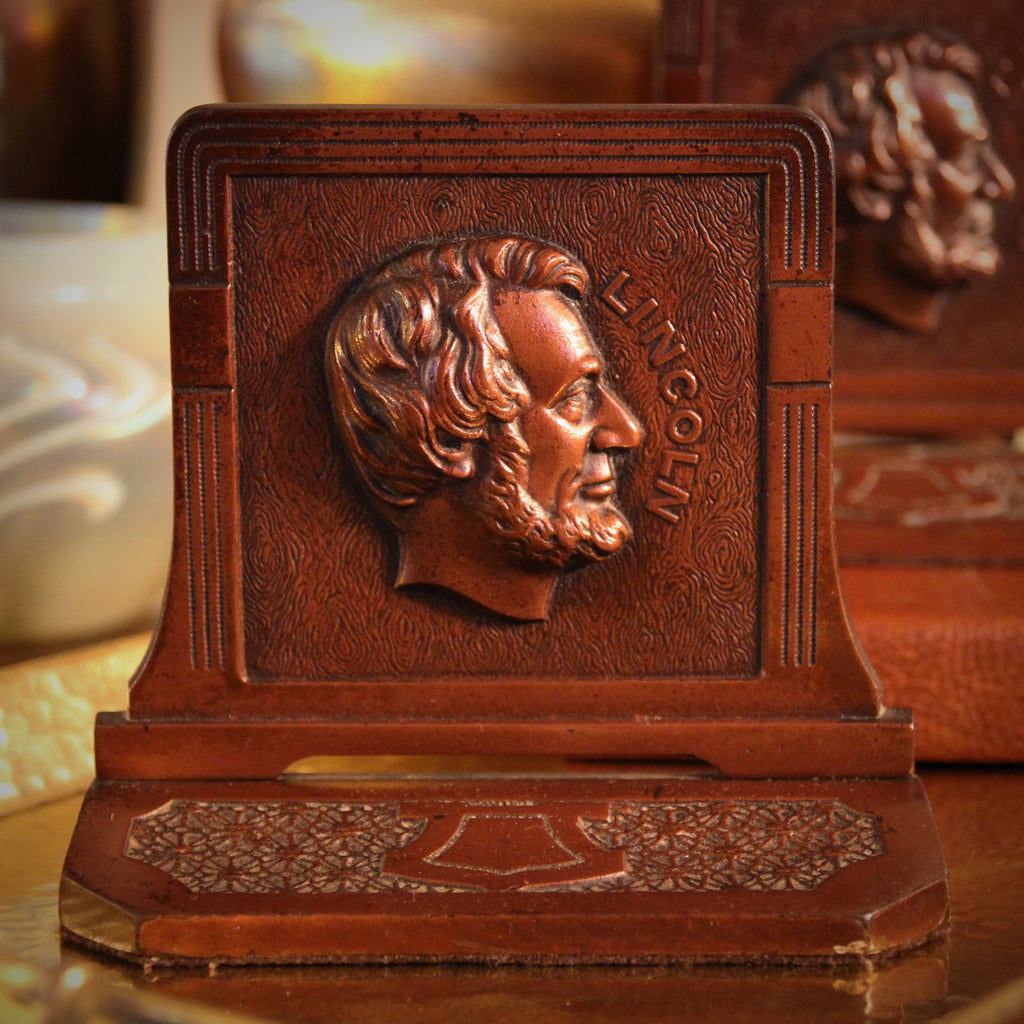
On this day, 2/12—212 years ago!—Abraham Lincoln was born at his family's "Sinking Spring Farm" in Kentucky. Raised to perform hard physical farm labor, he and his family moved several times during his childhood, eventually to Illinois when Abraham was 21. Lincoln was not a pampered child, born to comfort and luxury; he faced difficult challenges throughout his life—the most difficult, no doubt, as the 16th President of the United States. Lincoln was handed a country on the brink of civil war. Conservatives in the South were outraged at the election of this gangly, progressive leader (and alarmed that he would challenge their economic prosperity, based on enslavement). The month after his inauguration, the Civil War began.
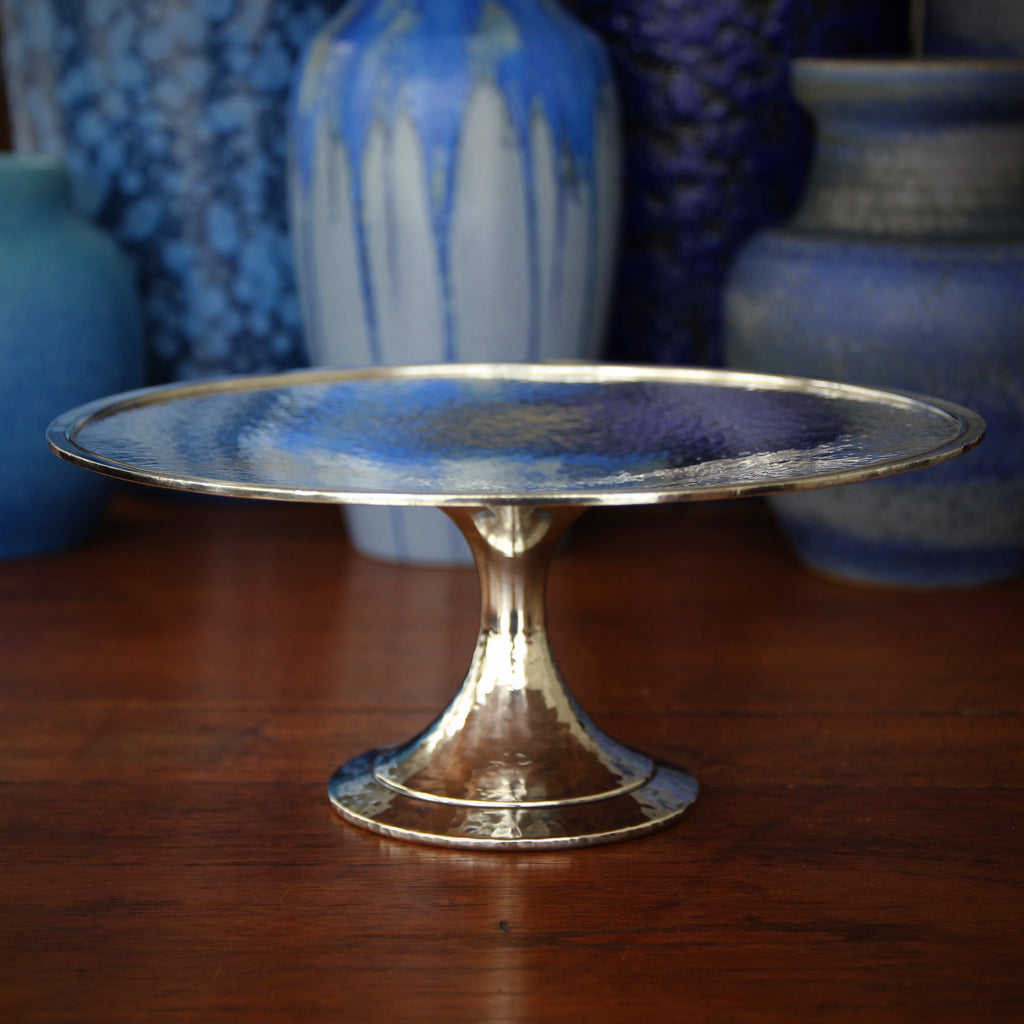
A nice tray can be used to present food in its best possible light. But putting something atop a pedestal adds a whole new dimension to the exhibition. Place a cake or muffins or even cookies upon a raised plate (like this one, shown above) and you've elevated the presentation. This Arts & Crafts cake plate is made of hammered and silver-plated. It was made by Derby of Meriden, Connecticut.
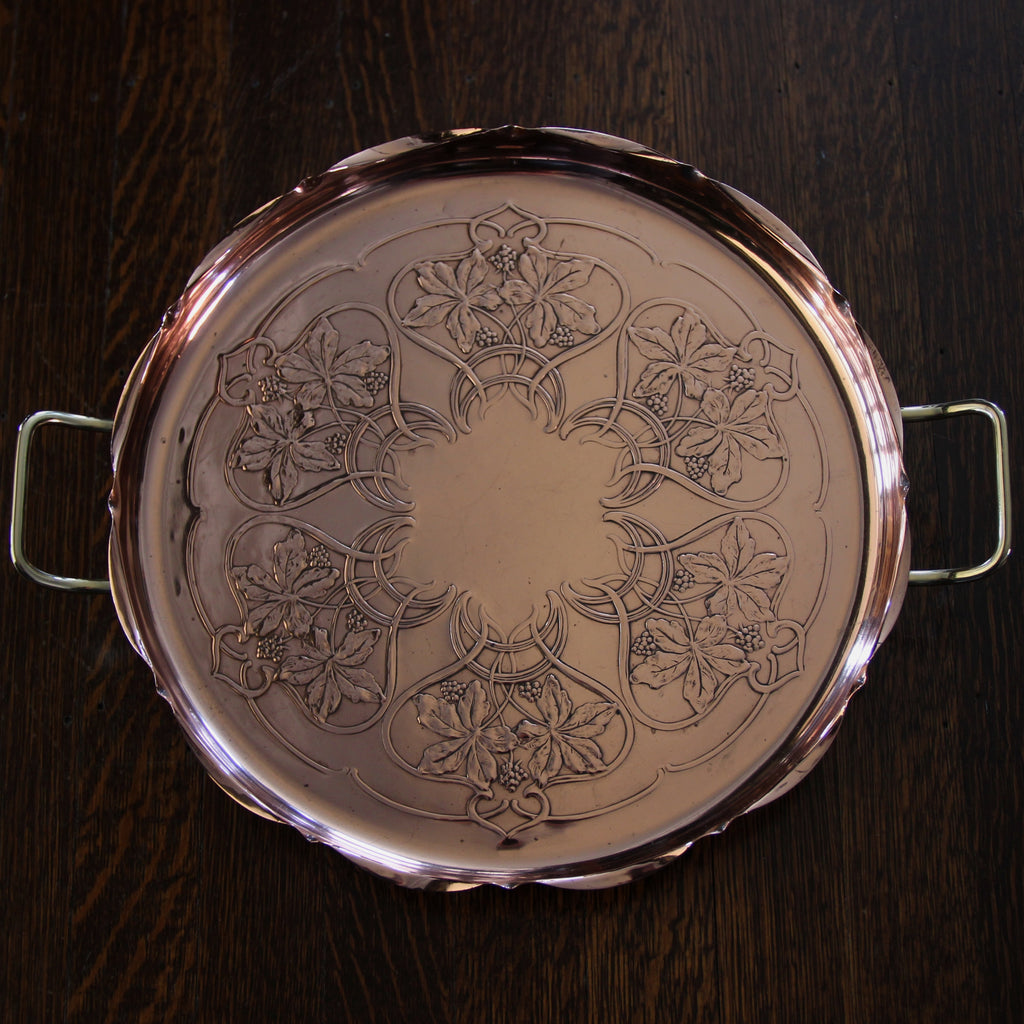
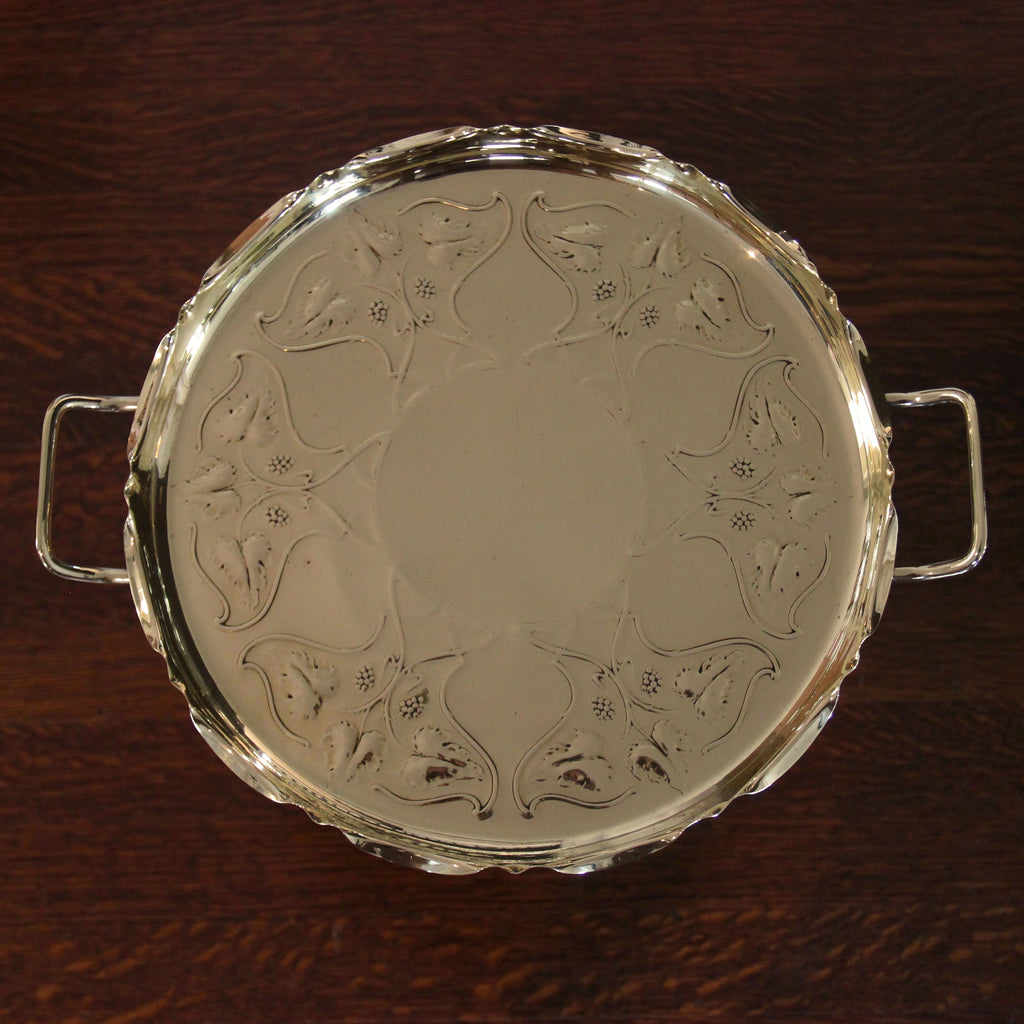
This journal entry title may not be obvious—and it is quite far from clever. (I was attempting a reference to the 1962 film "The Days of Wine and Roses" and its haunting theme song by Henry Mancini.) But! There is an association! The film, made by Blake Edwards and starring Jack Lemmon and Lee Remick, is the tale of a couple and their relationship to alcohol. This German Jugendstil tray, made by WMF in the 1910's, is decorated with a delicate repouseé of entwined vines, palmate leaves, and clusters of delicate berries. Though I have not, yet, identified the variety of berry, I have leapt to the conclusion that the Germans may have used these same fruit to make wine...
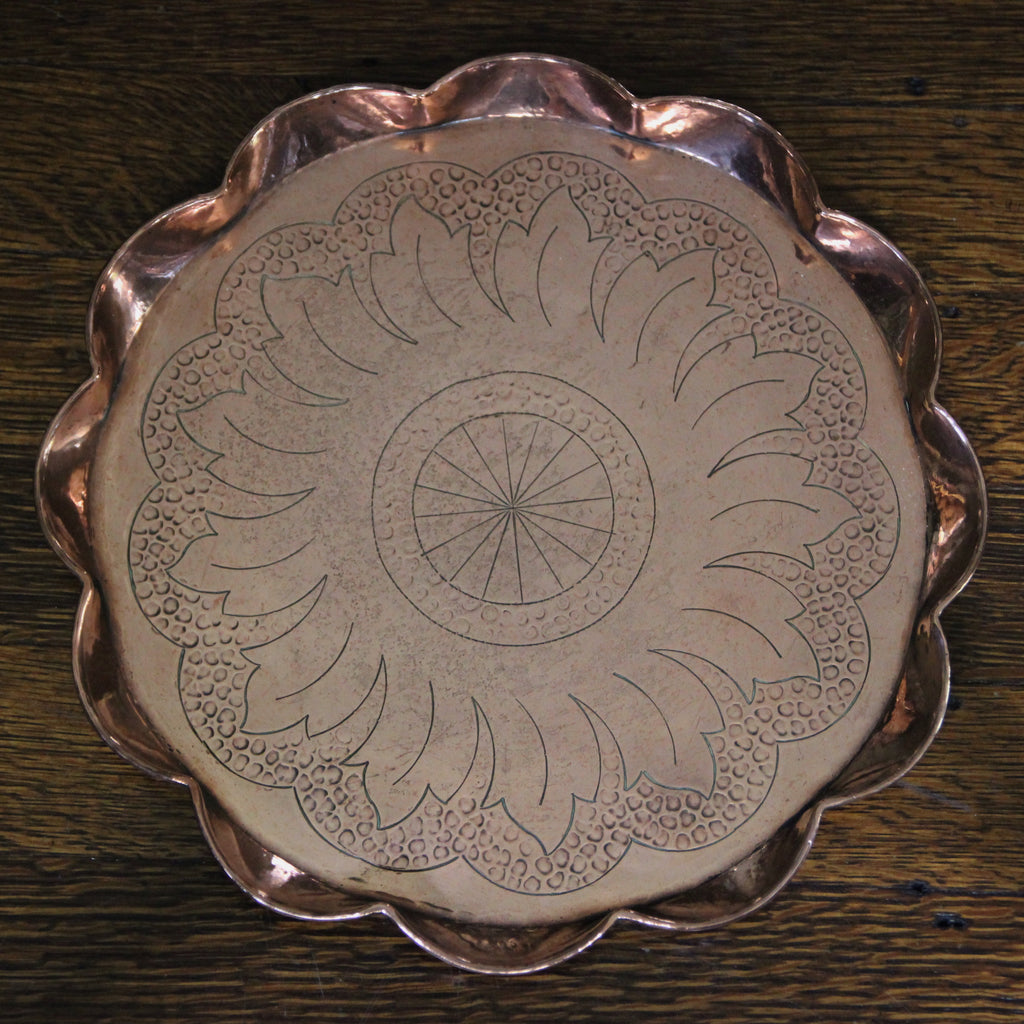
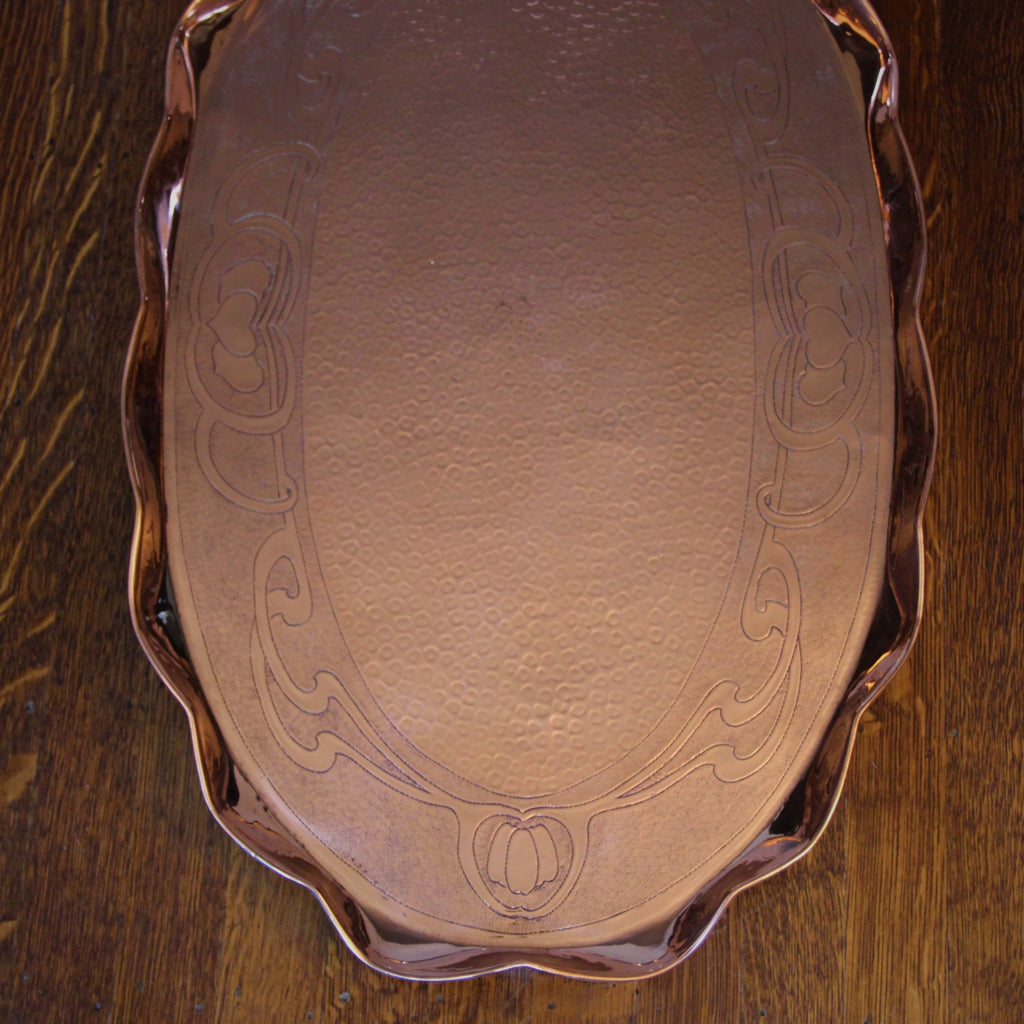
This little English Arts & Crafts copper tray is decorated with a hand-tooled radiant botanical design. It's not very big—just over nine inches across—but it has great style. It would look perfect hanging on the wall (in that "perfect little spot") or it would serve beautifully as a dresser tray, organizing all those bottles, tubes and jars which are part of one's daily ablutions.
It was in Seventh Grade when I was taught the word "juxtaposition"—that is, the placing of two items next to each other in order to compare or contrast their features. To my eleven-year-old mind, juxtaposition seemed to be a useful concept. But I had no understanding of how much I "would juxtapose" in my future life (or that I'd be writing about it 46 years later).
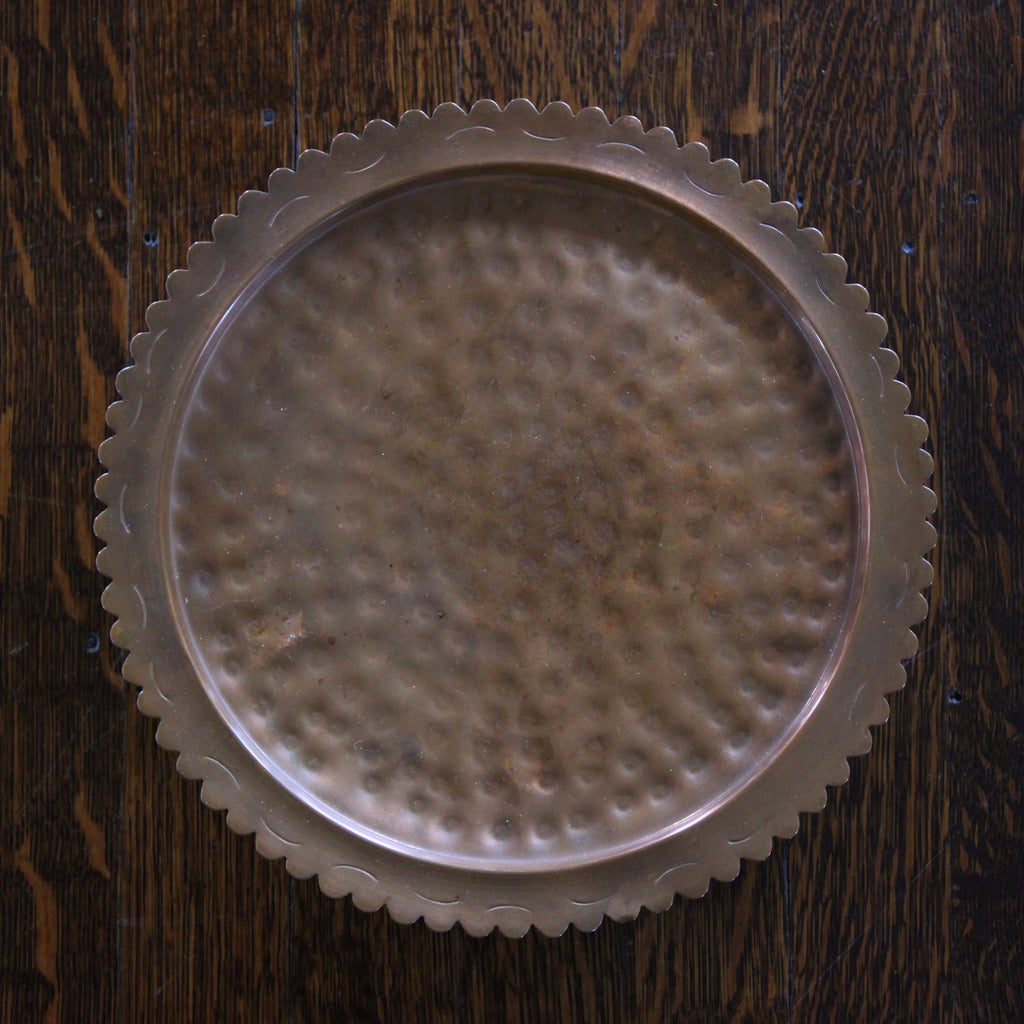
When I first found this English Arts & Crafts copper plate, I focused on the large-peen hand-hammering at its center. Such "brutalist" hammering is especially good for providing highly-visible texture from a distance (for example, as seen from across a room while hanging up-high on a wall).
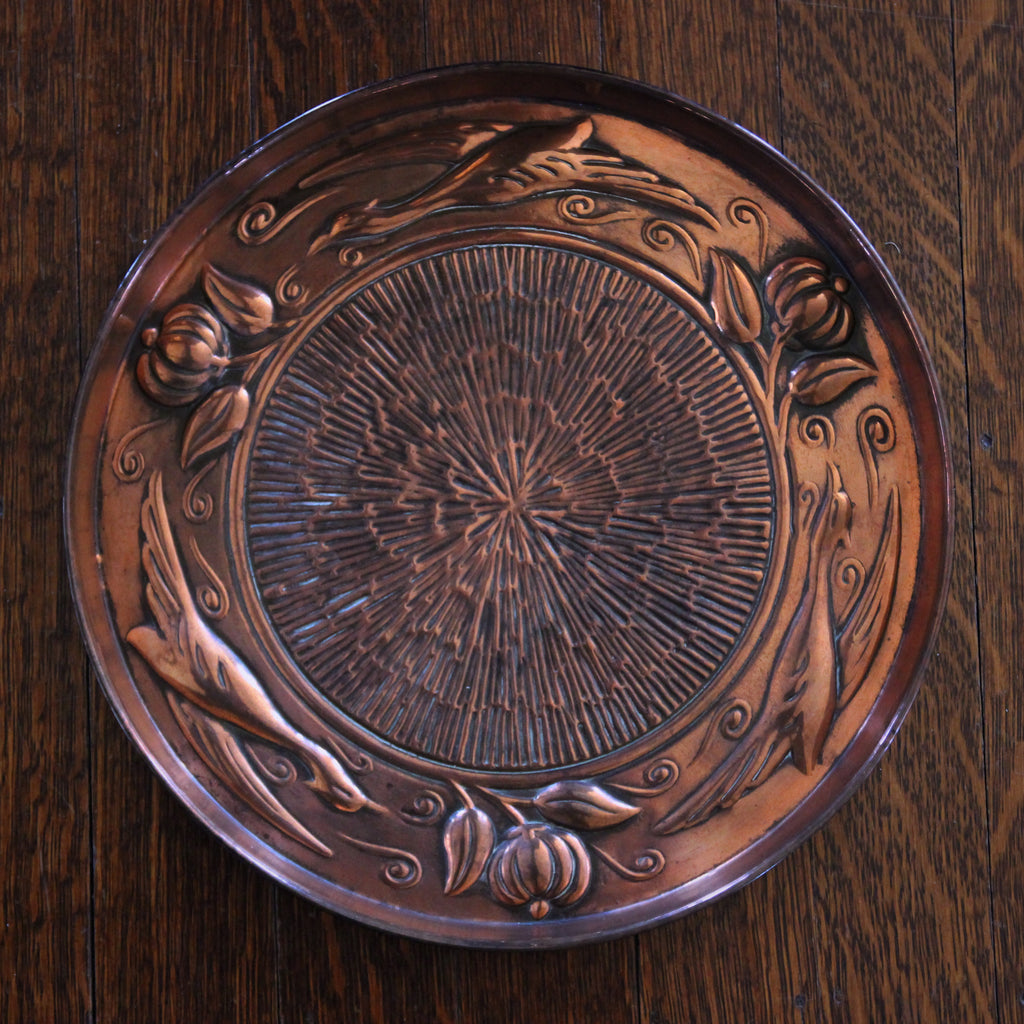
Yesterday we talked about the poppy as a symbol of remembrance, specifically of those who gave their lives in war for Britain. This English Arts & Crafts copper plate shows a trio of poppy pods—yet to be opened. Additionally, it shows a trio of wild geese, flying around the rim of the plate. For Celtic Christians, the wild goose is a symbol of the Holy Spirit, much as the dove is for the broader church. And don't underestimate the intentionality of "threes" (either geese or poppies). A trio, in Christian symbolism, is a reference to the Trinity. This handsome plate conveys a symbolic meaning—hidden within its the skillful repoussé work of its maker.
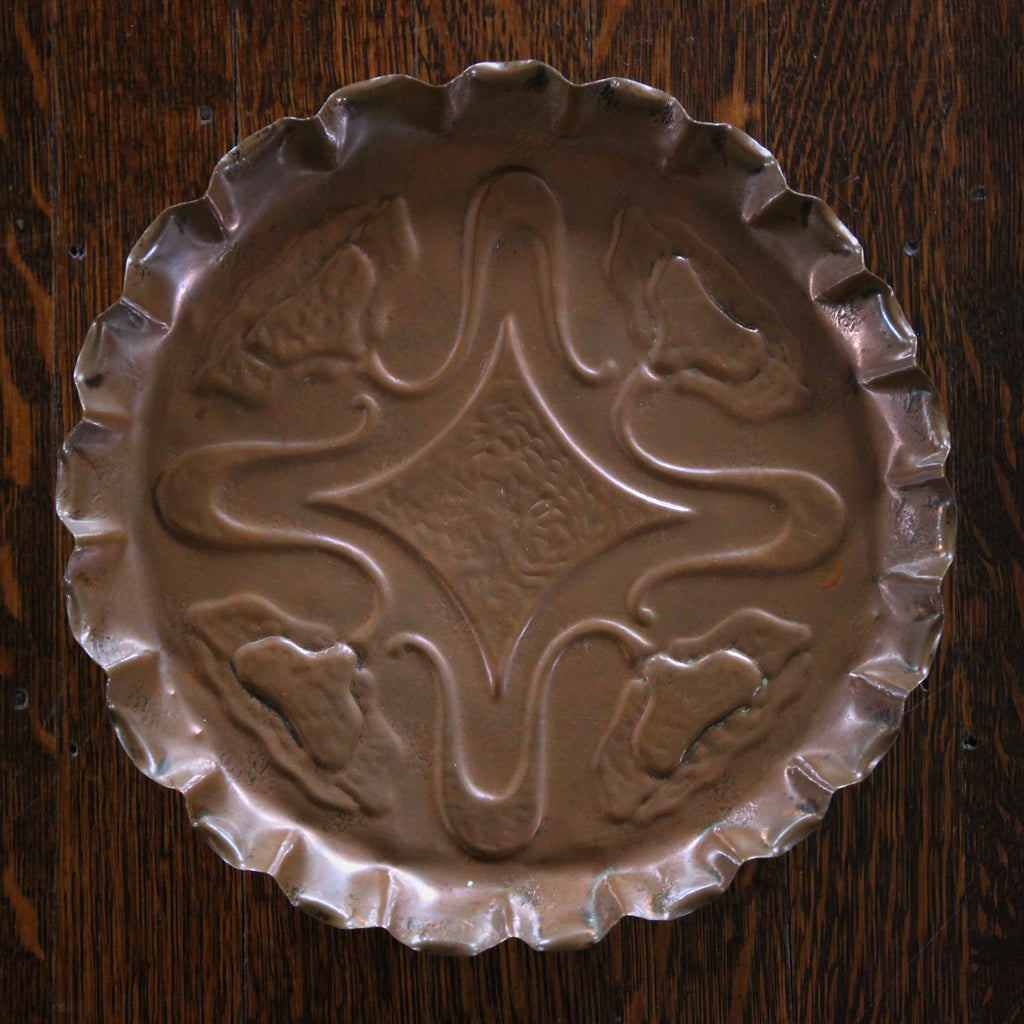
This English Arts & Crafts copper "pie plate" is decorated with a repoussé whiplash and poppy design. In England, poppies memorialize the war dead and (today) especially those who gave their lives in World War One. Red poppies stain the open fields of France's Western Front—where British (and other) servicemen died (and some were buried). Additionally, the narcotic effect of opium (from poppies) has always connoted sleep, thus the close association with eternal rest. This copper plate is beautiful in its own right—and made even more special by the remembrance it engenders.
For most of human history, the world was dominated by a small number of monarchs, the aristocratic one percent, and all the rest of us—the 99% who served those monarchs and aristocrats. "Luxury" was out-of-reach for all but the tippy-top. And then came the Industrial Revolution. While the Industrial Revolution did create many problems—pollution, exploitation, and the relegation of human labor as an interchangeable commodity—it also allowed for the growth of a modern Middle Class. And this new middle class had something heretofore unknown to them: discretionary income. For the first time, a growing middle class could afford to buy things that they wanted, not just what they needed. But they were still not rich enough to match the...
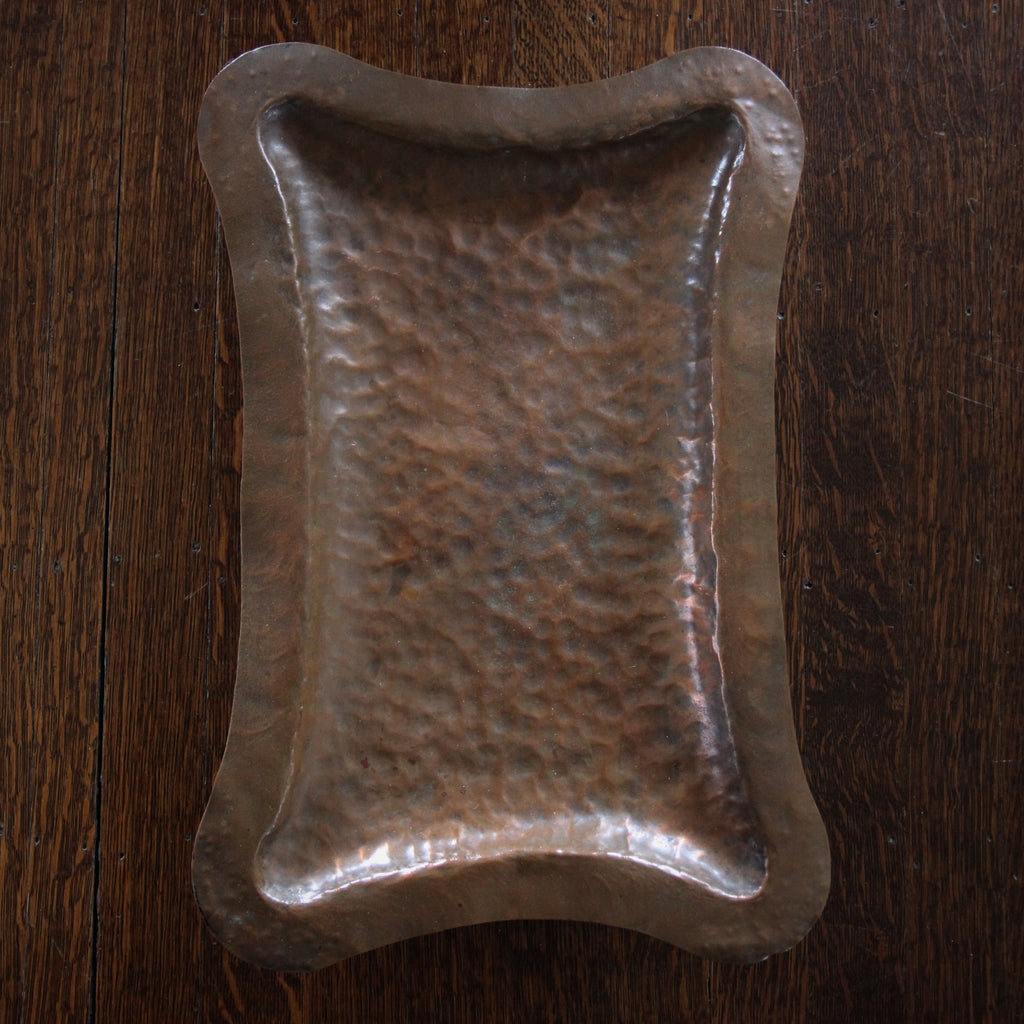
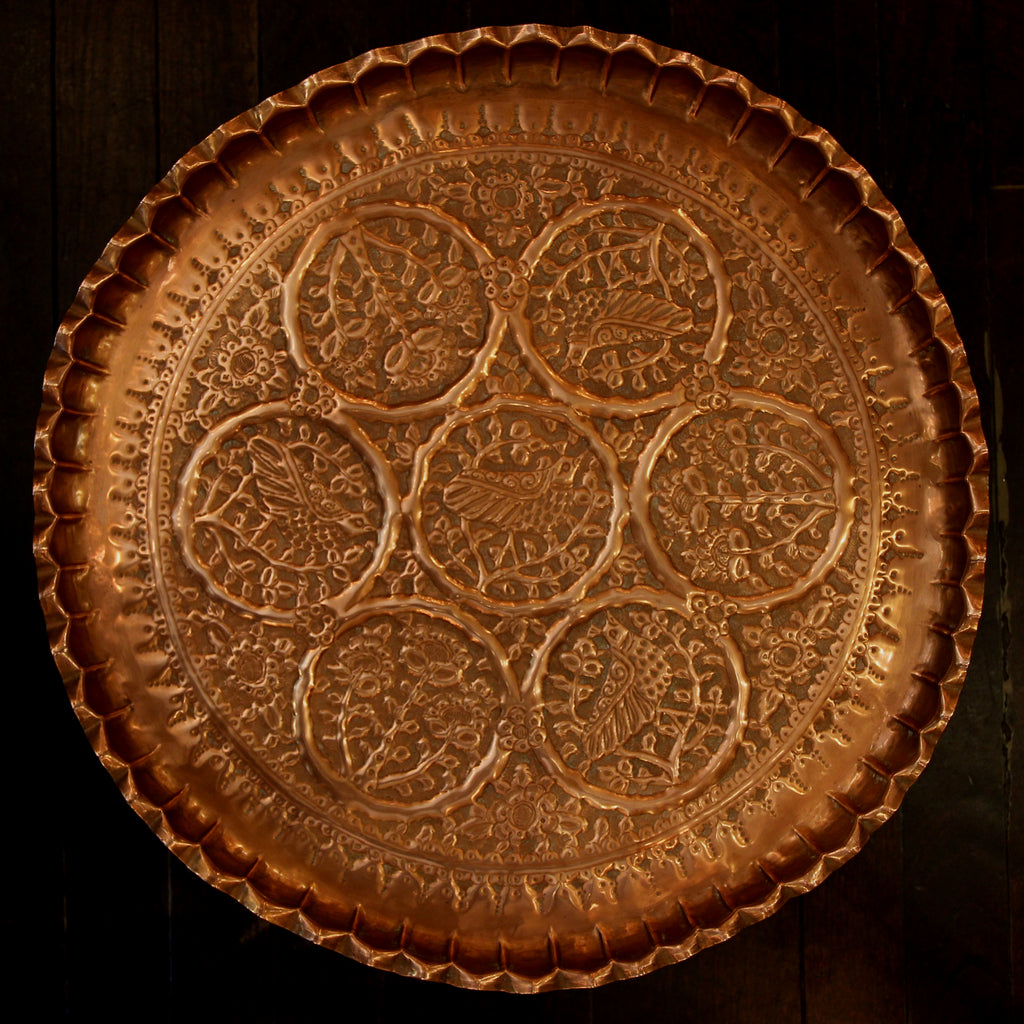
Yesterday, we shared one of the finest trays in our collection. If one might call that one "Beauty," the shallow bowl, shown above, might be called "The Beast." But a beast is not without its usefulness—or its charm. Rustically hand-hammered copper is fashioned into a shallow bowl. Set upon a refectory table, it would be perfect for holding fruit, bread or a collection of decorative objects—pinecones, wine corks, seashells or glass balls.
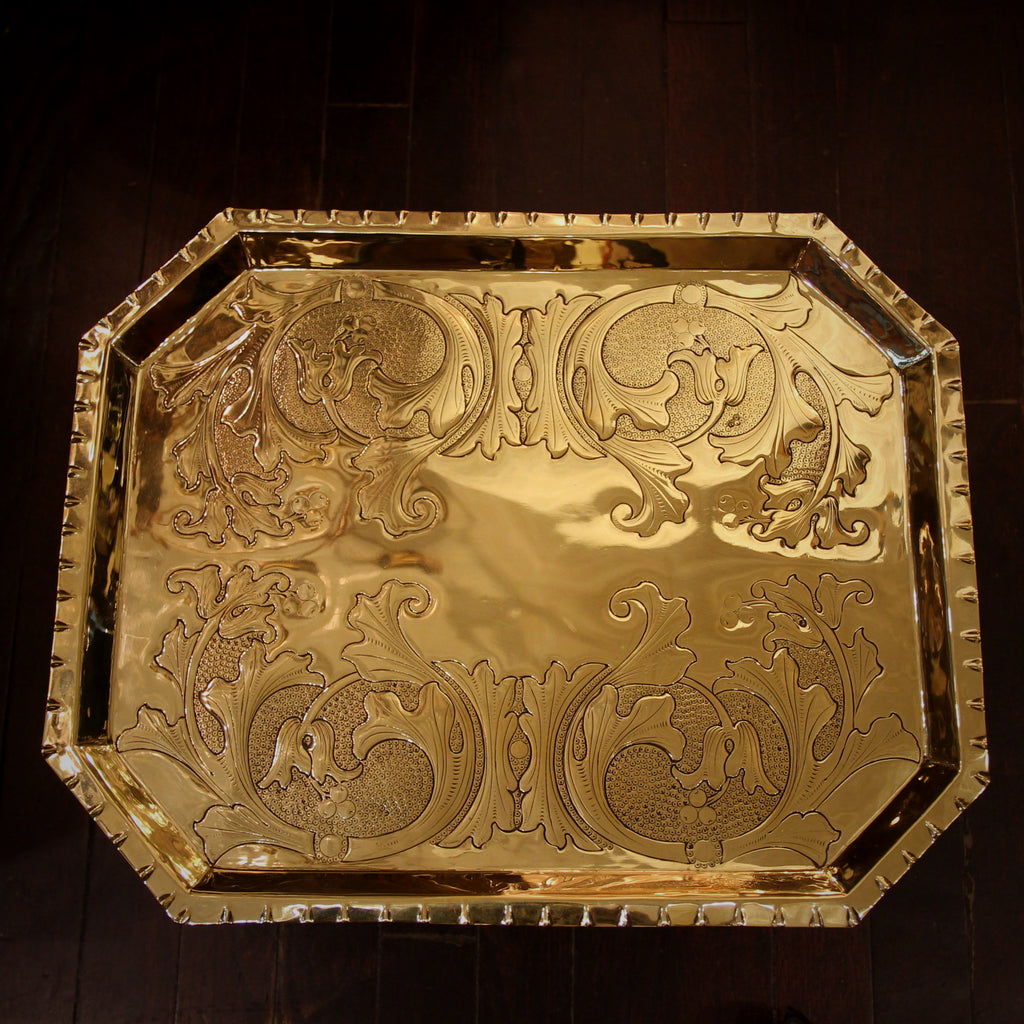
After 26 years of collecting and selling English trays, this one may be the nicest I've ever owned. And, although it could be used to serve food, it would be much better suited to hanging upon the wall as a work of art. Actually, it could serve as an architectural feature! Four whorls of scrolling botanicals luxuriate in each corner of the tray which is surrounded by a crimped-edge gallery. And the soft, warm reflection of light off the brass surface will gently brighten any spot in your home. (Why am I selling this?)
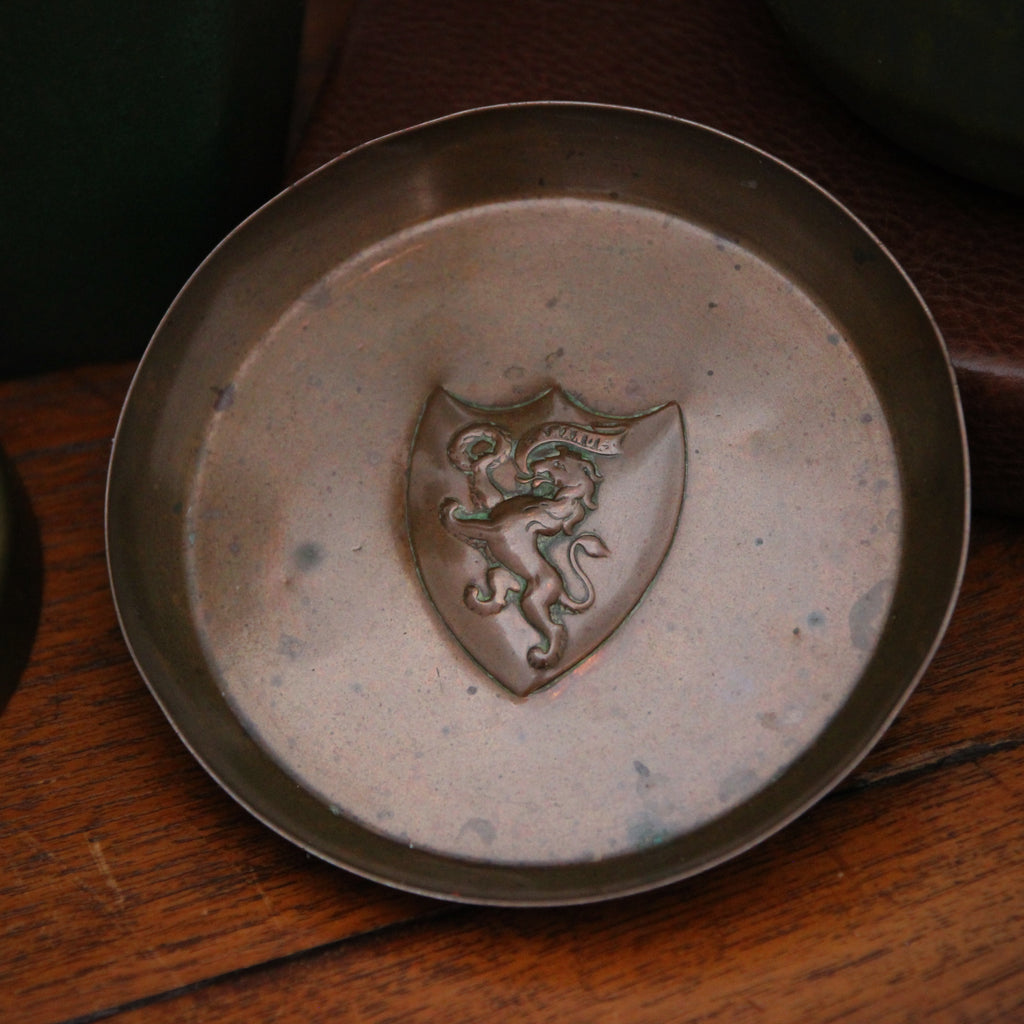
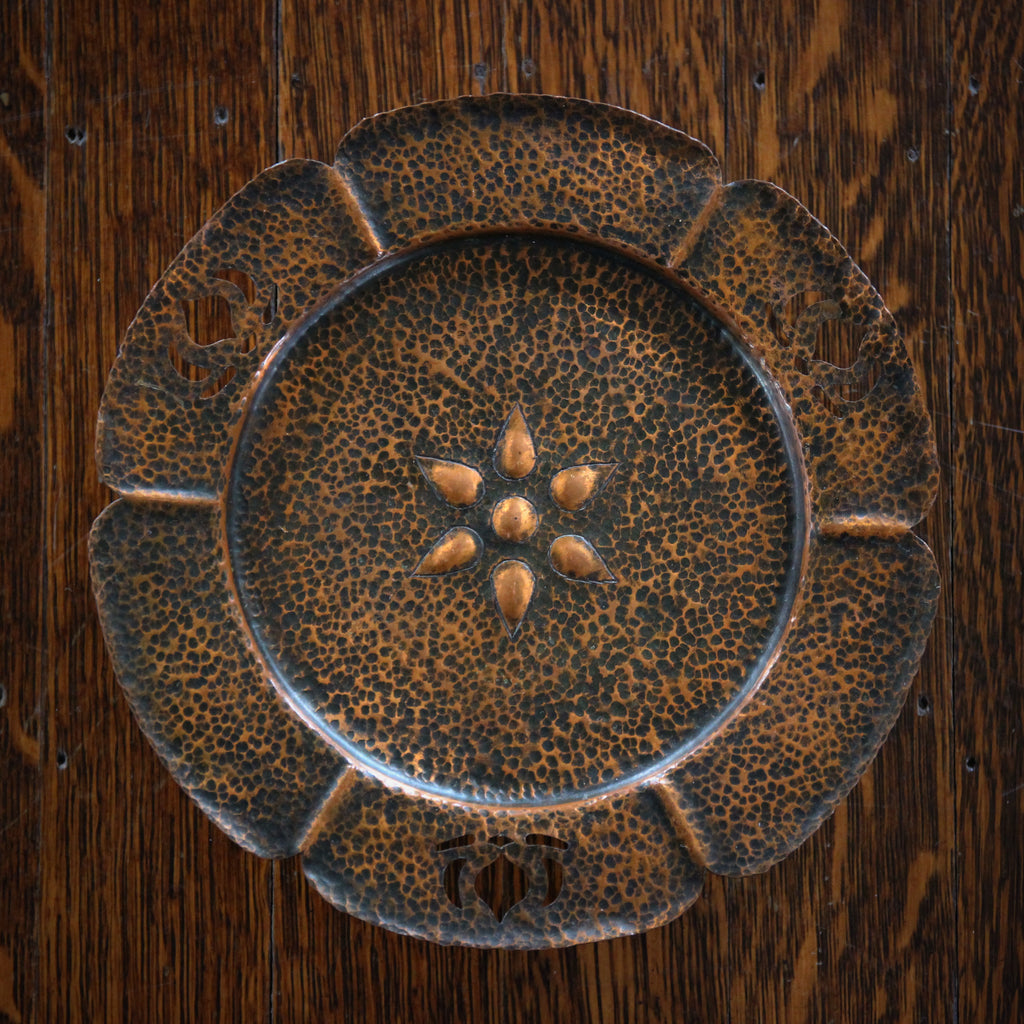
This sweet (though small) little plate would bring a lovely touch of Arts & Crafts sophistication to that tiny spot in your home which has been wanting for a small point of punctuation. It was made in England around 1905. The hammering is beautifully executed, the design is crisp, and the deep, brown patination is rich and lovely. Especially unique is the trio of piercings which encircle the plate. A stylized, six-petal flower radiates from the center.
February is here—and it brings along its regal birthstone, the amethyst. Until the Nineteenth Century, amethysts were very precious; they were considered one of the rare (and expensive) "Cardinal Gemstones"—alongside rubies, diamonds, sapphires and emeralds. At the time, they were only to be found in Austria and Russia (where the most beautiful, deep-purple amethysts were found). Medieval monarchs—especially in England—adorned themselves with the royal amethyst (given that the color purple has long been associated with royalty). Even today, Anglican bishops wear an amethyst in their episcopal rings. This is due to the ancient belief that amethysts prevented intoxication—and that alcohol, drunk from an amethyst bowl, would not cause inebriation. In fact, the name "amethyst" comes from the Ancient Greek root...
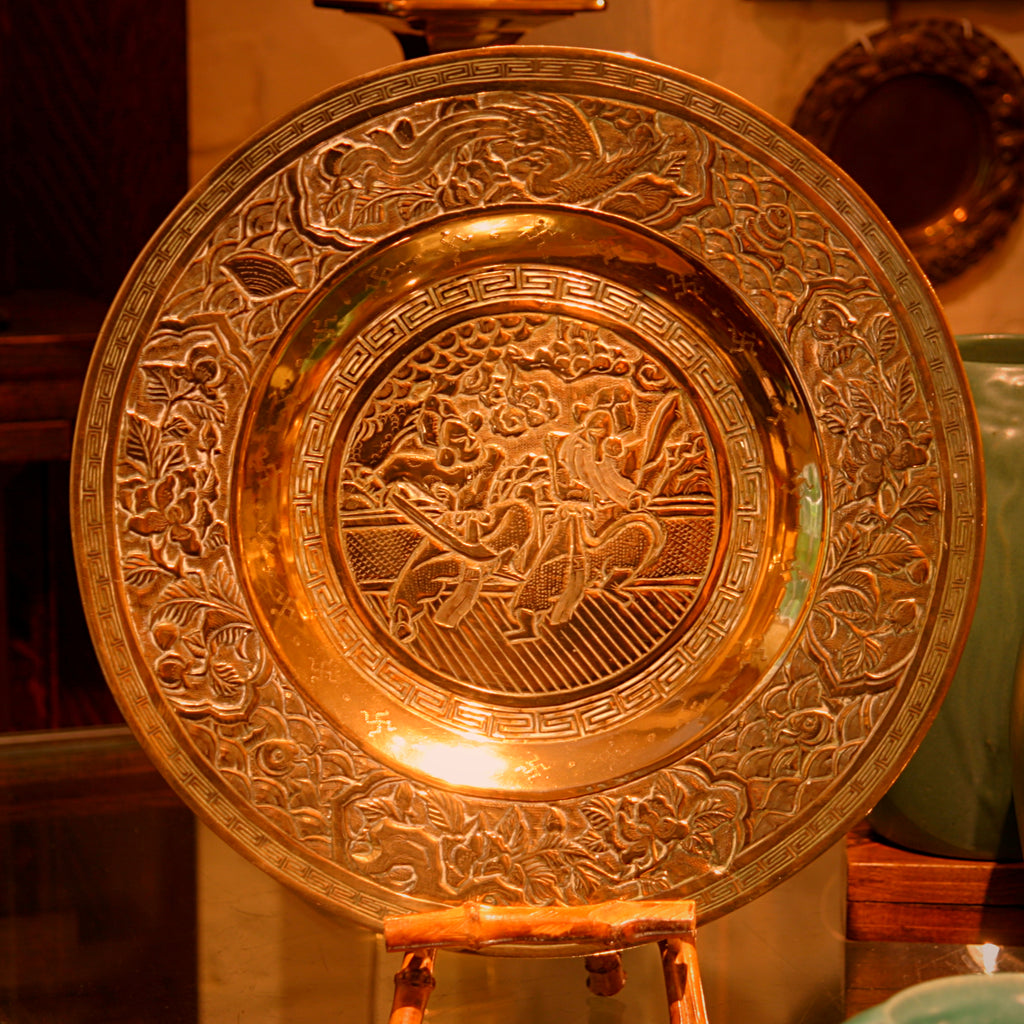
In the old days, China was considered "at the far end of the Earth." Venetian explorer-merchant, Marco Polo, was the first European to make a well-documented trip to China in the late 1200's (though scholars believe that the Chinese had periodic contact with Europe for centuries before this). It was not an easy trip; it took him three years to travel from Venice to China and he stayed there for 17 years. In later centuries, the West enjoyed increasingly easier travel to China, though politics did affect the ease of trade from time to time (as it continues to do today). Intrepid European traders made vast fortunes bringing-back luxurious and exotic products from China—textiles, ceramics, tea and other foodstuffs that...
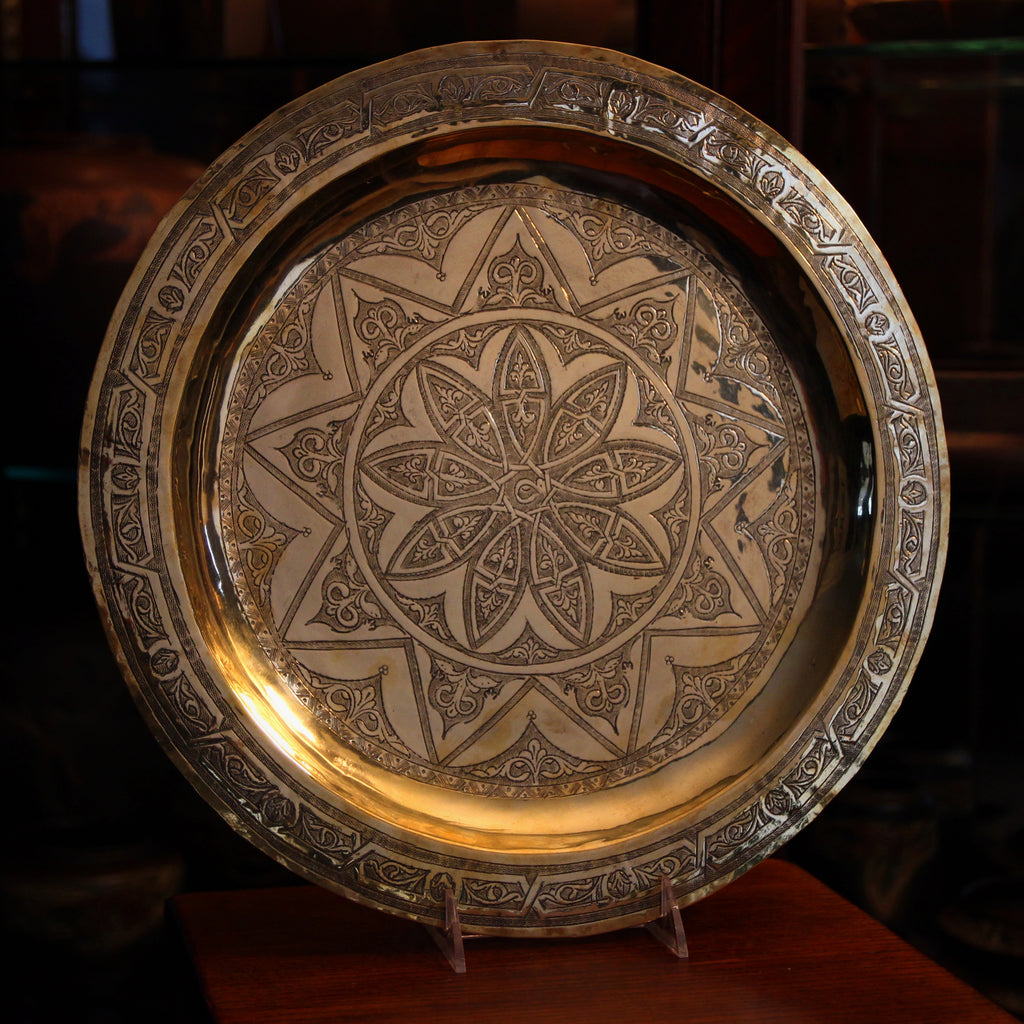
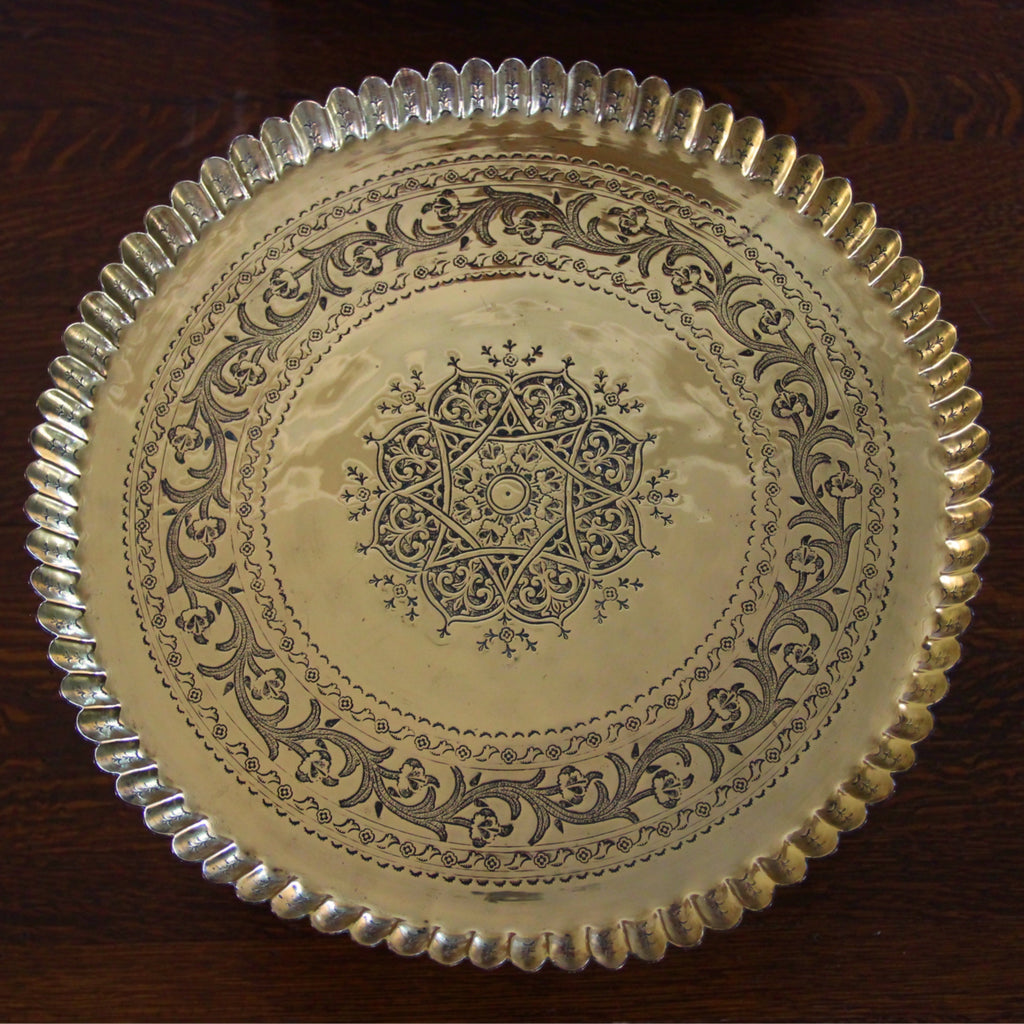
Bearing a more traditional Middle Eastern aesthetic, this Egyptian brass platter displays intricate layers of hand-tooling. It can be used as a tray or hung as an art piece on the wall—where it will provide a gleam of warm reflected light
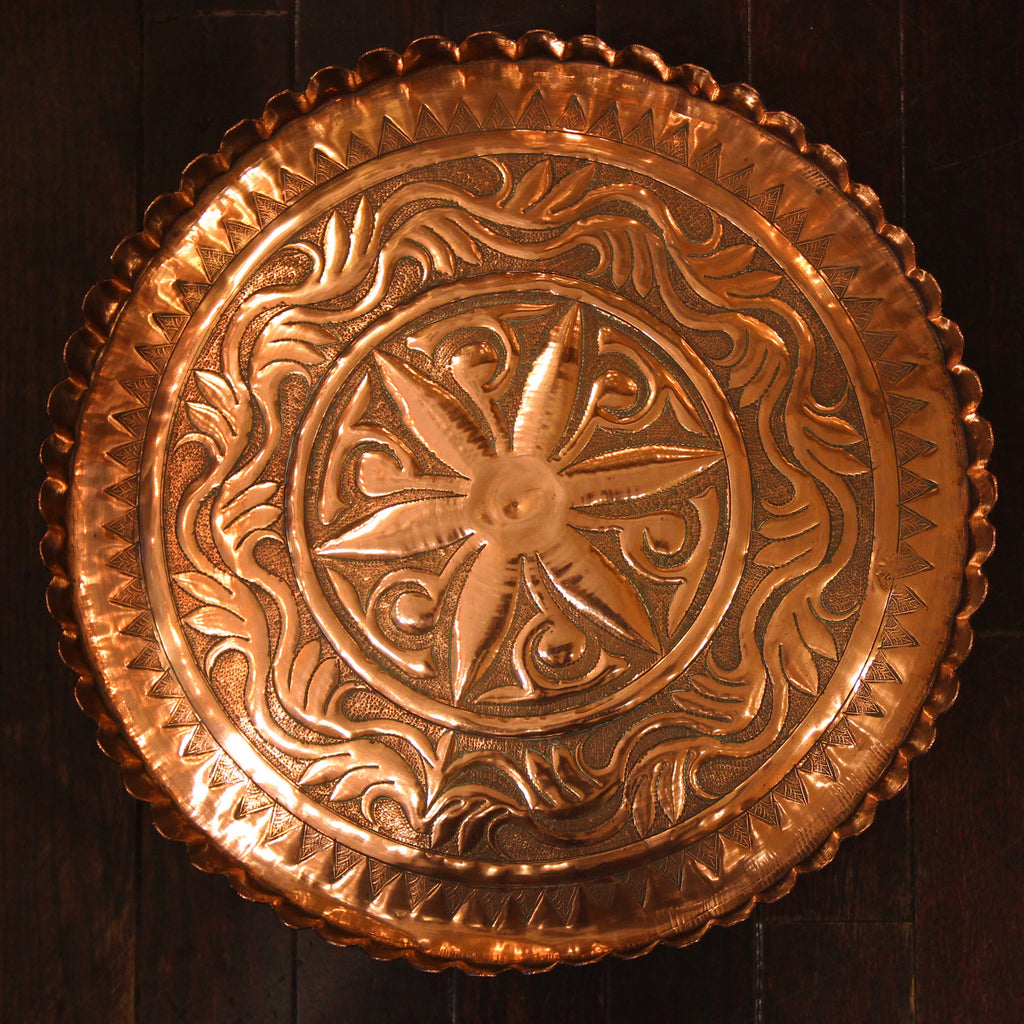
Here's another Middle Eastern beauty, this time in hand-tooled copper. A crenelated gallery surrounds the interior graphic elements: triangular "teeth," scrolling botanicals, and a corollate center. The bold simplicity of the design—almost "folk art" in aesthetic—brings this tray closer to the sensibility of traditional Arts & Crafts than most Middle Eastern works. Still, the competence of the metalsmith is apparent. This tray, hanging in an Arts & Crafts interior, would provide wonderfully warm punctuation.
Here's another handsome piece of metalwork: a Middle Eastern hand-tooled brass tray. It serves wonderfully as a tray. I like it even more when hanging on the wall—where it provides a warm glow of reflected light and beautiful punctuation in an Arts & Crafts interior. It's interesting to point-out that period Aesthetic Movement and Arts & Crafts designers or craftsmen would sometimes imitate "exotic" aesthetics and decorative elements into their work. This was their way of bringing the beauty of another culture to those who might not have the opportunity or wherewithal to travel so far away. And the wealthiest collectors competed with one another to have more and better Asian ceramics, Persian tilework or Middle Eastern metalcrafts. Some of these...
I love hammered metalwork—an appreciation which transcends place and period. Though, in fact, most of my collecting has been in the West: Europe, Britain and the United States. Thus, my ability to identify these places and periods is (a little bit) better developed. So, over the years, I have focused principally on acquiring Western metal crafts for my shop. (As a merchant, I must balance the issues of physical space and cash-on-hand.)
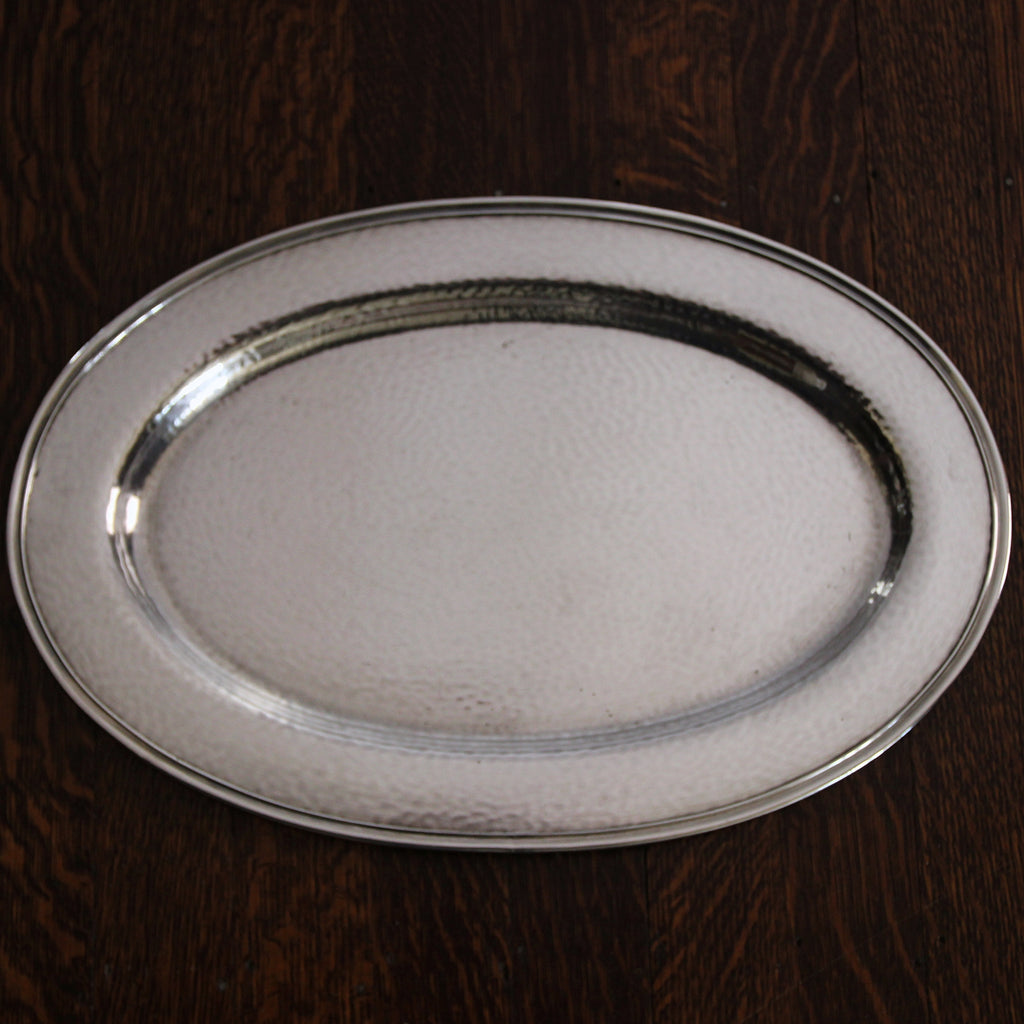
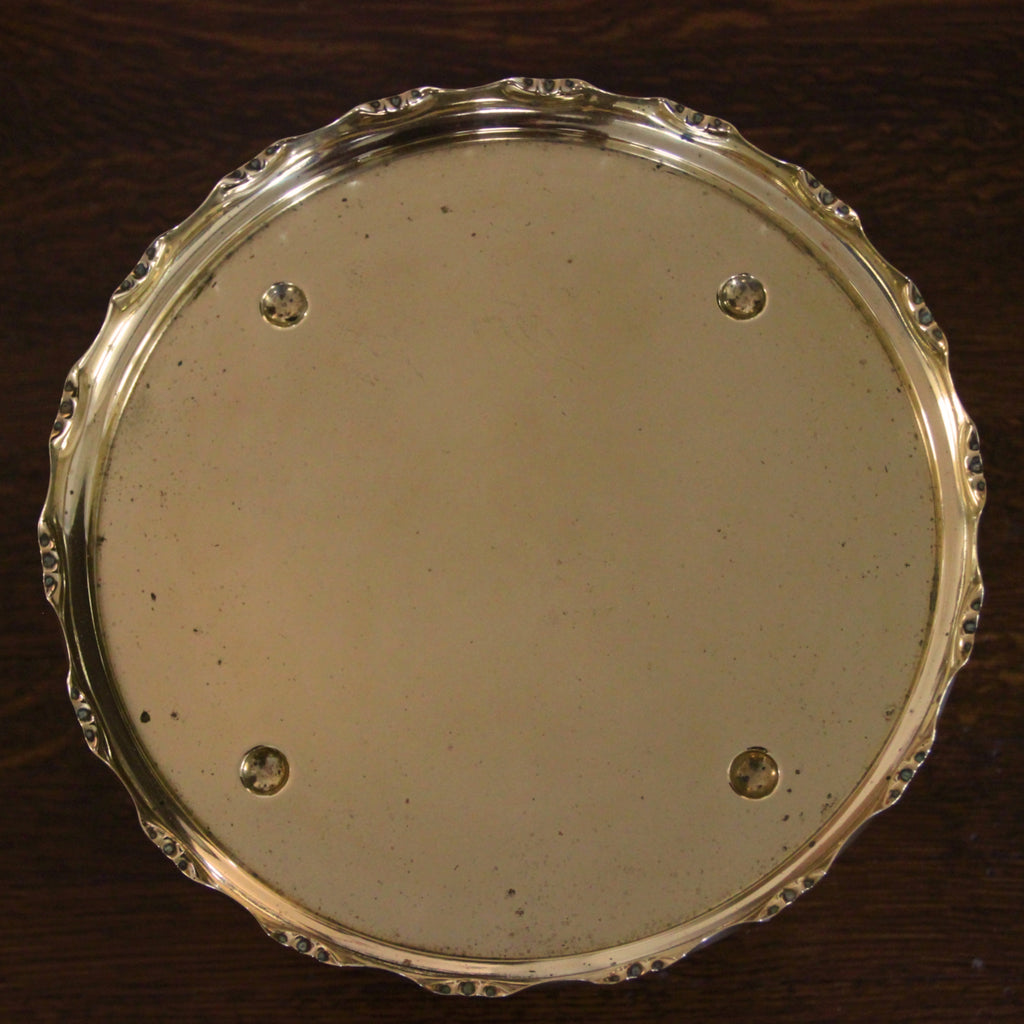
This simple tray was made by the Württembergische Metallwarenfabrik, more commonly known as WMF. It was founded in Geislingen, Germany in 1853. The company was well up-and-running (40 years old) by the time the German Jugendstil Movement was born—and WMF was well-positioned to take advantage of the trend. In fact, WMF enjoyed its heyday during the Late Nineteenth and Early Twentieth Centuries. It is possible that this tray once held a glass dish or "liner" of some sort. It holds a 12 inch plate nicely. Without a plate, it is just right as a drinks tray and would make a smart dresser or kitchen tray, too.
Cornish office clerk, Charles Thomas Eustace, returned to work after a long illness to discover that his position had been given to another person. The 59 year old father of 13 children needed to do something—and quick! He and his brother, John, opened a small copper crafts workshop in Hayle, Cornwall, their hometown. Although he knew nothing of metalsmithing, he learned the craft quickly, becaming quite proficient. Eustace admired the Keswick School of Industrial Arts and drew inspiration from their Arts & Crafts designs, despite the fact that it was now the 1930’s and the Arts & Crafts movement had pretty much ended with World War One. Fortunately, Cornwall had a community of small copper crafters which probably helped Eustace get his...
During these chilly Winter days, we are featuring a selection of trays now in-stock at LEO Design. We look-forward to the time (the sooner, the better) when we can use these trays to serve family, friends and other loved ones. The company which would evolve into Joseph Sankey and Sons was established in 1854, making simple tin trays. In the late Nineteenth Century, Sankey was joined by his brothers, by which time the company had developed a broader line of products, many of them intended for an elegant upper middle class market. With the advent of the English Arts & Crafts (Art Nouveau) movement, Sankey produced a large number of sophisticated household service pieces: trays, tankards, kettles and planters. These were made in brass, copper...
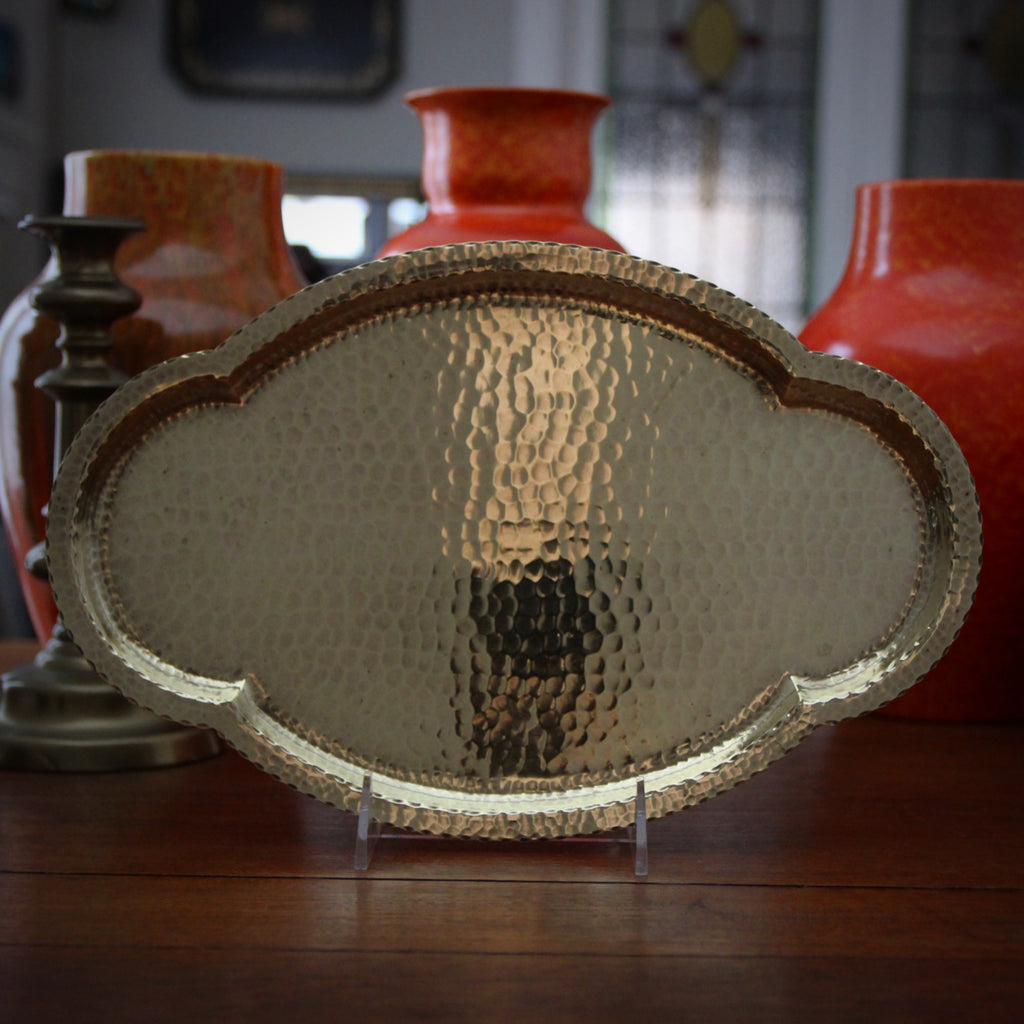
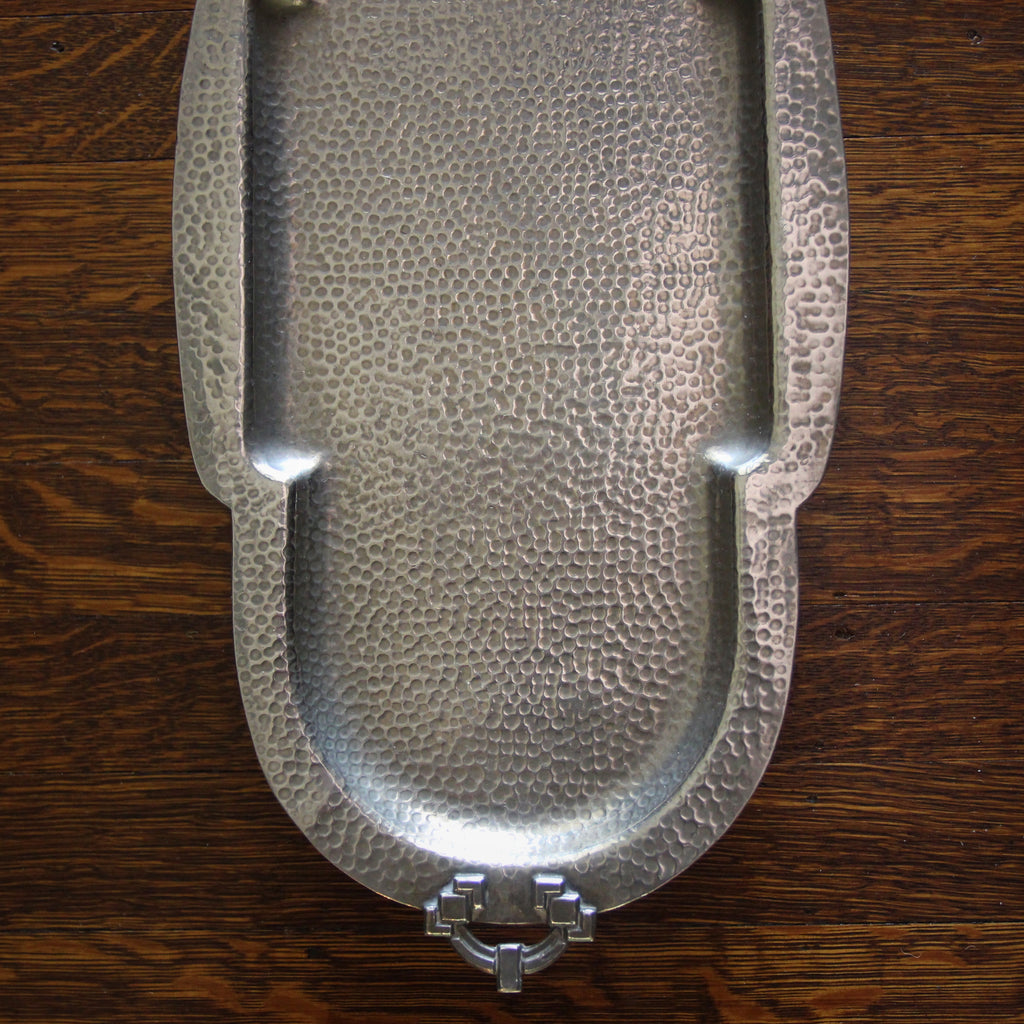
With the sweet smell of Transition still perfuming the air, we share this English hand-hammered pewter tray, made in the 1920's or 1930's. The Gothic elongate-quatrefoil silhouette and the textured peening of the metal places this tray within the English Arts & Crafts sensibility. The handles, however, provide a whisper of Art Deco style—which moves this handsome tray into the "transitional" period between the two Early Twentieth Century movements.
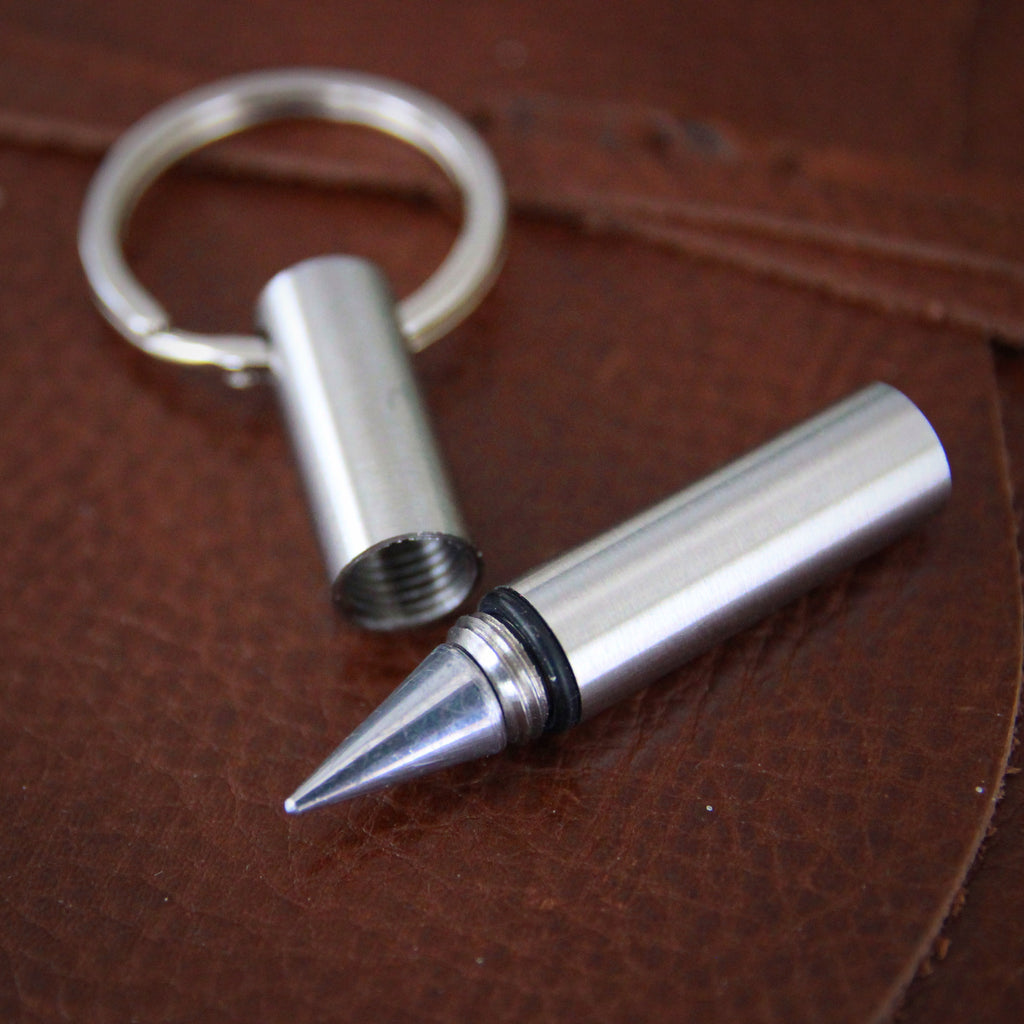
Like our other "metal alloy tipped" pen, this one writes semi-permanently and even underwater. It screws into a handy key fob, making it ready for use when you didn't bring a conventional pen.
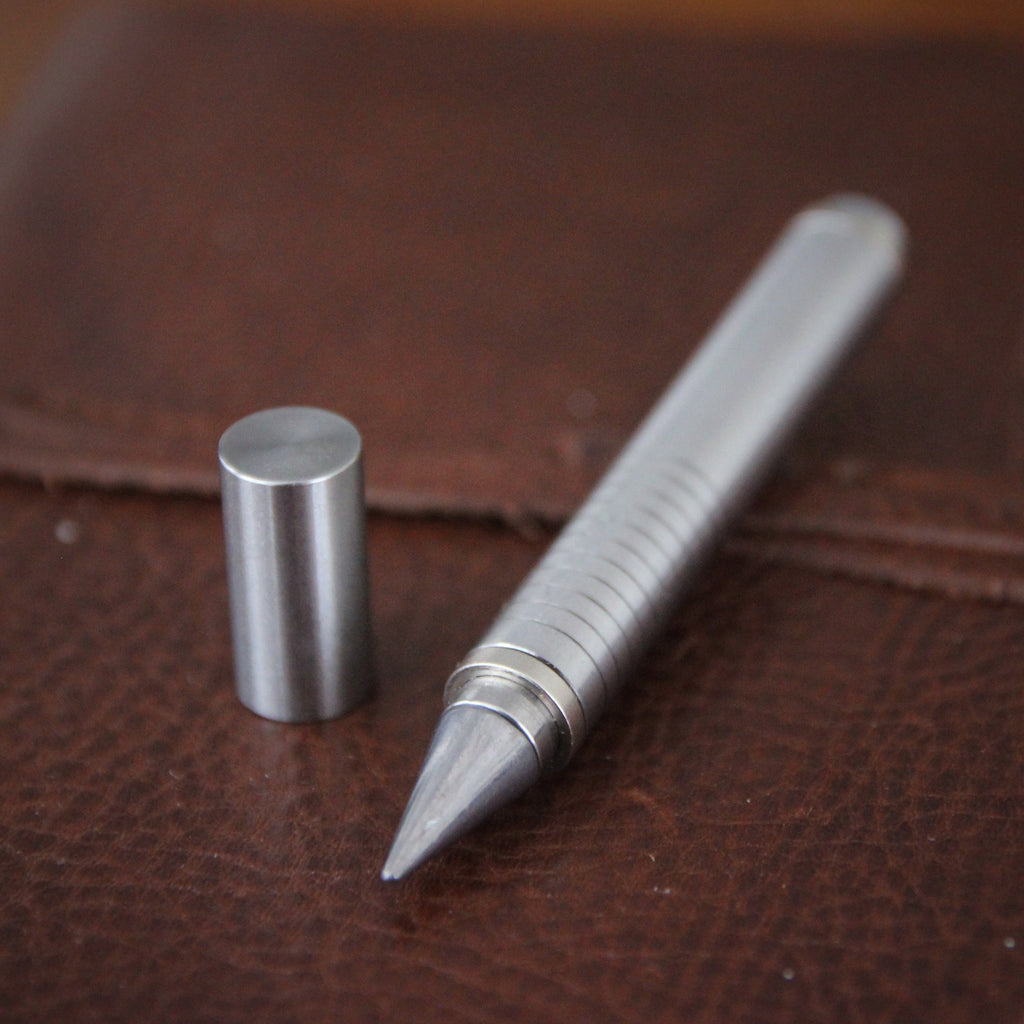
Suppose you need to write a quick note—while sitting at the bottom of a pool or diving in the deep-blue sea. This "metal alloy" pen could save the day! Its special tip writes (semi-permanently) without lead or ink. And it will even write underwater! (Waterproof paper is another matter.) When finished, cap it with its magnetic snap-on cover.
Advance your lead—with an assured click, click, click—and keep-on sketching the scene. This hexagonal mechanical pencil, made in England of brushed stainless steel, will keep writing in durable style. The faceted sides keep it from rolling-off your desk. And the supply of 2mm leads will get you through many a landscape.
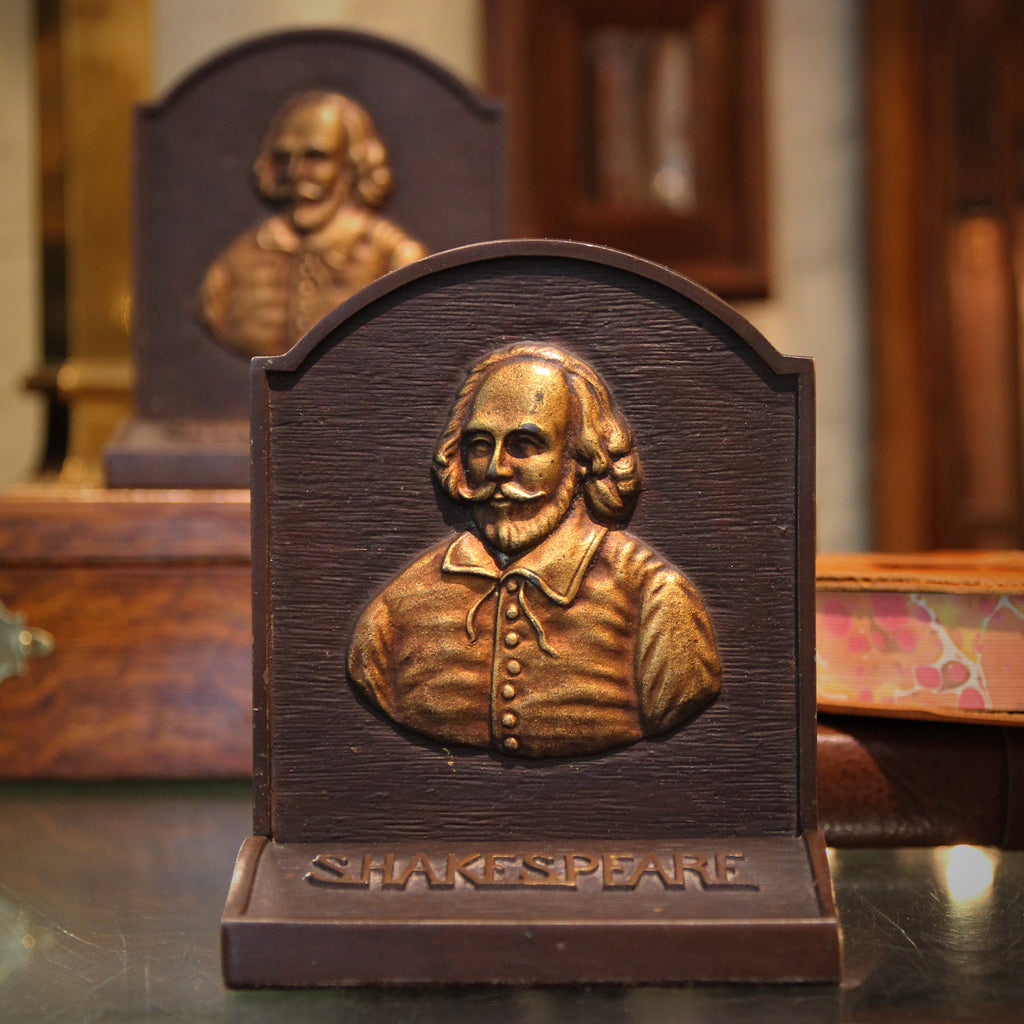
Life's but a walking shadow; a poor player, that struts and frets his hour upon the stage, and then is heard no more: it is a tale told by an idiot, full of sound and fury, signifying nothing. -William Shakespeare, Macbeth (1606) Today we shall witness a staged performance—dramatized for all the world to see—which Shakespeare described and might have predicted over 400 years ago. Elected officials (some might call them "disciples") will demonstrate their blind allegiance to their shepherd—a figurehead they venerate above party or country. They call him "The Chosen One" and they long for their master to recognize their piety and adoration. The Bard's words have proved durable; so will the judgement of history. But, perhaps, history hasn't yet...
It's here, gentle reader. The climax we've been waiting (and waiting and waiting) for: today Georgia voters will decide which candidates will represent them in the US Senate. They will also be deciding the course of American politics for the next two years (or longer).
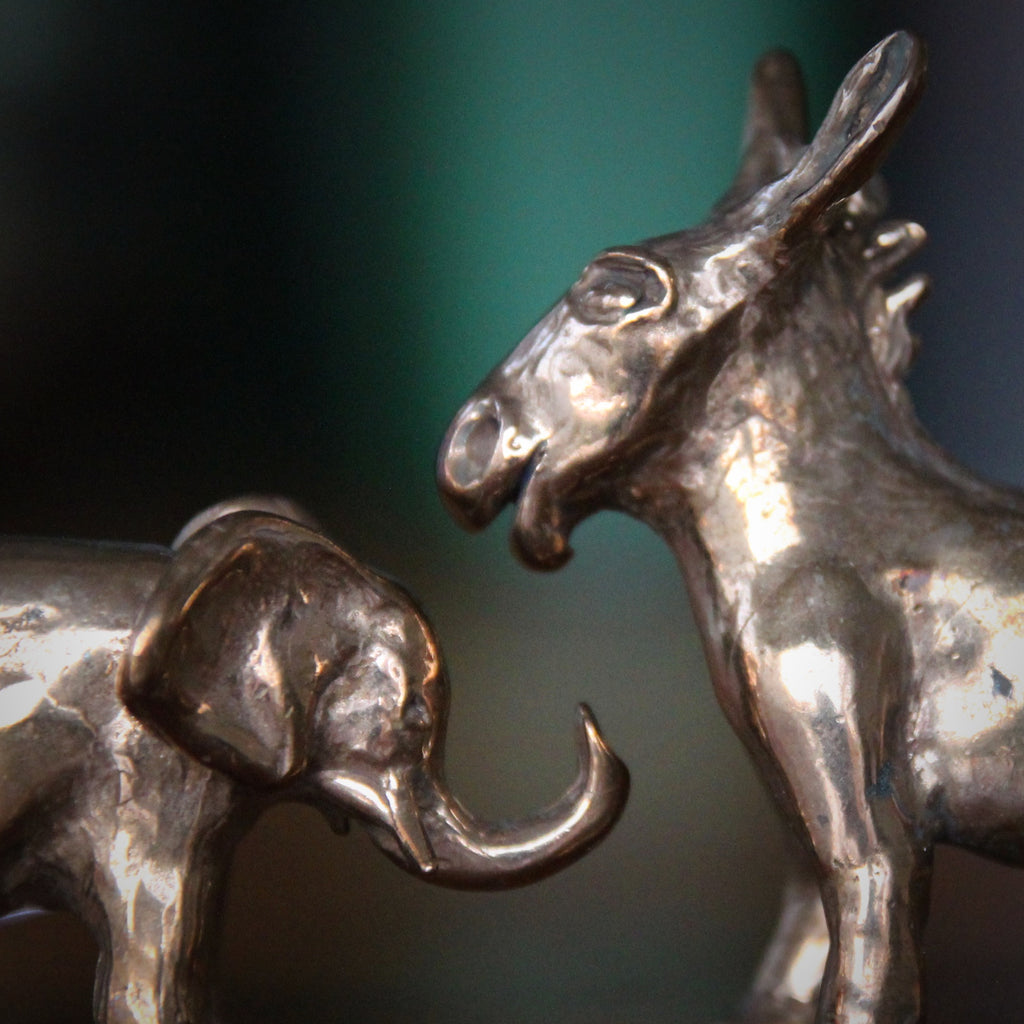
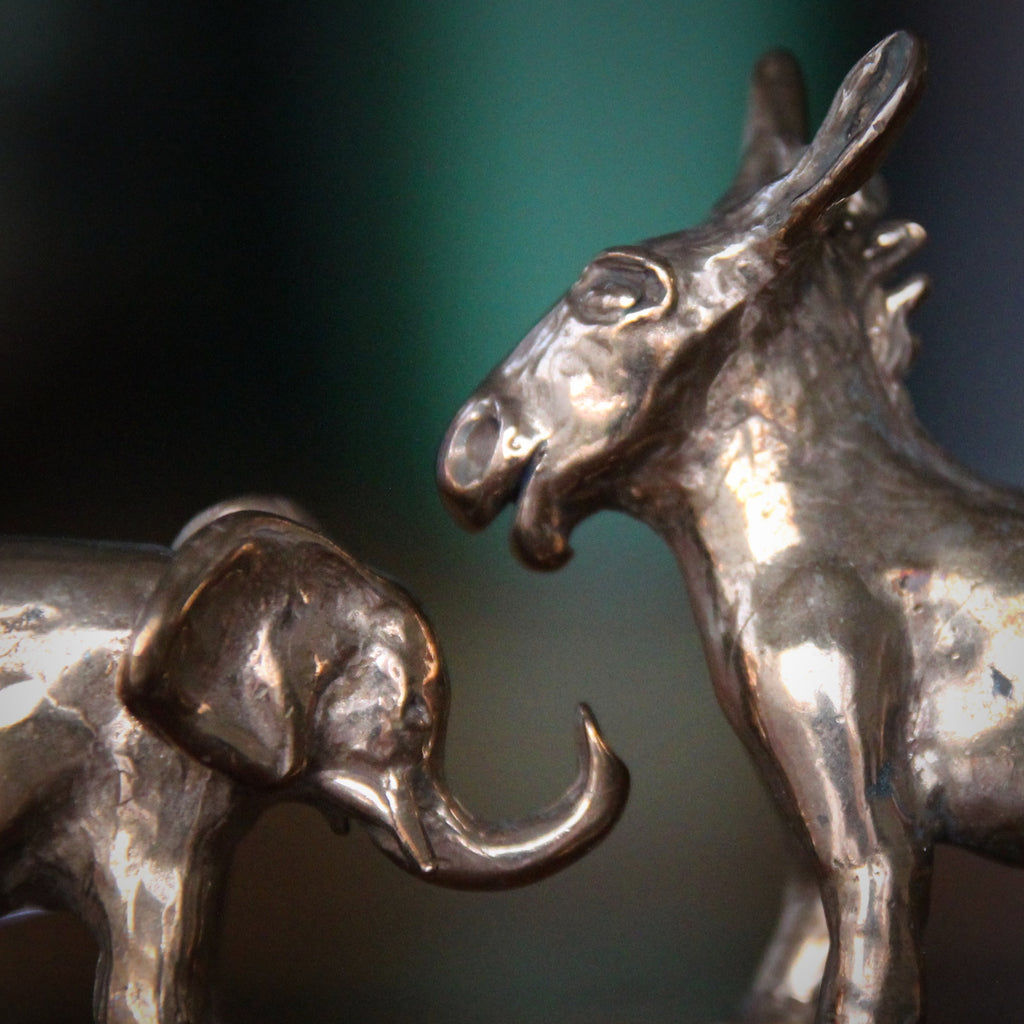
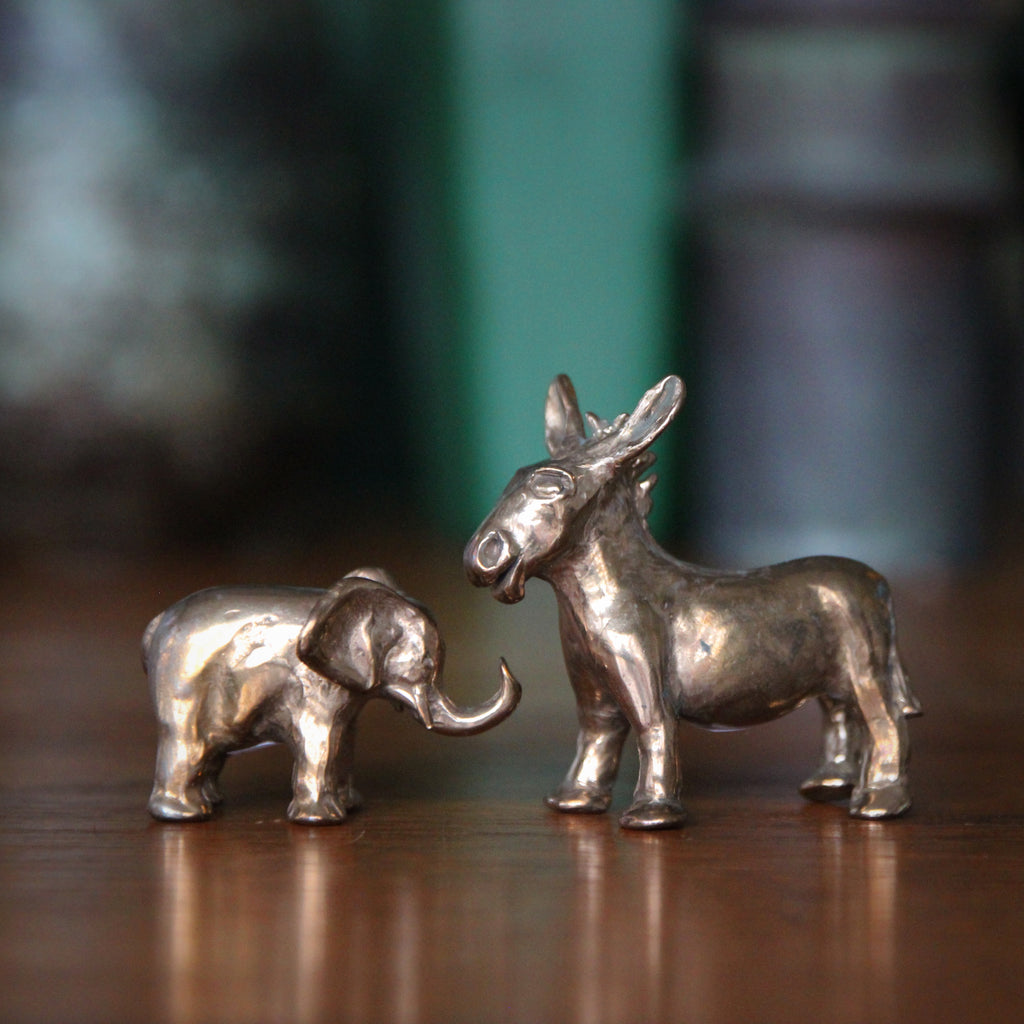
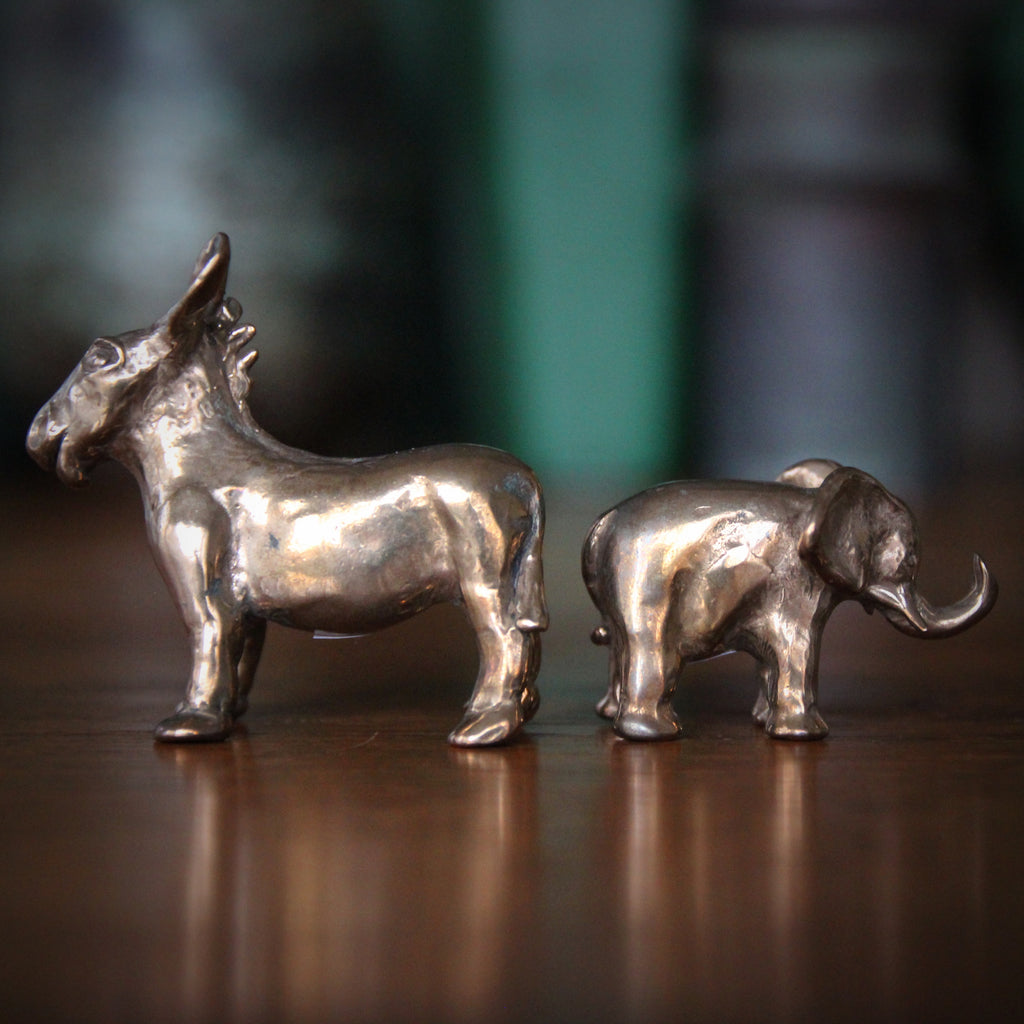
Our little cast bronze sculptures face-off in the photo above. The "Lucky Elephant" has the letters L-U-C-K stamped into the bottom of each of his feet. The "Kick-Ass Donkey" bears the letters K-I-C-K under his hooves.
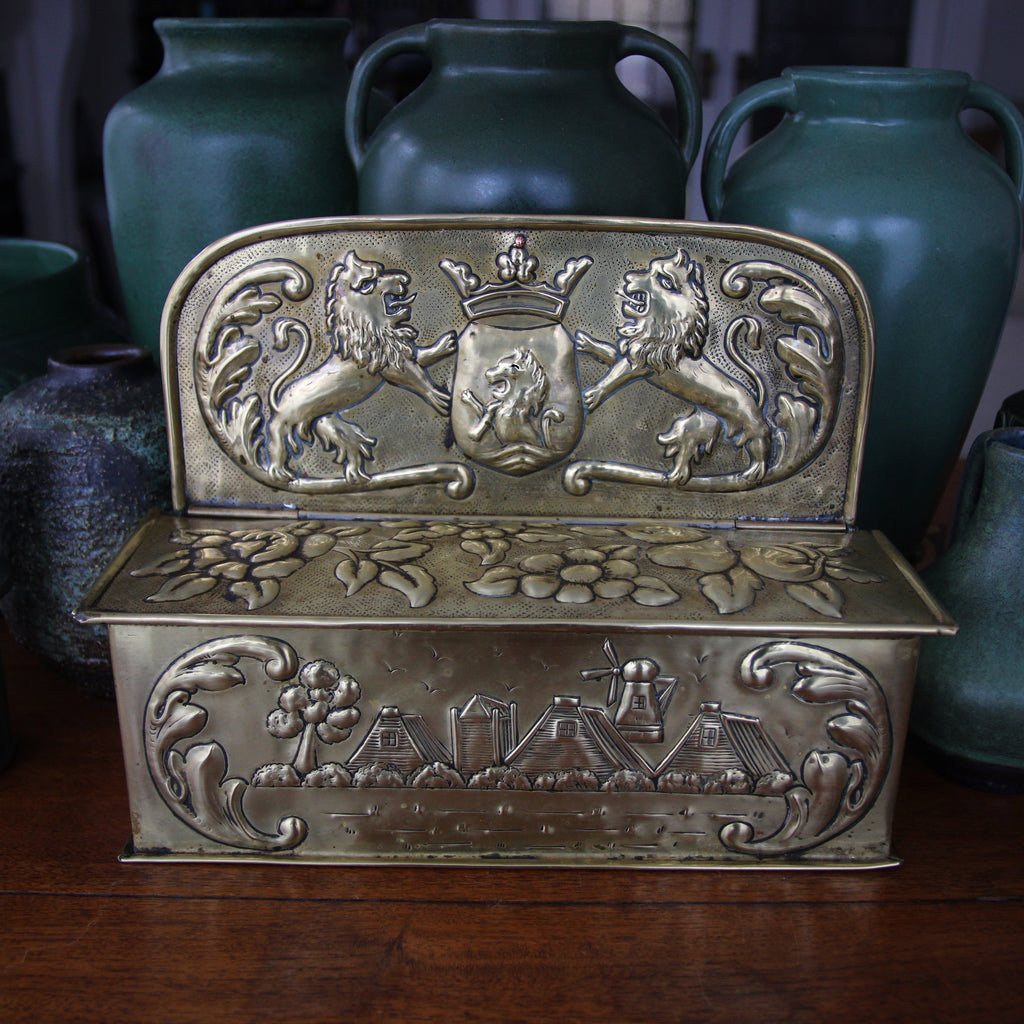
At the time this box was made, in the 1890's, most middle class British households (where a box like this might have lived) would have employed at least one or two live-in servants. Naturally, the maids, cooks and footmen (if a house was really fancy) would be expected to work on Christmas Day, serving their employers. Thus came "Boxing Day," the day after Christmas and the traditional date on which servants would receive their "boxes" (containing gifts or money or both) and have their day off. To this day, England (and the other Commonwealth countries) celebrate Boxing Day—not so much as a day off for servants but as a national holiday for all. The English Arts & Crafts brass candle box, shown above, was...
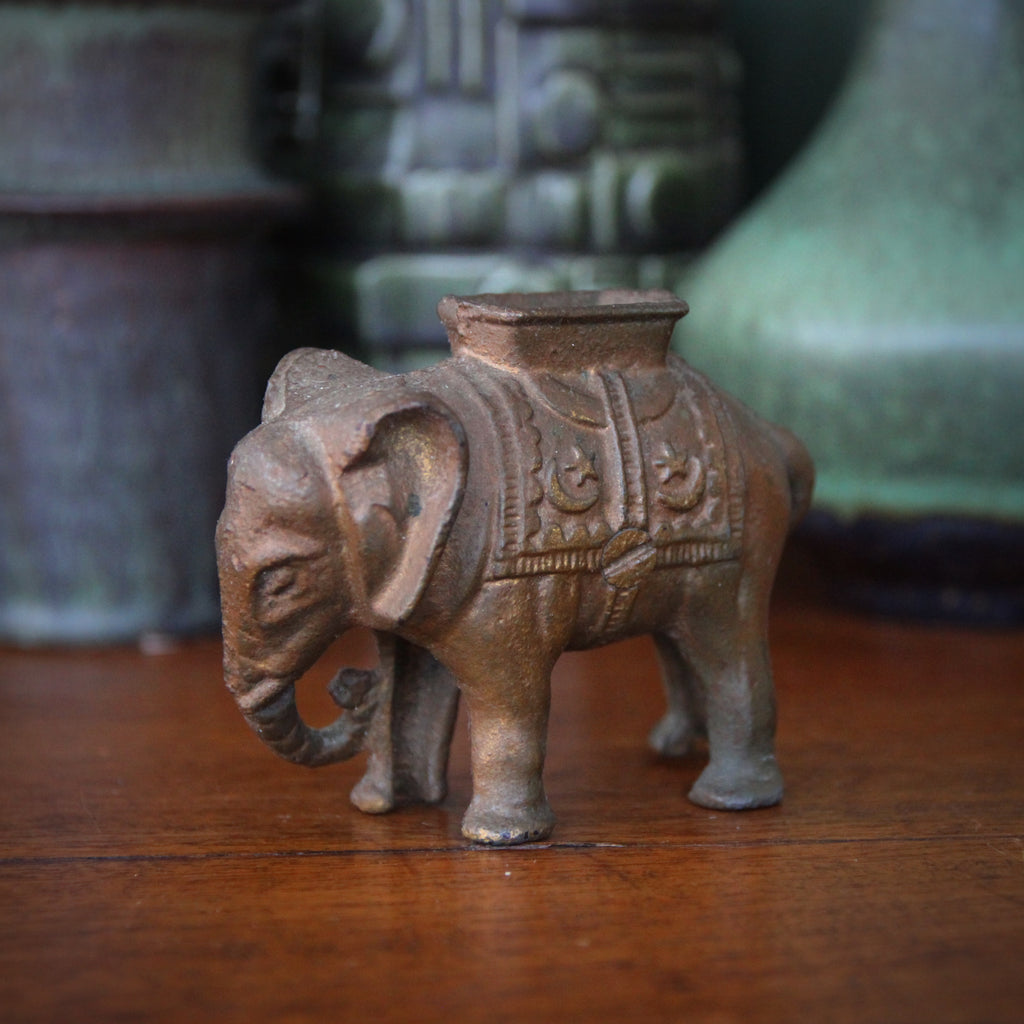
This stately elephant sways patiently while waiting for payment. He's a turn-of-the-century cast iron coin bank, still showing traces of his original gold paint. Click on the photo above to learn more about him.
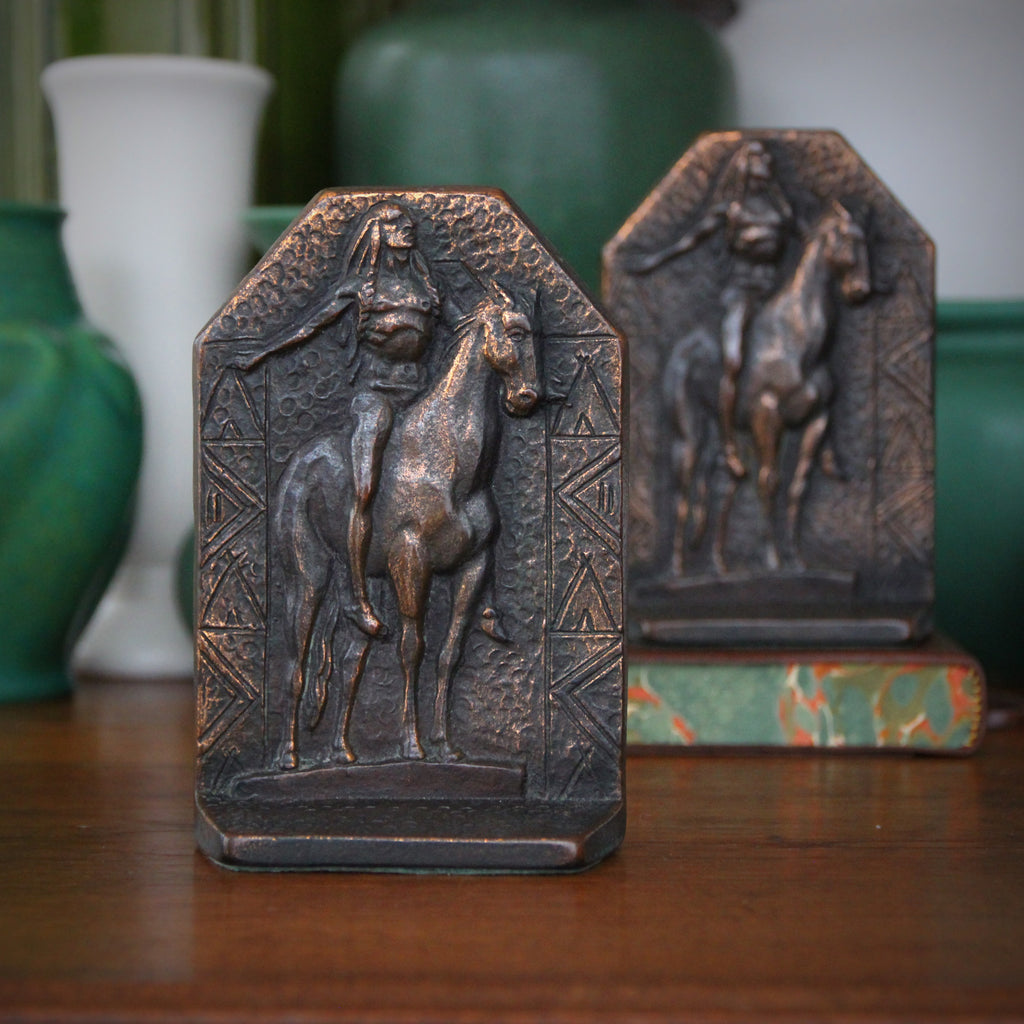
American sculptor Cyrus Edwin Dallin (1861 – 1944) was born in Utah and grew-up around many Native Americans, children and adults. He developed a sympathy to their history and their difficult plight. Dallin created a cycle of four sculptures portraying mounted Indian horsemen. His masterpiece, “Appeal to the Great Spirit,” was cast in Paris and unveiled at the Paris Salon of 1909—where it won the gold medal. It became popular immediately—especially in America—and the image has been used everywhere from advertising to album covers. Smaller copies of the work have been made and installed across the country. One version is part of the White House’s permanent collection and was used to decorate President Clinton’s Oval Office. The original was installed in the forecourt of Boston's...
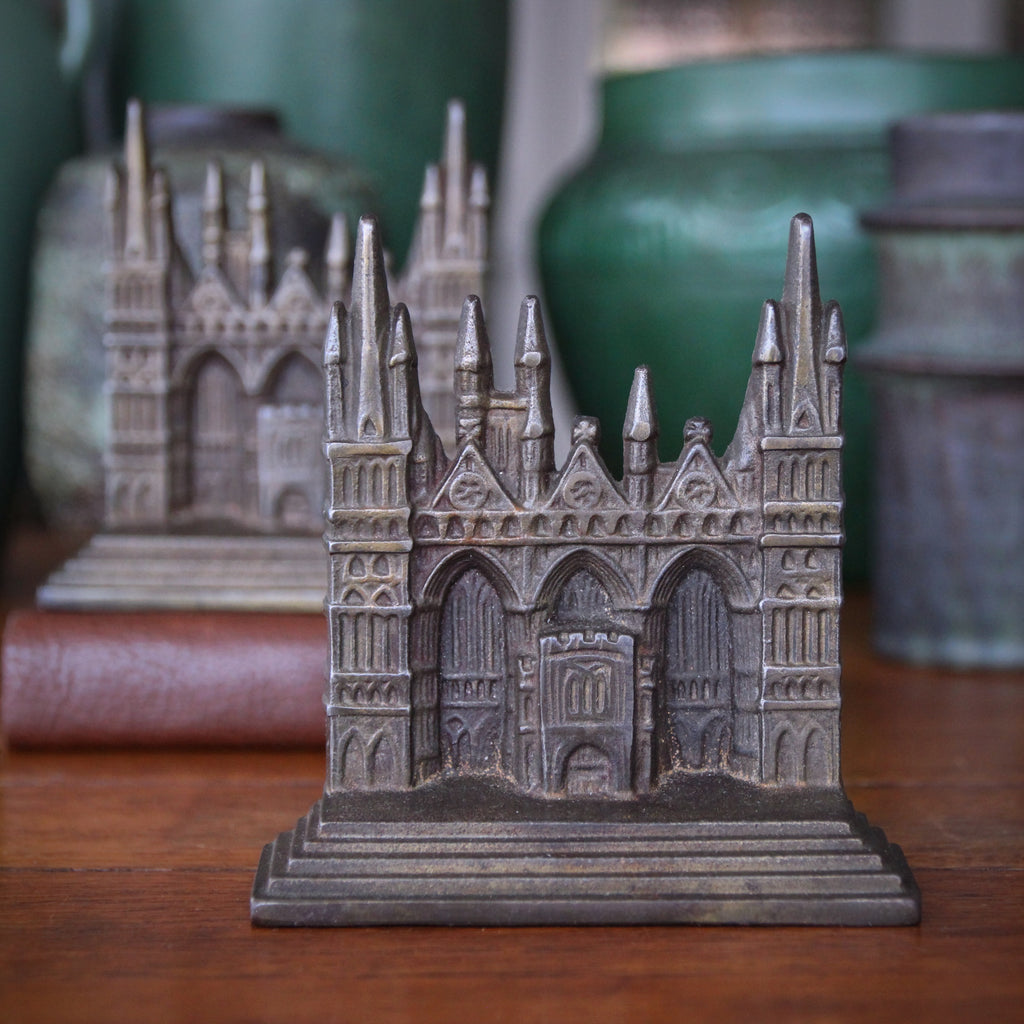
Some 85 miles north of London stands Peterborough Cathedral, one of the great churches of Britain. Principally built between 1118 and 1237, this English Gothic masterpiece stands on the site of an earlier church, founded in 655. Saints Peter, Paul and Andrew look down from the three central gables, appropriate as the cathedral's official name is the Cathedral Church of Saint Peter, Saint Paul and Saint Andrew. The church was originally a Catholic house of worship. When Henry VIII "dissolved the monasteries"—thus stripping the churches of their precious objects and banning Catholic worship—it was converted to an Anglican cathedral. But Henry's first wife, Catherine of Aragon, had already been buried in the church—and remains there to this day. Later, the Scottish...
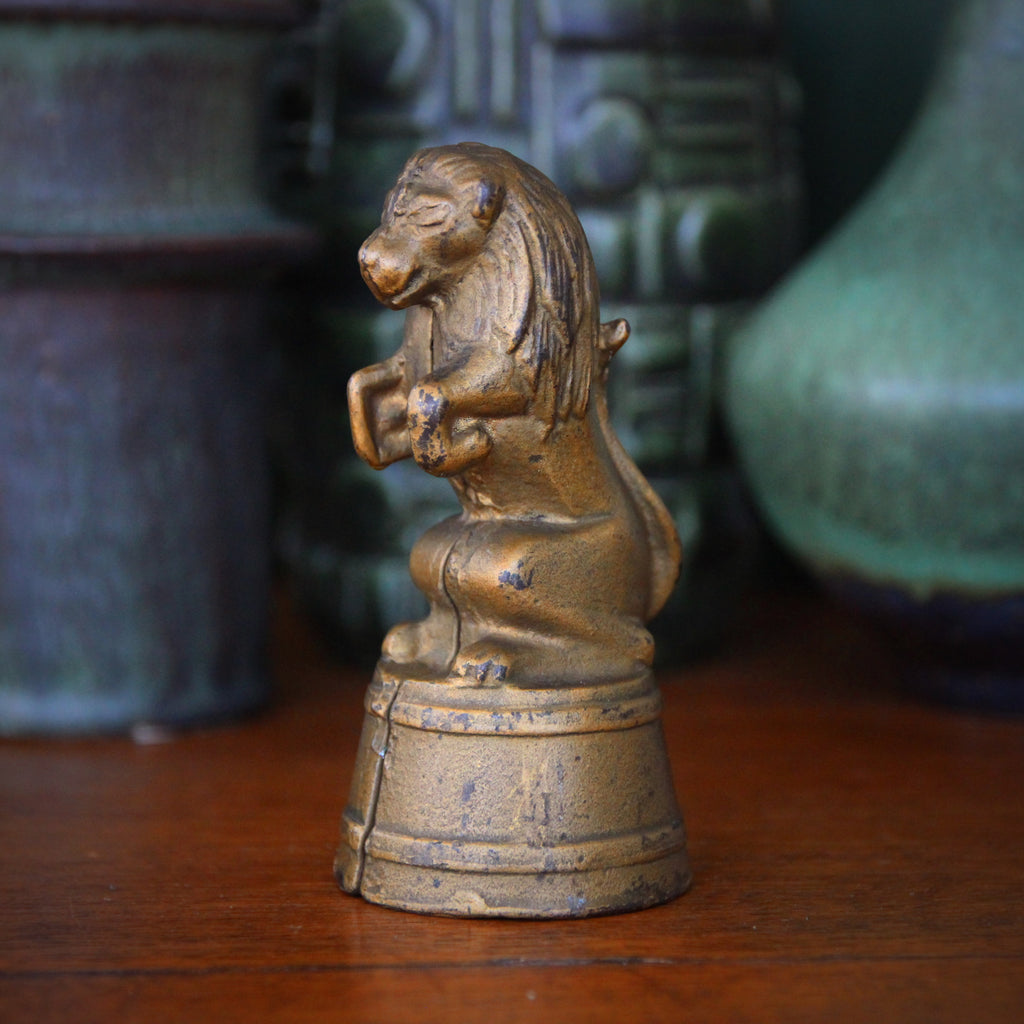
No lion. Christmas is less than one week away! This jolly lion, posing proudly atop his barrel, has run away from the circus and is looking for a good home. He still wears his original gold paint and will happily guard your coins (he's a bank). Click on th photo above to learn more about him.
Call me an Aesthete. Like those dandies of the Late Nineteenth Century, I do believe in "Beauty for Beauty's Sake." Why shouldn't something look good?
Like a painting: do I really have to wake up to a picture which "challenges" me? Isn't it enough to be moved by a favorite color palette? Or remembrances of a place with happy memories?
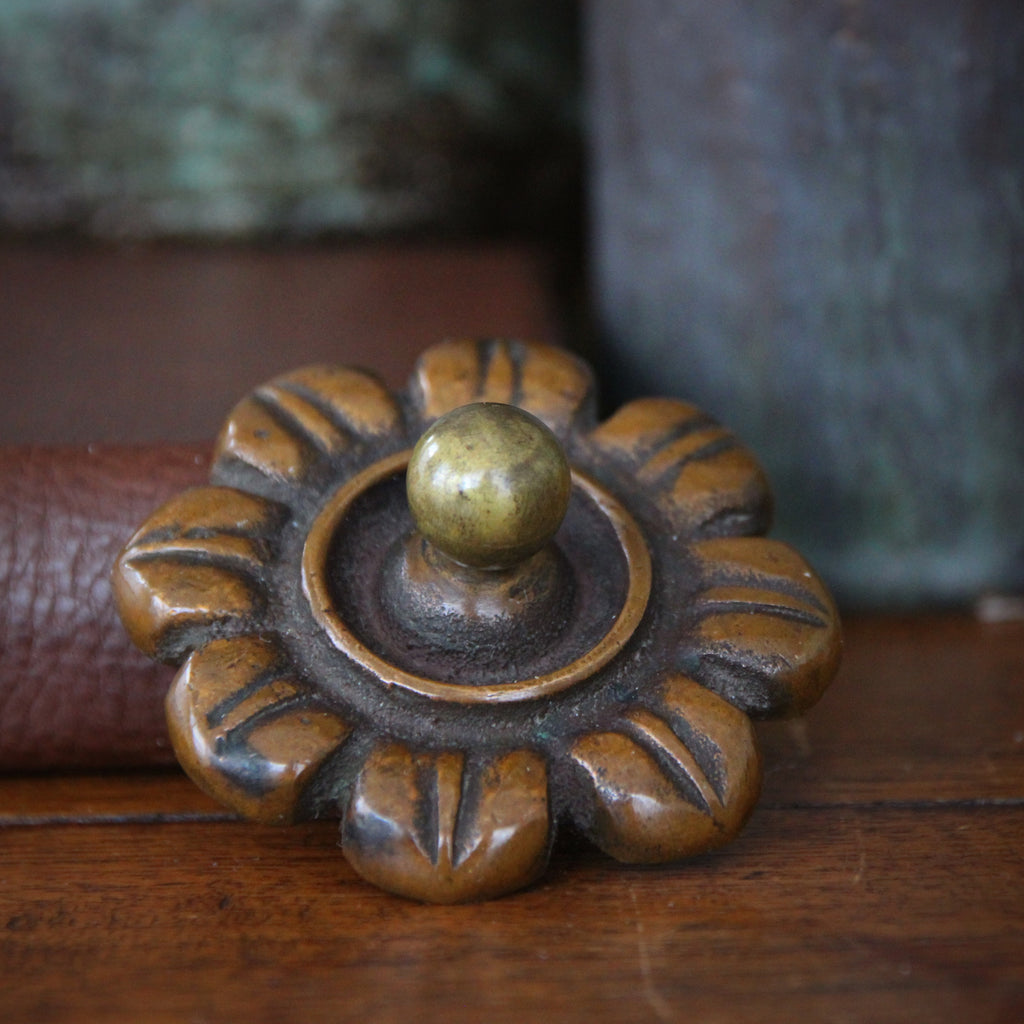
"'Tis a gift to be simple" are the first few words of the Shaker hymn, attributed to Joseph Brackett (written in 1848). And it is true: sometimes the simplest things can give the most pleasure—like this simple cast bronze "correlated" (that is, "with petals") paperweight. Years of oxidation have given it a rich, brown patina. But the spherical knob shows the slightly polished result of years of handling. Please click on the photo above to learn more about it.
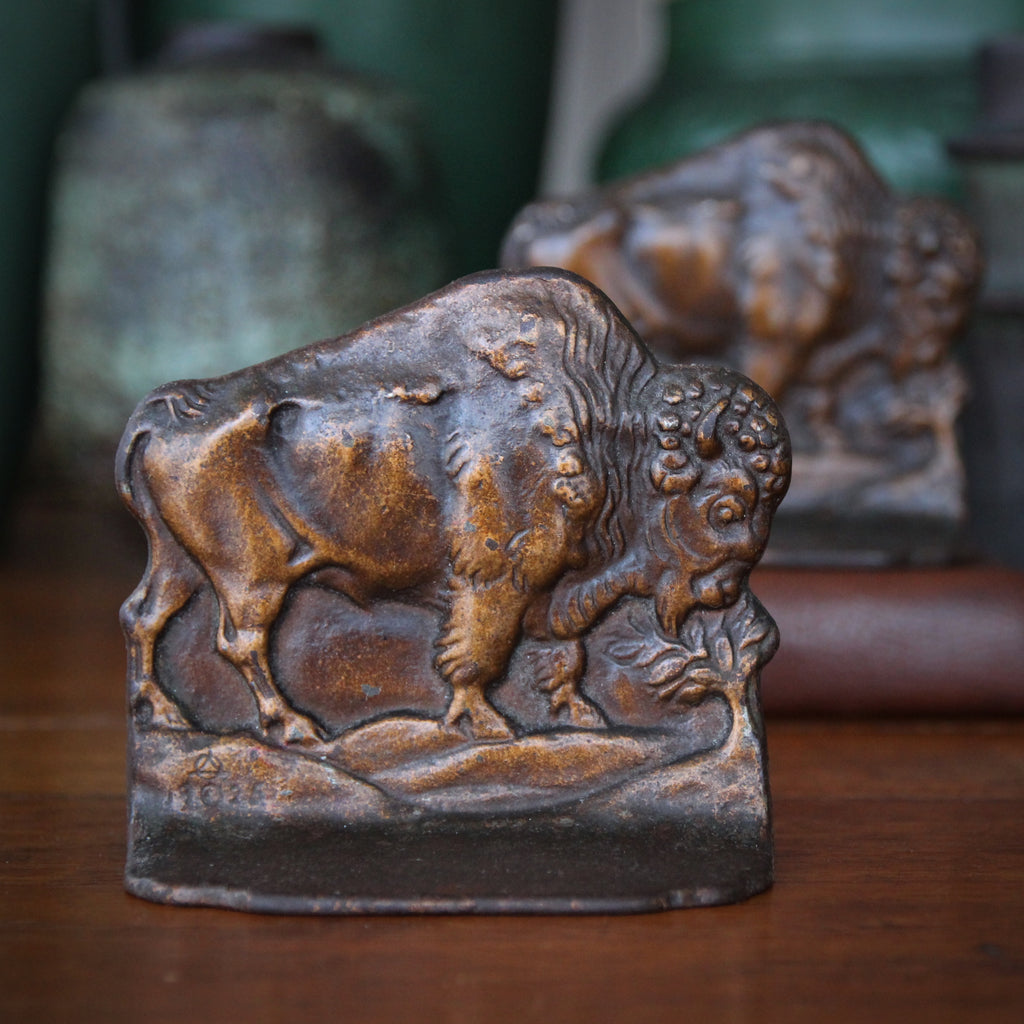
Sticklers inform us that there is no such creature as an "American Buffalo." Buffaloes, the pedants contend, live in South Africa (as Cape Buffalo) and in Southeast Asia (as Water Buffalo). "Bison," they inform us, are the creatures found "Home on the Range" (with the deer and the antelope). Technically, these spoilsports are correct. Nevertheless, there is a long written record of the word "buffalo" being used to refer to the American Bison—not to mention all the popular songs, images and folktales. For millenia, bison roamed much of North America: Alaska, Canada, the United States, and part of Mexico. But hunting of the shaggy bovids decimated their numbers; the bison population fell from a high of 60 million (in the...
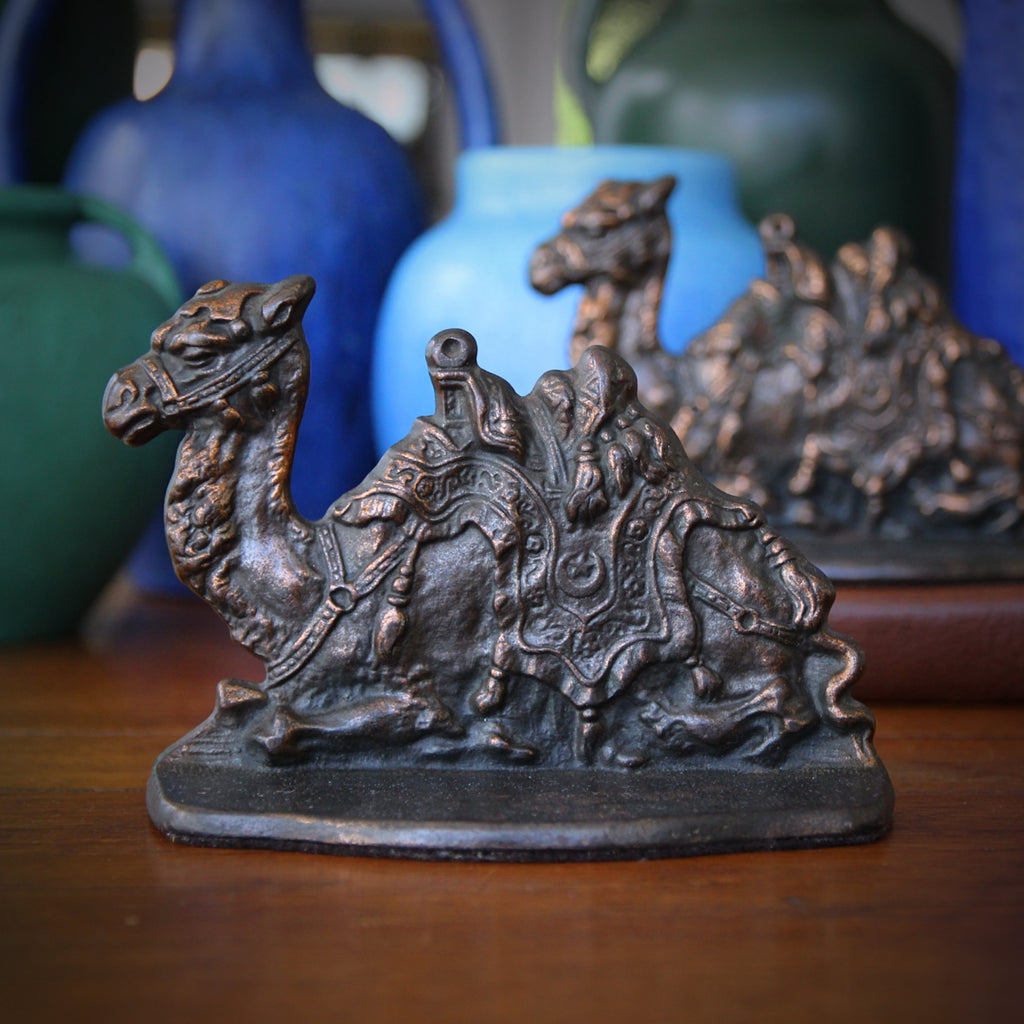
As wonderful as these cast iron bookends from the Twenties are, the camels they depict are even more remarkable creatures! Their ability to survive in harsh, arid climes have earned them the nickname "The Ships of the Desert."
There are two basic varieties of domesticated camels: the single-humped Dromedary Camel found in Arabia (94% of camels) and the larger two-humped Bactrian Camel of Central Asia (Afghanistan, Uzbekistan, Tajikistan). Camels were first domesticated around 3000 years BC—and have been a reliable source of milk, meat and transport ever since.
"If you're going though Hell, keep going." - Winston Churchill Remember national leadership? Admittedly, 2020 was a tough year. But it was hardly the worst year in human history. In fact, it was not even the worst year in American history. And yet, we still pine for the days when our national leader would actually . . . well . . . lead. One could do worse than to study Winston Churchill for lessons in leadership. His famous saying, quoted above, didn't paint a rosy picture. Churchill didn't try to distract, dissemble or deceive. Churchill didn't tell the British people that they were "rounding-the bend." He acknowledged the challenges they faced and told his people to push-on. People find comfort...
At the heart of The Eternal City lies the "Forum Romanum"—an expansive, sunken field of remarkable (though ruined) temples, arches and remnants of other ancient buildings, most over 2,000 years old. The Roman Forum was the center of life in the bustling ancient city, the place where government activity, judicial trials, mercantile trading, even gladiatorial events competed for space cheek-by-jowl. And for five centuries (from the Renaissance to the present), the Forum has provided rich inspiration for artists, architects and designers, each seeking insight into the timeless, classic beauty of a romanticized past.
The Art Nouveau Movement sprung-up in many different countries around the world—mostly within a three decade period (about 1890 through the Teens). In general, the different "schools of design" (which had different names in different places) marked a decisive break from the prevailing popular style—and relied on greater handcraft, "honest materials," and simplified, organic design. Some of these movements originated with a social, political, or national philosophy. But the Art Nouveau aesthetic was also utilized in some commercial-scale production (a seeming contradiction, given the earliest roots of the movement). In Germany, the Art Nouveau aesthetic was called Jugendstil—the "Young Style" (or the "New Style). Like its other Art Nouveau cousins, the German version utilized materials in their natural form (like...
Christmas is but one month from today! Enter three "wise men"—following a star, seeking the truth, bearing their gifts. Though we usually envision the "kings" carrying grandly theatrical and precious canisters (holding the gold, frankincense and myrrh), in truth, the travelers probably carried caskets or covered vessels that were far more modest—like the copper canister shown above. Though humble, this canister exhibits the skill of a talented artisan—who hammered the piece freehand, from a single ingot of copper, using only a hammer, tongs and an anvil. No mould or form was used—just a variety of hammers with differing peens—and the craftsman needed to 1) raise the piece from the ingot, 2) create a balanced form in the correct shape, 3)...
We're now two-thirds of the way through Autumn—and the temperature is really starting to decline. It's time to finish putting-away my plants for the winter, to cut back anything that will hibernate through the cold and (hopefully) come back next spring, and to turn-off the water sources to outside spigots and hoses.
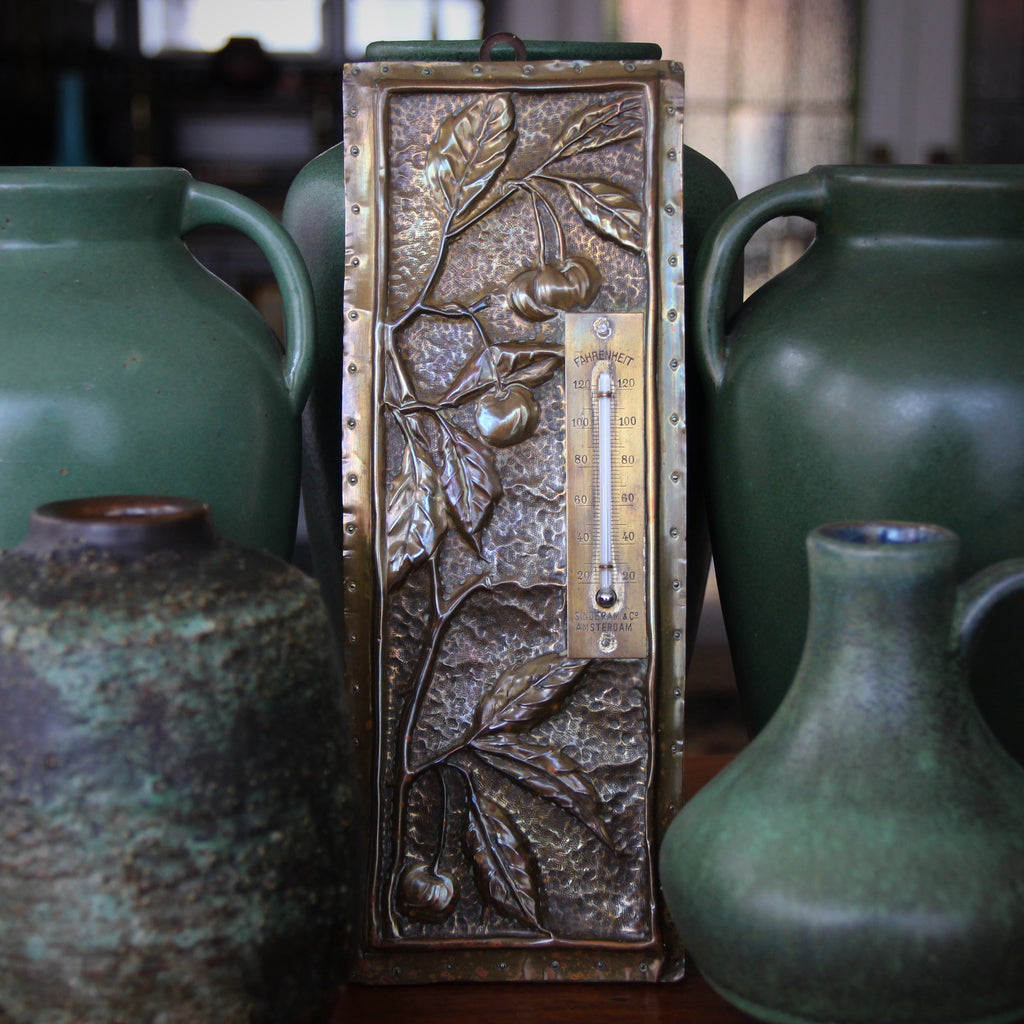
Embrace the chill in style with this English Arts & Crafts "thermometer plaque." While the mercury thermometer is Dutch-made, the hammered-brass plaque is pure English Arts & Crafts (c. 1900). Summery cherry branches bear fruit and leaves—reminding us that Summer does come back every year.
The base of this Edwardian English desk bell is solid cast brass. But the dome—the "musical part"—is cast of polished "bell metal" which is a variety of bronze which produces a beautifully resonant "ding!" It was made around 1910 and would have sat on a hotel reception desk or a smart shop counter.
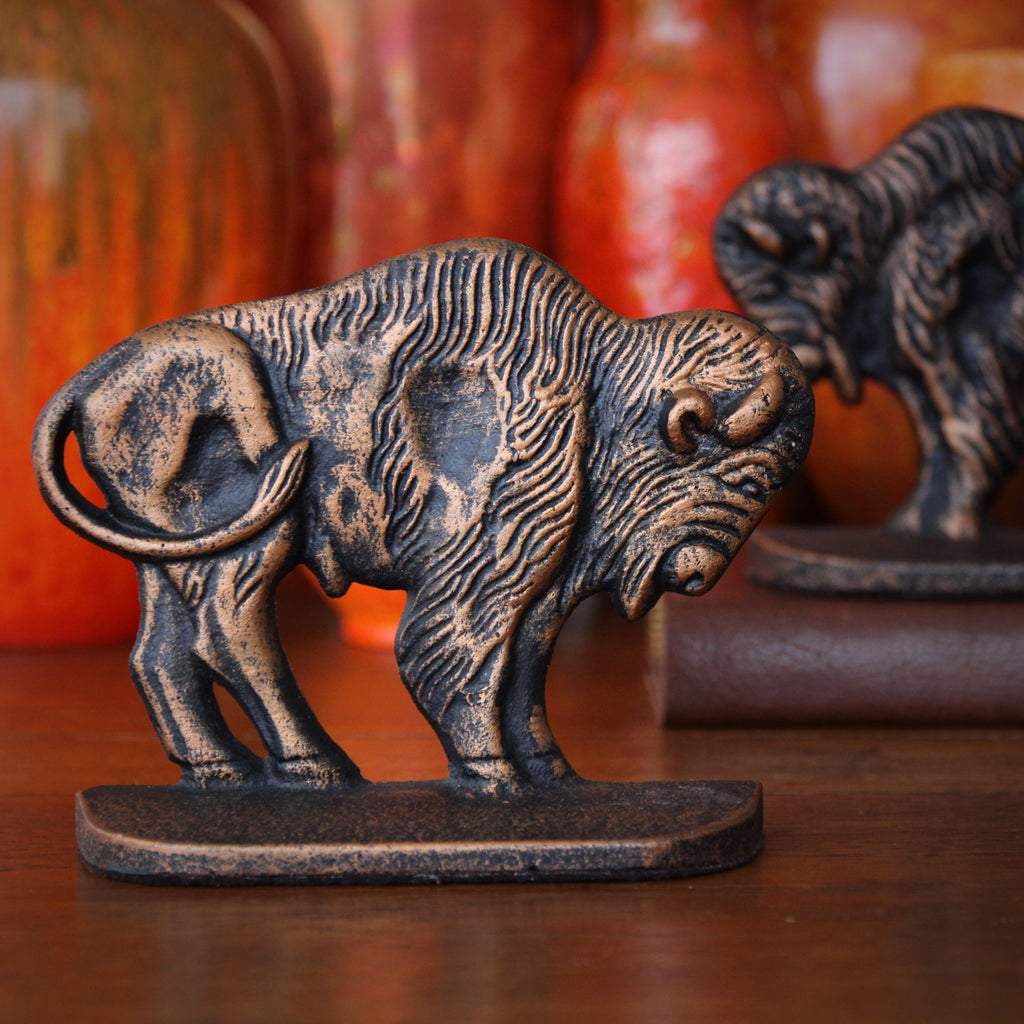
Most pairs of bookends comprise two interchangeable members—two bookends from the same mould, modeled identically. This was a concession to ease and expense (and usually worked just fine for most purposes). But, when a bookend maker wanted to take things to the next level, they created a "mirrored" pair of bookends, like the Bisons shown above. To make a mirrored pair of bookends required a lot more work—at every stage of design, production and handling. First, two different models needed to be crafted (one facing in each direction). Likewise, two different moulds needed to be made and maintained. Then, as the bookends were finished, packed and shipped, it was not enough to just grab two bookends; rather, a pair had to...
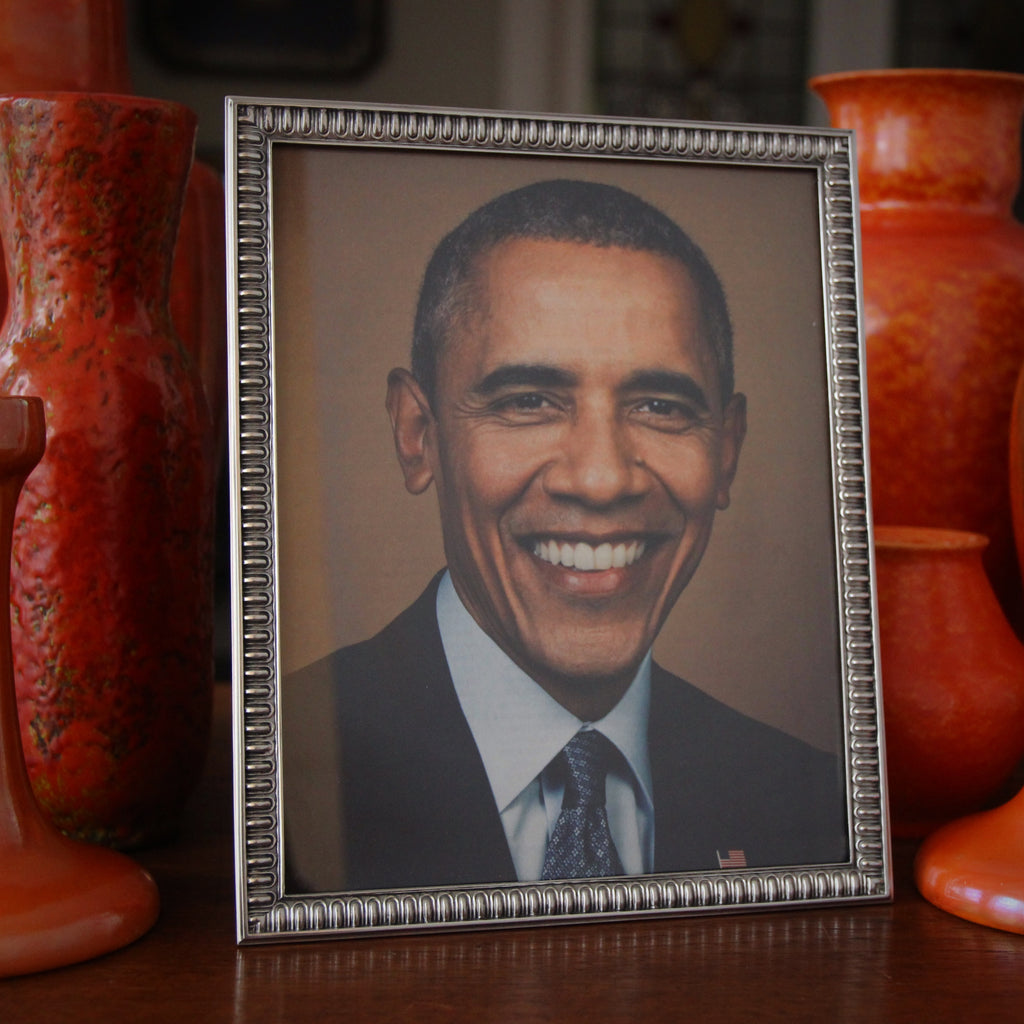
This week I am sharing some of my favorite pewter photo frames with you. Sadly, the New York City workshop which designs and produces these frames is closing after 40 years of quality manufacturing. As of today, I still have a nice assortment of styles and sizes, though, alas, I will no longer be able to replace the pieces as they sell. Click here to jump to the LEO Design "Frames" offering and scroll downward to the pewter frames. Let's end with LEO—or, rather, two LEOs! Our 44th President (indeed, a LEO) beams, surrounded by a frame decorated with stylized "Lion's Claws." It's one of the heavier frames in the collection, designed with substance and gravitas. Click on the photo...
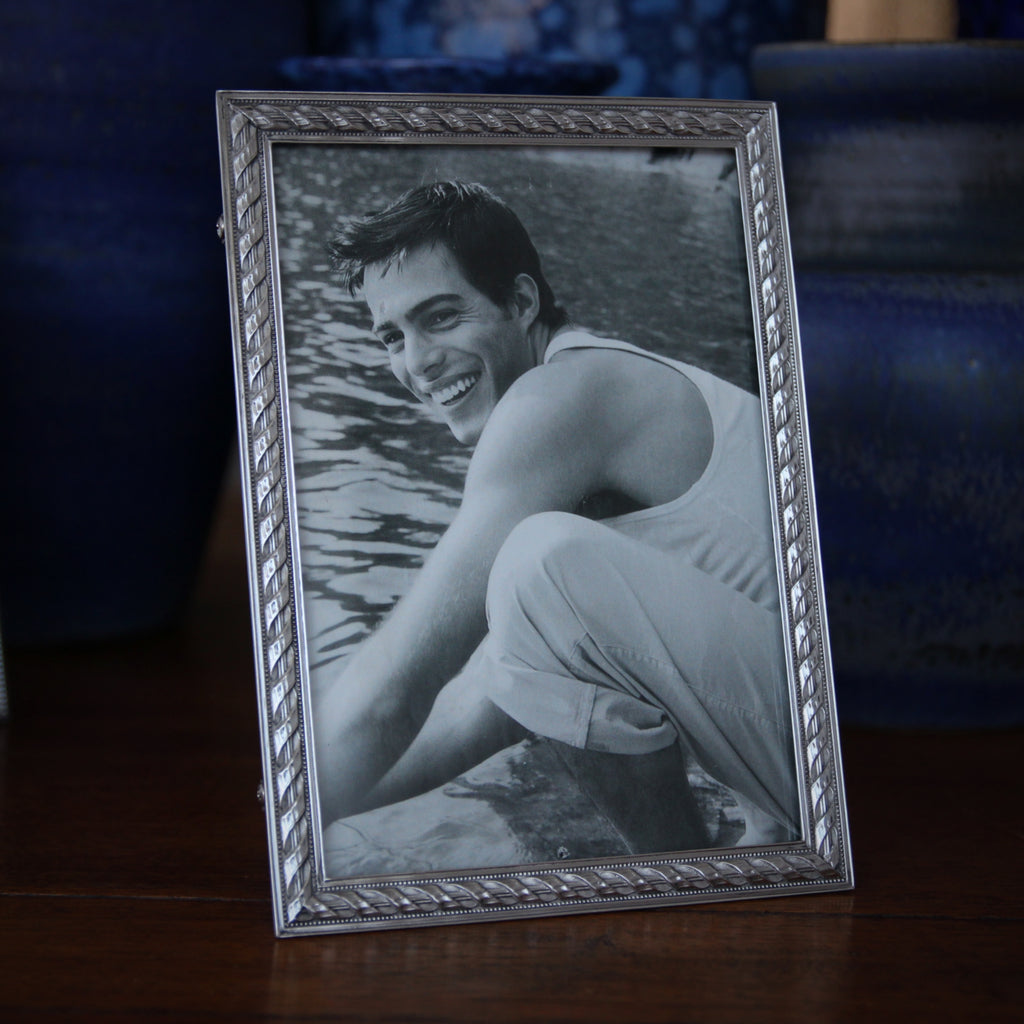
This week I am sharing some of my favorite pewter photo frames with you. Sadly, the New York City workshop which designs and produces these frames is closing after 40 years of quality manufacturing. As of today, I still have a nice assortment of styles and sizes, though, alas, I will no longer be able to replace the pieces as they sell. Click here to jump to the LEO Design "Frames" offering and scroll downward to the pewter frames. This frame style, surrounded with a twisting "rope" border, is the first style I ordered for the shop. It is such a classic—and always perfect for your photo of an "outdoorsy" scene, anything nautical or a handsome son or grandson. Click on...
This week I am sharing some of my favorite pewter photo frames with you. Sadly, the New York City workshop which designs and produces these frames is closing after 40 years of quality manufacturing. As of today, I still have a nice assortment of styles and sizes, though, alas, I will no longer be able to replace the pieces as they sell. Click here to jump to the LEO Design "Frames" offering and scroll downward to the pewter frames. If you're looking for a subtle, understated frame, this option may be your best choice. While the frame design does nothing to compete with the photo (in fact, it rather recedes), it is certainly not boring (see the detail shot, below). And,...
This week I am sharing some of my favorite pewter photo frames with you. Sadly, the New York City workshop which designs and produces these frames is closing after 40 years of quality manufacturing. As of today, I still have a nice assortment of styles and sizes, though, alas, I will no longer be able to replace the pieces as they sell. Click here to jump to the LEO Design "Frames" offering and scroll downward to the pewter frames. This handsome "Checkerboard" frame is both classic and quite modern. It has a crisp and orderly border design which is fashion-forward and, yet, timeless. This example shows a 3" x 4" size (though other sizes are also available). Please click on...
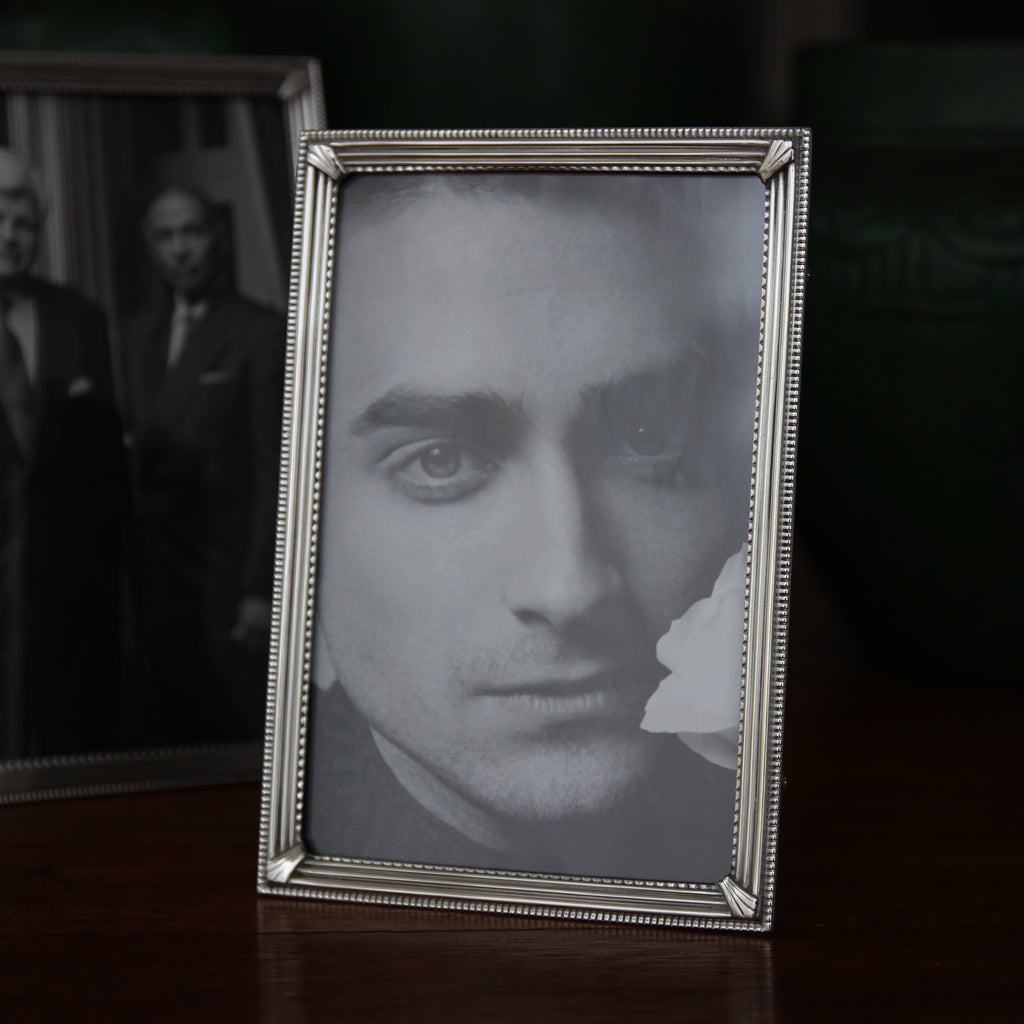
This week I am sharing some of my favorite pewter photo frames with you. Sadly, the New York City workshop which designs and produces these frames is closing after 40 years of quality manufacturing. As of today, I still have a nice assortment of styles and sizes, though, alas, I will no longer be able to replace the pieces as they sell. Click here to jump to the LEO Design "Frames" offering and scroll downward to the pewter frames. The Art Deco period may be the high-water mark of commercially-produced photo frame design and manufacturing. Such classic Deco style takes center stage in this frame—crisply-ribbed & beaded and punctuated with corner scallops which draw the eye centerward. Click on the photo...
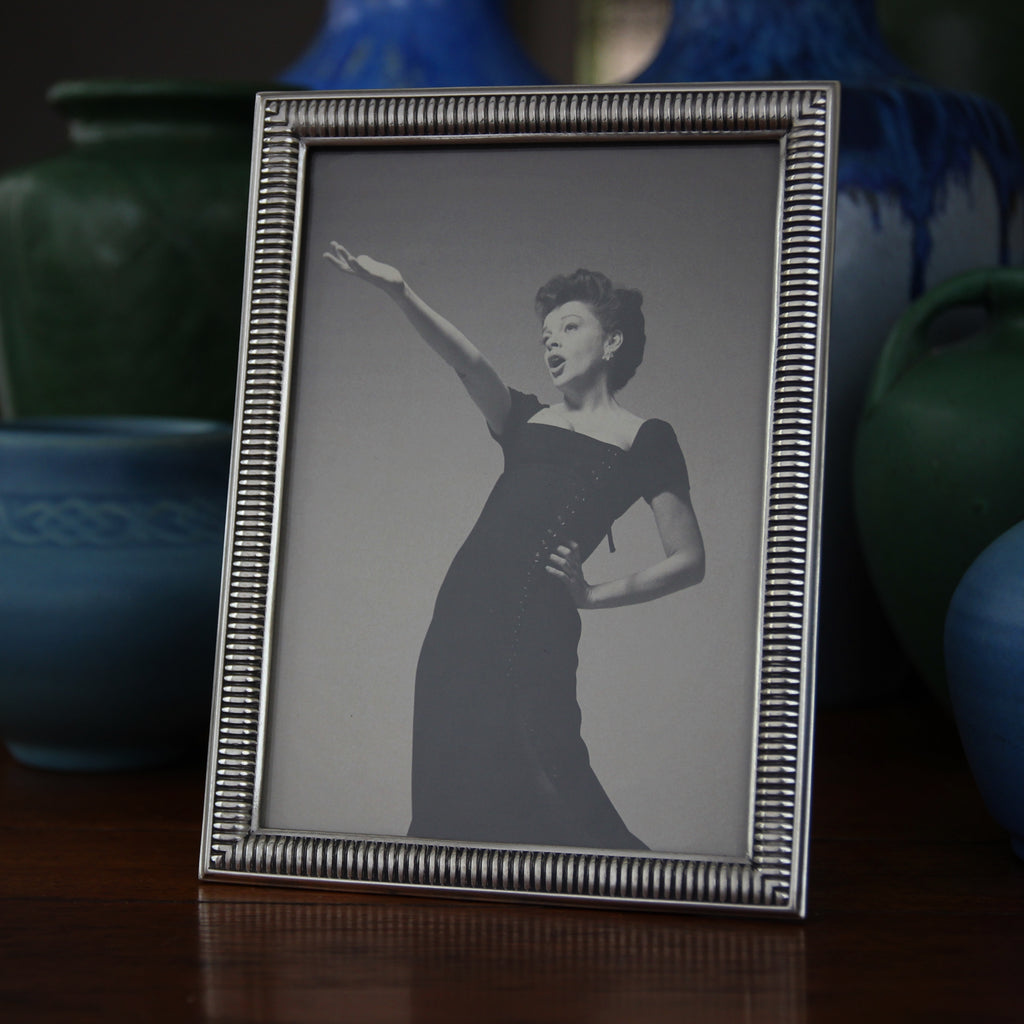
This week I am sharing some of my favorite pewter photo frames with you. Sadly, the New York City workshop which designs and produces these frames is closing after 40 years of quality manufacturing. As of today, I still have a nice assortment of styles and sizes, though, alas, I will no longer be able to replace the pieces as they sell. Click here to jump to the LEO Design "Frames" offering and scroll downward to the pewter frames. The heavily-ribbed "Spring-form" border on this frame gives it a substance and seriousness—anchoring your photo with handsome elegance. Amongst our frames, this is one of the "heavier" offerings (in weight and in visual presence). Please click on the photo above to...
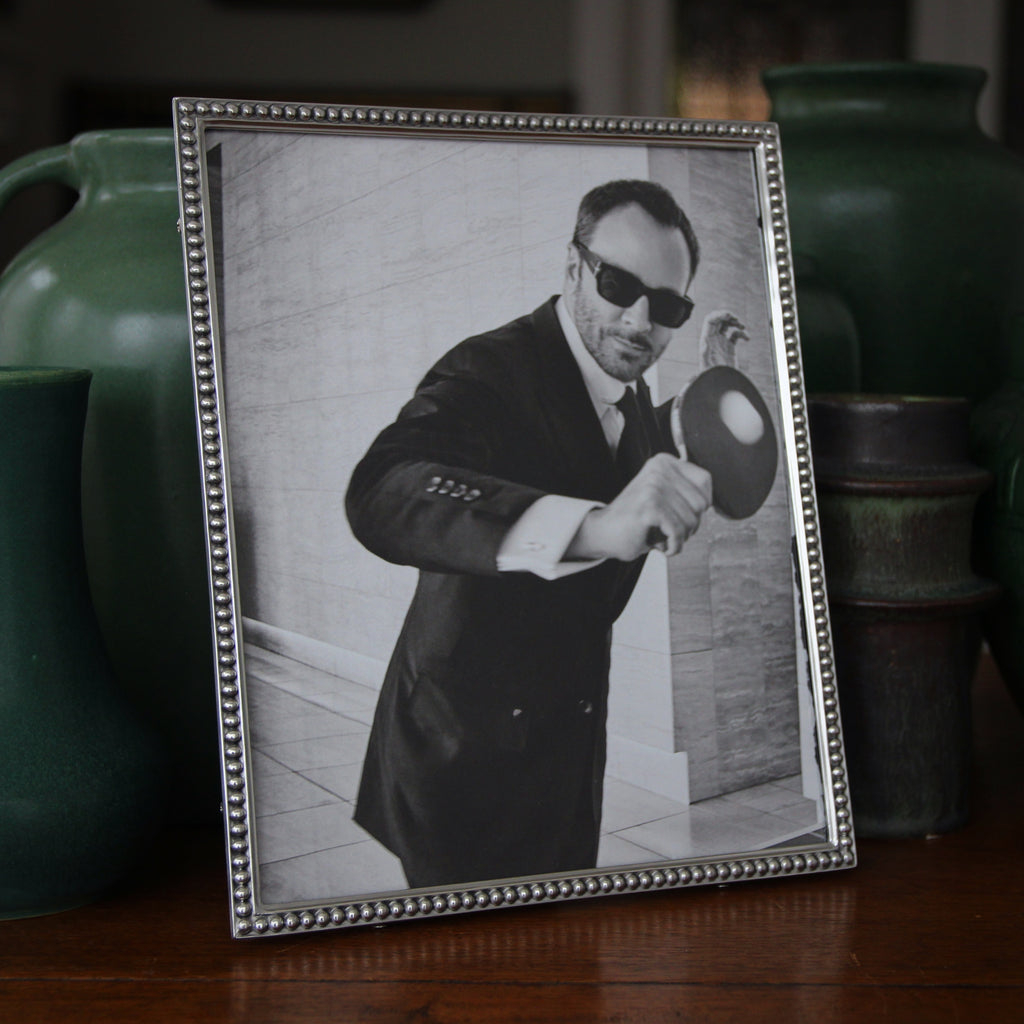
This week I am sharing some of my favorite pewter photo frames with you. Sadly, the New York City workshop which designs and produces these frames is closing after 40 years of quality manufacturing. As of today, I still have a nice assortment of styles and sizes, though, alas, I will no longer be able to replace the pieces as they sell. Click here to jump to the LEO Design "Frames" offering and scroll downward to the pewter frames. The string of pearls which surrounds this frame, gives an air of understated glamour to any photo within it. Like the gentle lights surrounding a backstage dressing mirror (or the chaser lights on a theatre marquee), the design hints at Twenties celebrity—but...
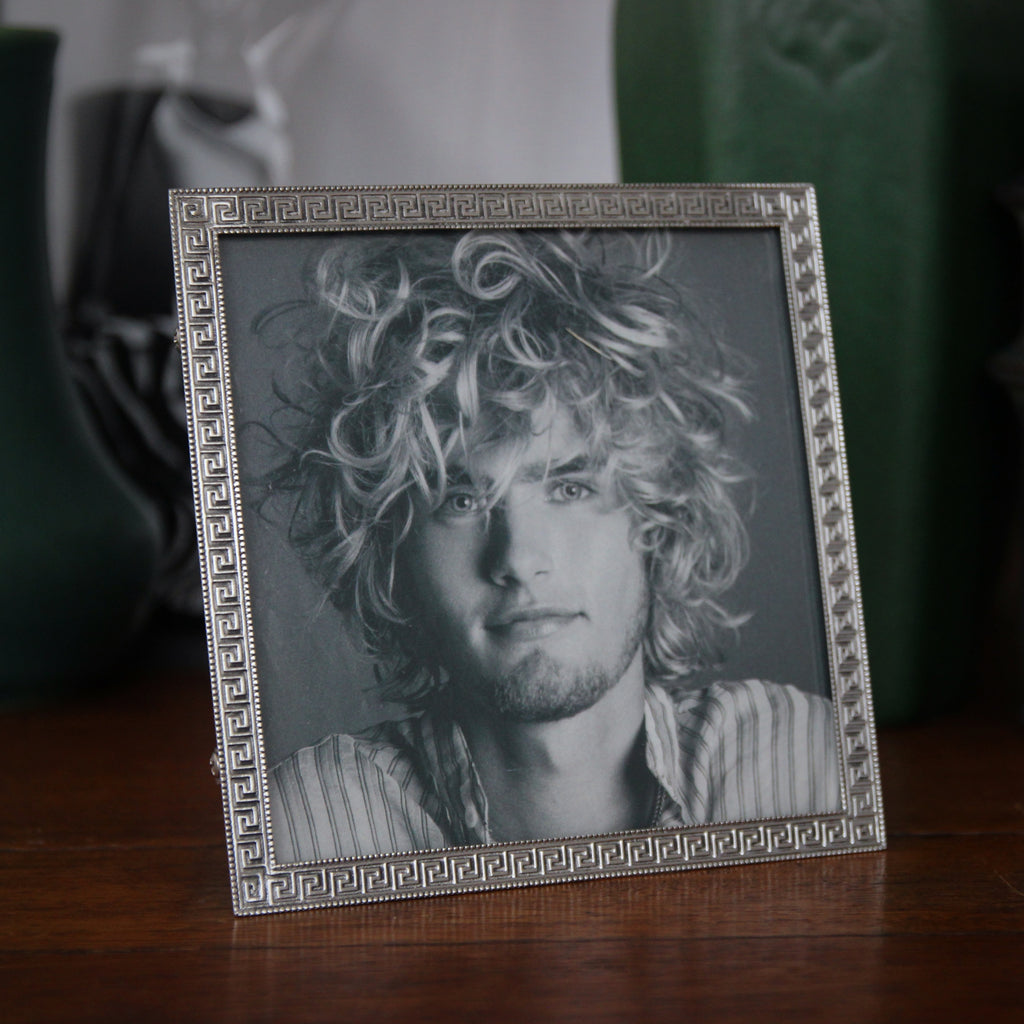
This week I am sharing some of my favorite pewter photo frames with you. Sadly, the New York City workshop which designs and produces these frames is closing after 40 years of quality manufacturing. As of today, I still have a nice assortment of styles and sizes, though, alas, I will no longer be able to replace the pieces as they sell. Click here to jump to the LEO Design "Frames" offering and scroll downward to the pewter frames. I'll buy anything with a simple, crisp "Greek Key" motif on it! I consider it the handsomest of graphic elements—whether on a building, interior moulding, etched on glass, or cast on a handsome frame. To me, it is the perfect combination...
Though the news isn't uncommon, it is always unexpected and heartbreaking: another one of my beloved vendors is going-out-of-business. This time, it's my favorite frame-maker. As a merchant, it's thrilling enough to find a high-quality product—made to exacting, old-time standards—but when that item happens to be manufactured in New York City, well, that's wonderful, indeed! After 40 years, Ruth and Constantine Elias are closing-up their manufacturing workshop in Queens, New York. For the last 25 of those years, they were nearly always my highest-volume vendor source (and always in the top three). Their frames were in my store on Day One, on my first day of trading in August of 1995 (on Bleecker Street). As LEO Design got bigger and more...
As of early Saturday morning, the Democrat's lead seems insurmountable. And, yet, the press seems unwilling to acknowledge Joe Biden's win. Some say it's because this year's election is so uniquely unpredictable—with so many mail-in ballots, loads of provisional ballots and a stark partisan difference between those who voted by mail and those voted in-person on Election Day. Others speculate that the media is intimidated by President Trump—or, perhaps, giving him a sporting chance to make-up some ground before announcing the inevitable. Hopefully, any day now...
The count continues and the head-to-head battle continues! The POD is in the lead—but stay tuned: the numbers can change as the mail-in ballots are delivered and counted!
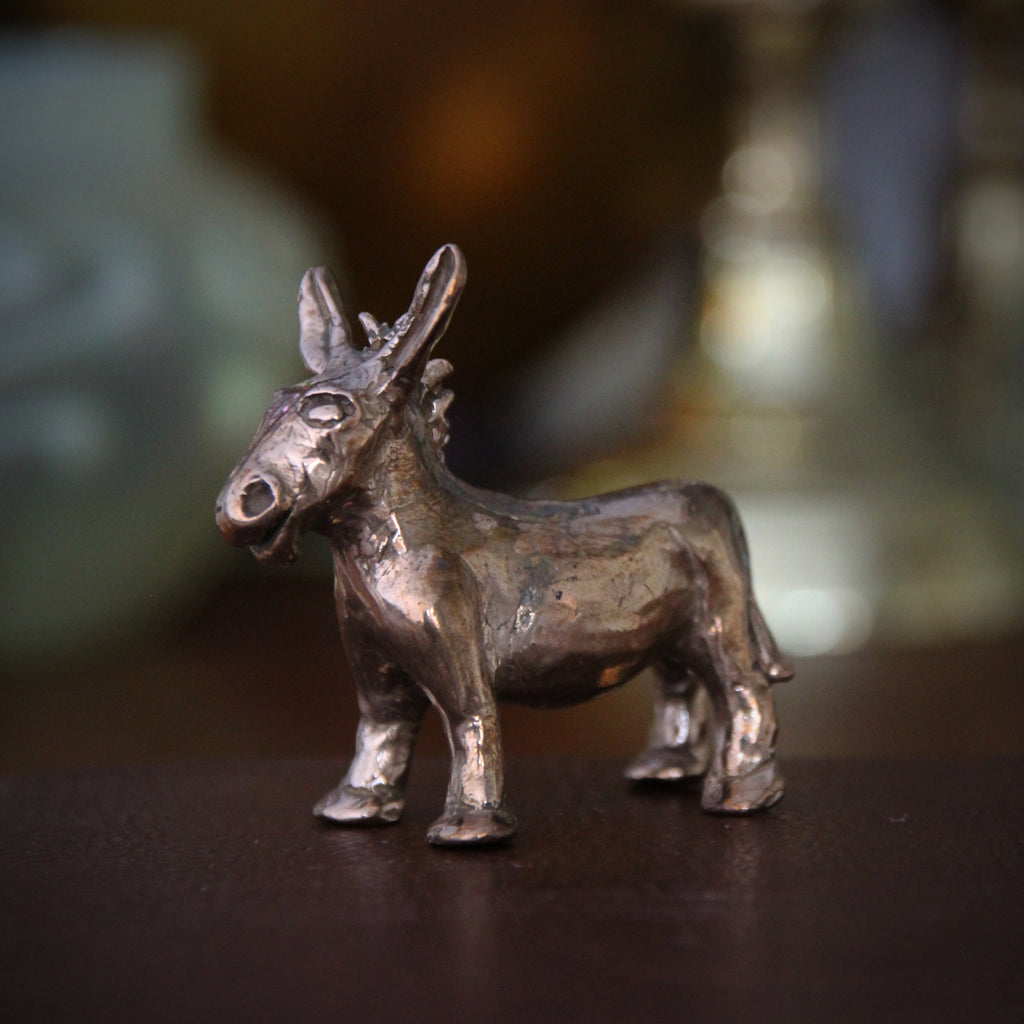
This little mascot of the Dems, the Donkey, has the letters K-I-C-K marked to the bottom of each hoof. "Kick Ass!" To learn more about him, please click on the photo above.
All the votes were cast by Tuesday—and, yet, the counting still goes on! The duel will continue until all votes are received, organized and counted—and no one's precisely sure when that may be.
These little bronze creatures represent the mascots of the two largest political parties: the elephant represents the GOP (the "Grand Ol' Party" or the Republicans) and the POD (the "Party of Democracy," also known as the Democrats). Please click on the photo above to learn more about the elephant.
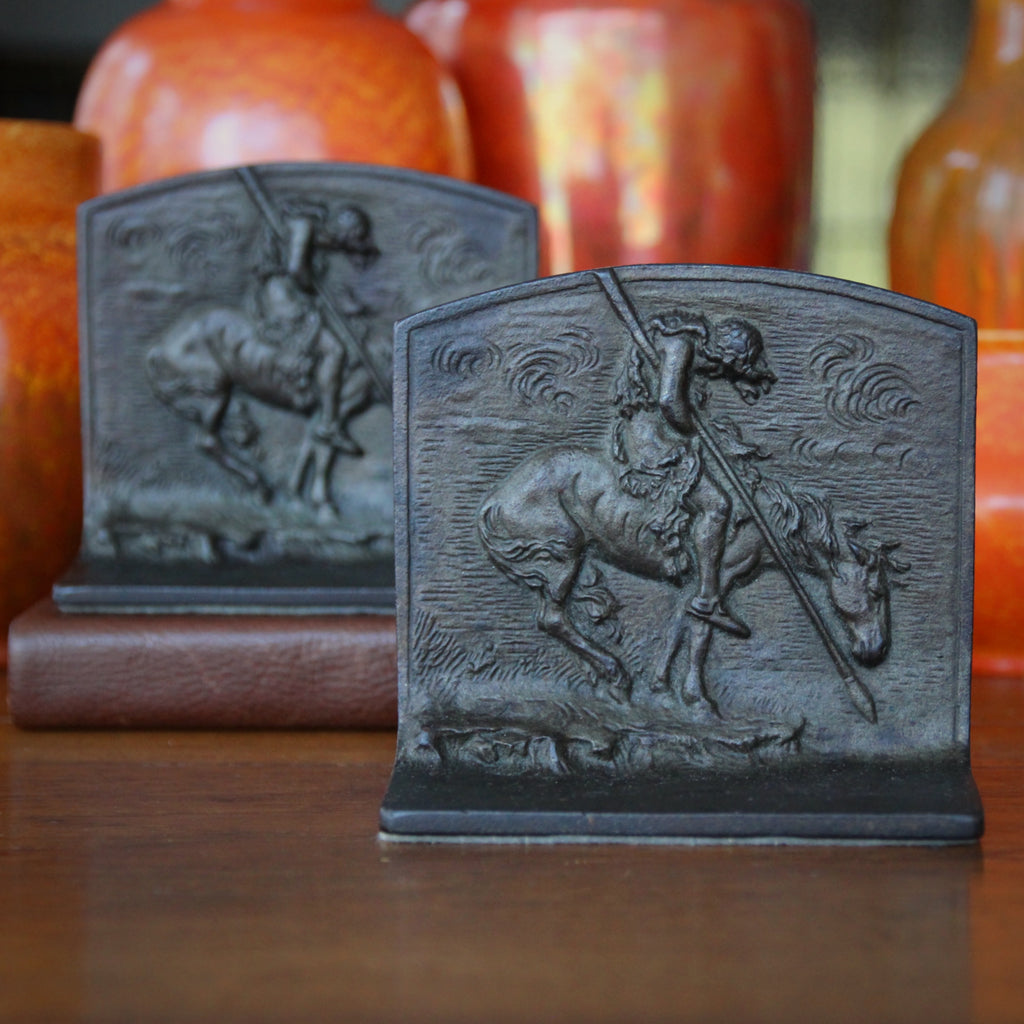
For five long years, America has been running-in-place—enduring an election campaign that just won't end. While the contesting may not cease tomorrow (and chances are, it won't), it is, nevertheless, The End of the Trail. Tomorrow the voting will end and we will wait as final ballots are received and counted. May the good team win. These bookends, made in the 1920's, depict a bas relief representation of James Earle Fraser's End of the Trail sculpture. Fraser, moved by the plight of Native Americans displaced from their homelands, sculpted an exhausted Indian atop his (equally exhausted) horse who have been pushed West, to the edge of the Pacific—where they can go no further. Fraser began working on the idea as early...
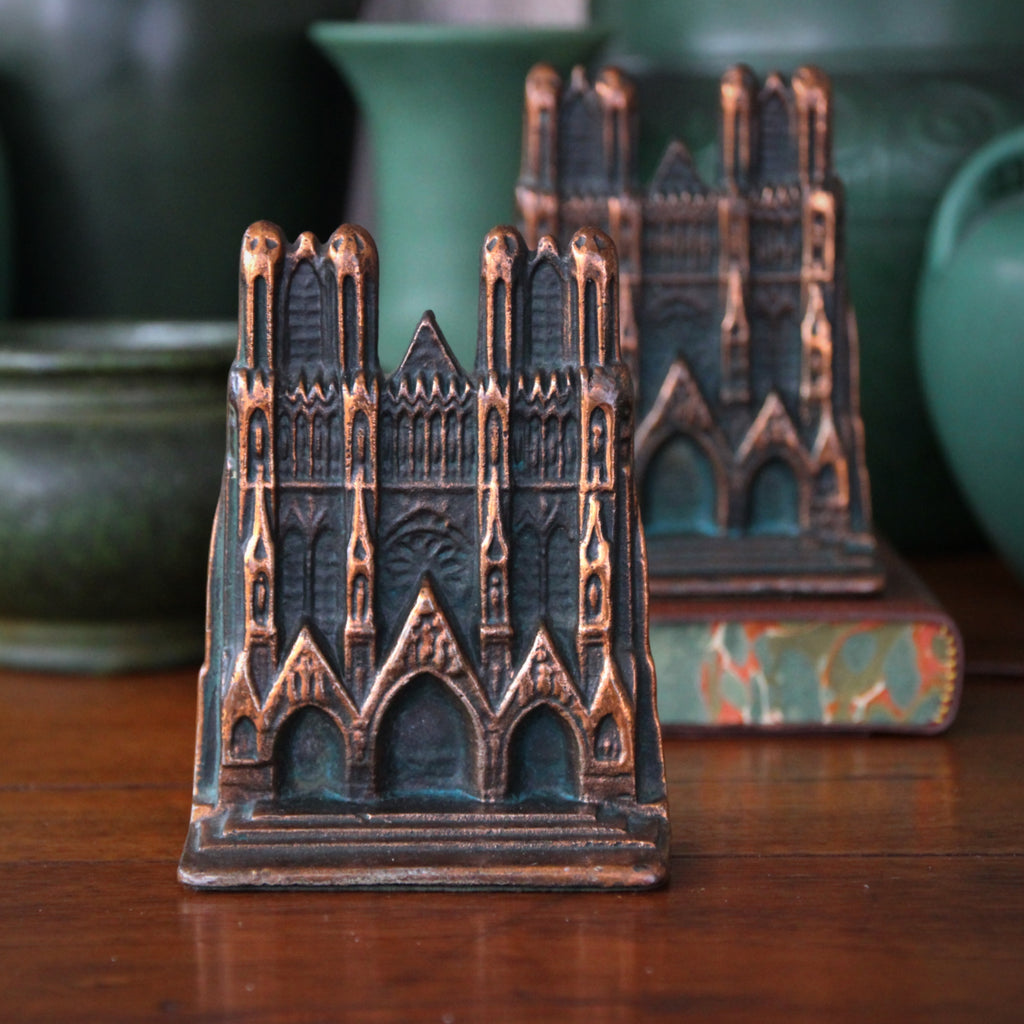
Today is All Saints' Day, the day when all the saints in Heaven (known and unknown) are honored and celebrated. It is preceded by All Hallows' Eve (Halloween) and followed by All Souls' Day on 2 November. The bookends shown here capture the important French Cathedral of Notre-Dame de Reims. Built during the 13th through 15th Centuries, it has long been the site of the coronation of French kings. From 1415 to 1429, the English occupied the city of Reims—and its cathedral—thus preventing the traditional coronation of King Charles VII. Enter Saint Jeanne d'Arc who led the French Army to defeat the English, threw them out, liberated the city, and took-back the Cathedral so that Charles could be crowned. Click...
Changing a country—its culture, its people, its leadership—can seem Sisyphean. Push as one might, the change just doesn't seem to occur. But when The People all push together, change can happen, as difficult as it may appear. Keep pushing and please vote!
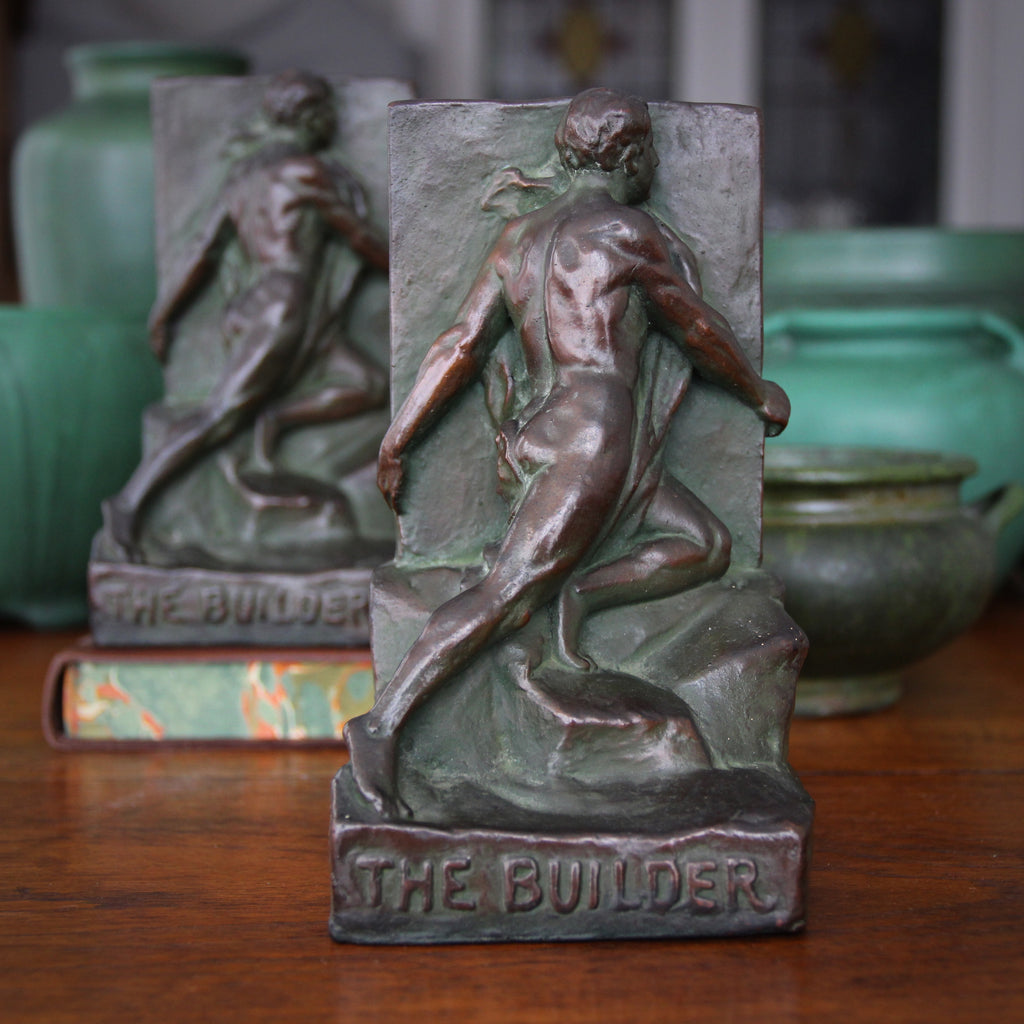
These bronze clad and patinated bookends were sculpted by Hungarian artist Julio Kilenyi (1885 - 1959) and made in the 1920's. They capture beautifully the spirit of "The Builder"—in the form of a straining human body—pushing with tremendous effort to achieve human progress. Please click on the photo above to learn more about them.
2020 is my first presidential election in Pennsylvania and all I can say is, "Benji, I don't think we're in Chelsea anymore...". Having previously lived in reliably blue states—Hawaii, Massachusetts, Connecticut, Rhode Island and New York—I have never been subject to the "swing state crush" of advertising and campaign attention that is endured in a state like Pennsylvania. In fact, I was unprepared for the "performance anxiety" that comes with living in such a state—responding to desperate enquiries from friends in all those blue states. And, of course, not wanting to let them (and my country) down. And I still have not gotten used to presidential candidates coming frequently to my state—and, oftentimes, my city! They are candidates on-the-prowl for...
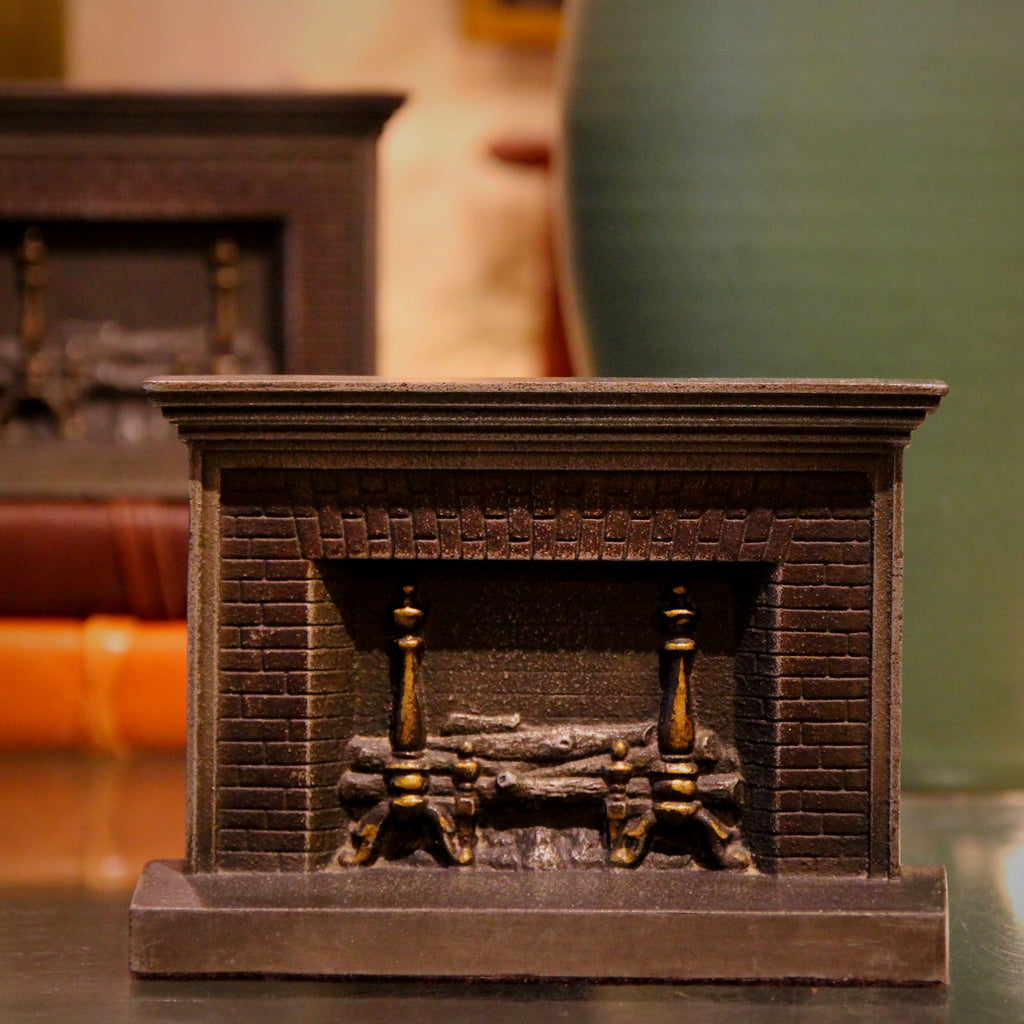
Autumn is surely here—with a decided nip in the air. How nice it would be to sit with the feet-up, in front of the fireplace! Instead, I find myself glued to the news, tracking the latest variance in the polling data. Soon, soon we can rest—unplug, tune-out and repair.
This pair of cast iron bookends were made in the 1930's by Bradley & Hubbard (Meriden, Connecticut). Their heavy and solid mass will hold-up your favorite tomes (which you can read by the fireside). Please click on the photo above to learn more about them.
Eve luxuriates in The Garden of Eden, reclining upon a date tree. Is it the Tree of Knowledge? We are witness to the final days Before the Fall; quiet, natural, complete perfection. Oh, how far we've come. Poor Eve! For centuries, (male) preachers and theologians have tried to pin her for The Fall. And, it's true, Eve did acquire Knowledge before her husband did. But, as I read Genesis, I see that God personally instructed Adam not to eat from the Tree of Knowledge (before Eve was even created). But we do not hear God giving the same directive to Eve. Nevertheless, many people (unfairly) blame the woman more than her man. The story gets even more dramatic after they've eaten. Even as...
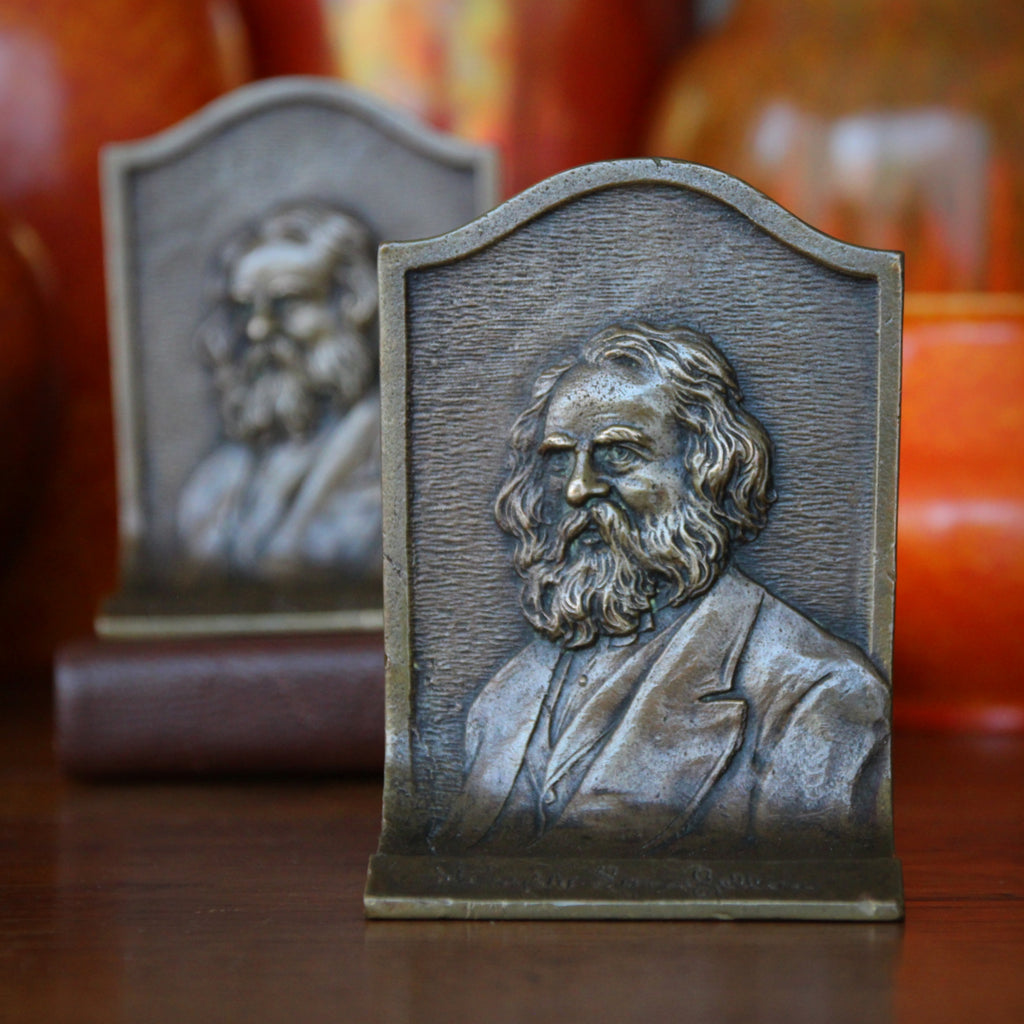
One of America's greatest poets was Henry Wadsworth Longfellow. He was born to a prominent, well-educated family in Portland, Maine (then a part of Massachusetts) in 1807. At the age of 15, he began studying at Bowdoin College (which had been founded by his grandfather). He graduated in two-and-a-half years, after which he toured Europe for three years—learning French, Italian, Spanish, Portuguese and German in the process. While in Madrid, Longfellow befriended fellow writer Washington Irving who encouraged the young poet to continue his pursuit of writing. After returning to the United States, Longfellow began teaching at Bowdoin and, later, at Harvard. Longfellow's first wife, Mary Storer Potter, was a childhood friend from Portland. While on a trip together to Europe, she suffered...
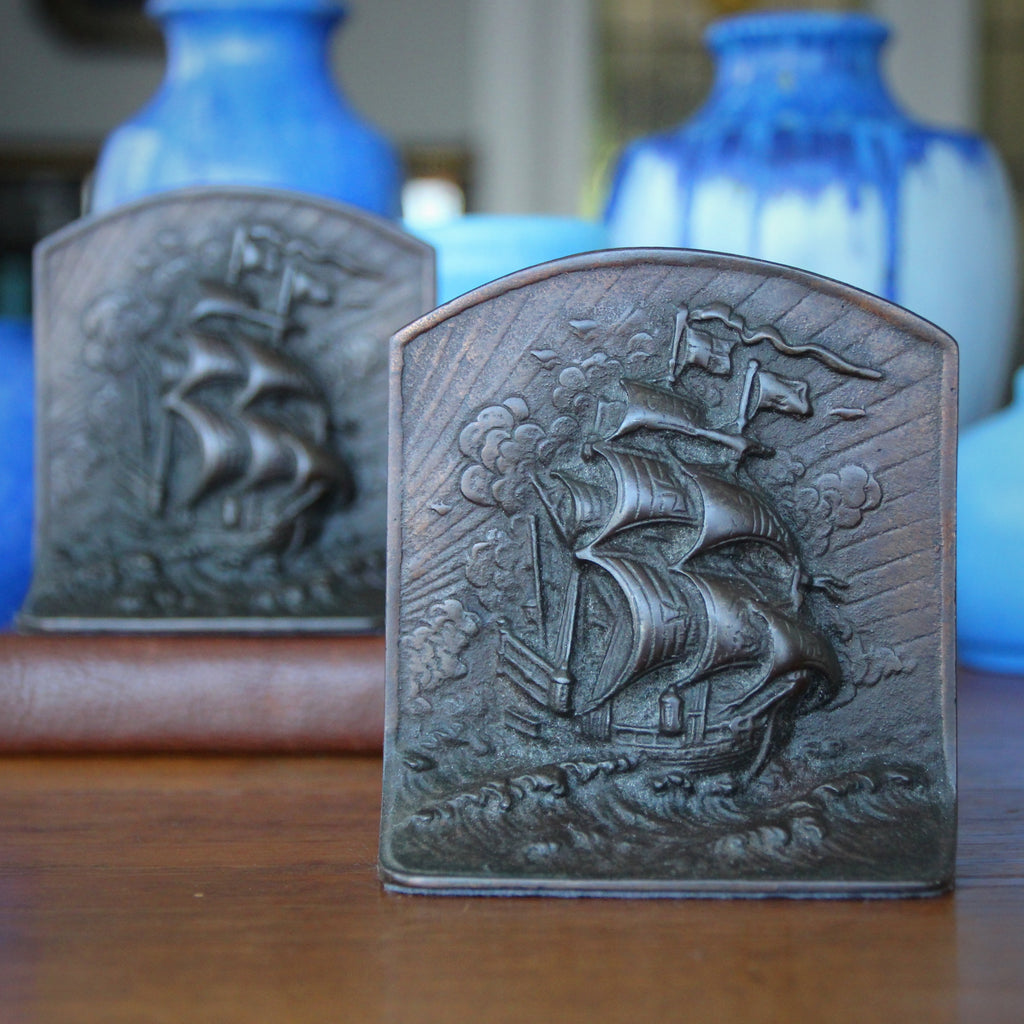
I can see it on the horizon! Or . . . I think I can. It's our ship! Coming-in!
The next ten days will be tense, indeed. But keep your eyes on the horizon. That ship is due—very soon! Rescue is at hand!
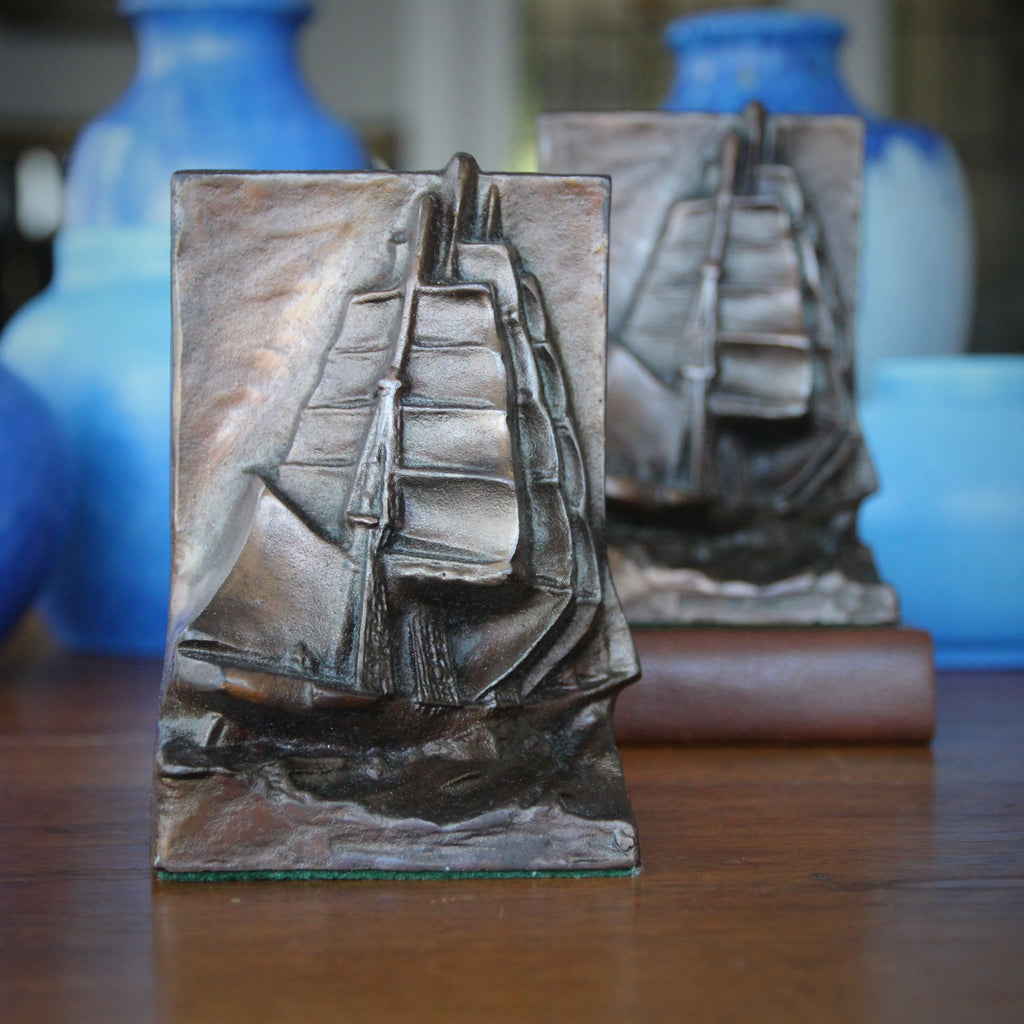
This pair of cast iron bookends, from the 1920's, show a handsomely-sculpted galleon plying choppy seas. Click on the photo above to learn more about them.
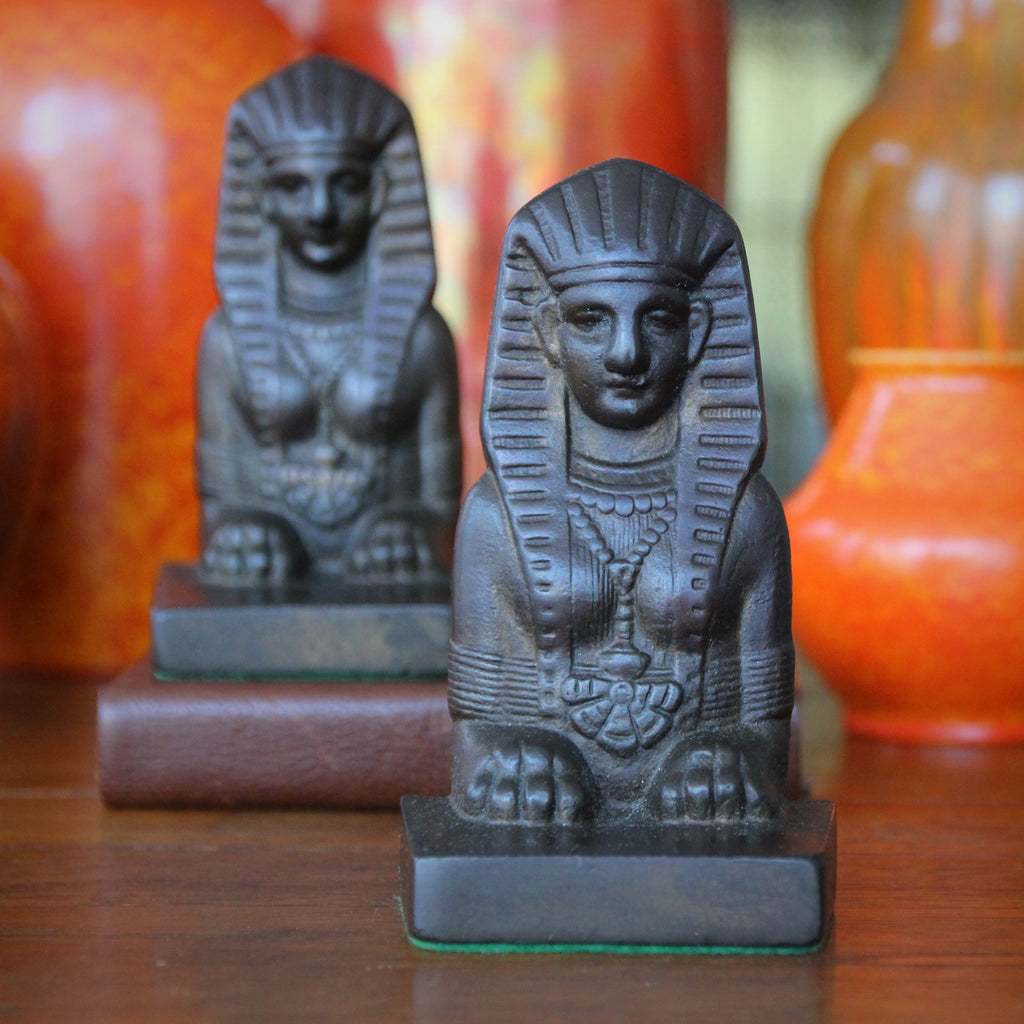
The Great Sphinx of Giza gazes eastward, over the River Nile—which, for millennia, was the source of life in the flat, sandy lands of the Giza Plateau. Some historians consider it the oldest surviving sculpture in the world, built around 2500 BC for the Pharaoh Khafre (and bearing that pharaoh's face). It was originally carved out of bedrock but has been restored (over the last 4,500 years) with blocks of stone. It stands 66 feet tall (at the head) and 240 feet long (head to tail). These bookends are a stylized representation of the great sculpture—though reinterpreted though the lens of Art Deco fashion of the 1920's. When Tutankhamen's tomb was discovered (98 years ago, next week), it kicked-off a...
Tonight is the final presidential debate of the 2020 election—or, at least, it is scheduled to be. Last week's debate was cancelled abruptly when the president backed-out of the event. Candidate Biden opted to join a Miami town hall in its place.
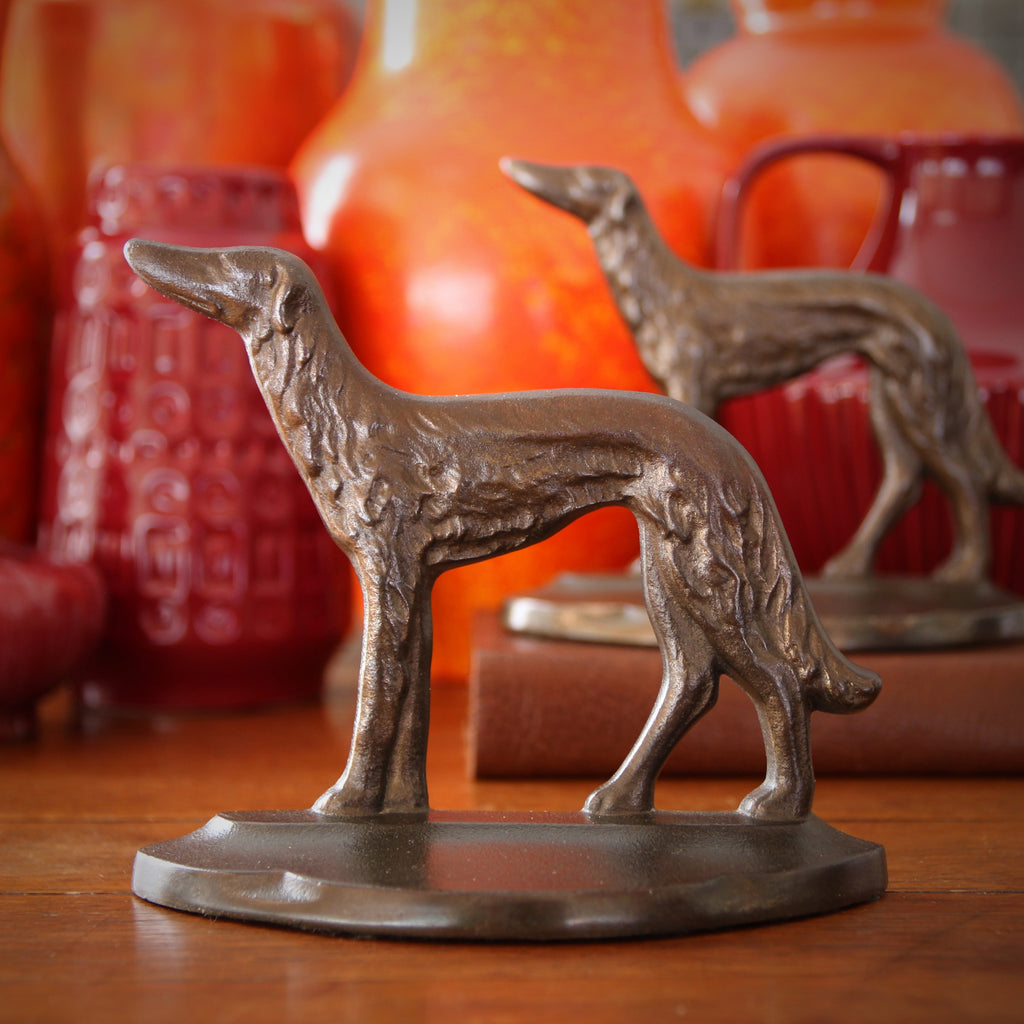
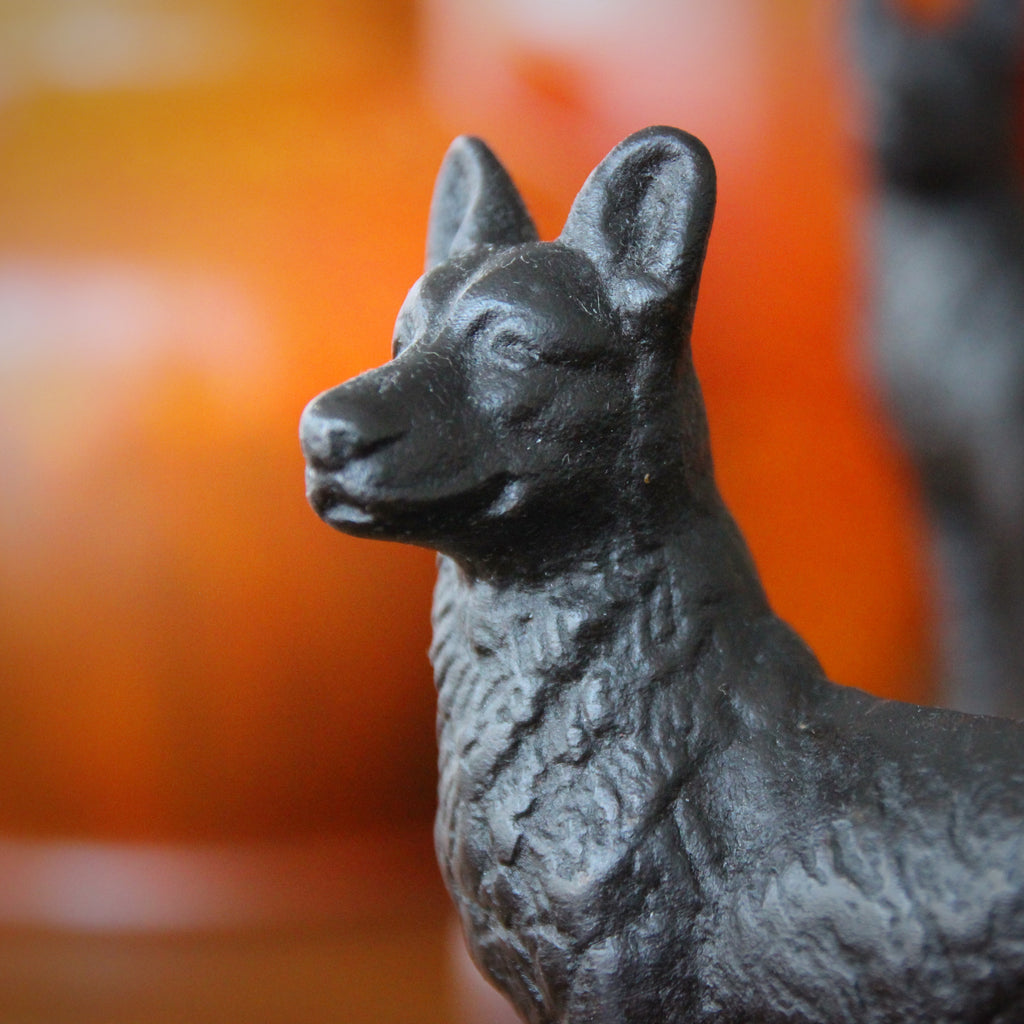
These dogs—bookends, actually—are interesting in that they are fully-sculpted all the way around. If not holding-up books, they would make nice pair of (light) doorstops or look dashing as (two) handsome canine sculptures. Please click on the photo above to learn more about them.
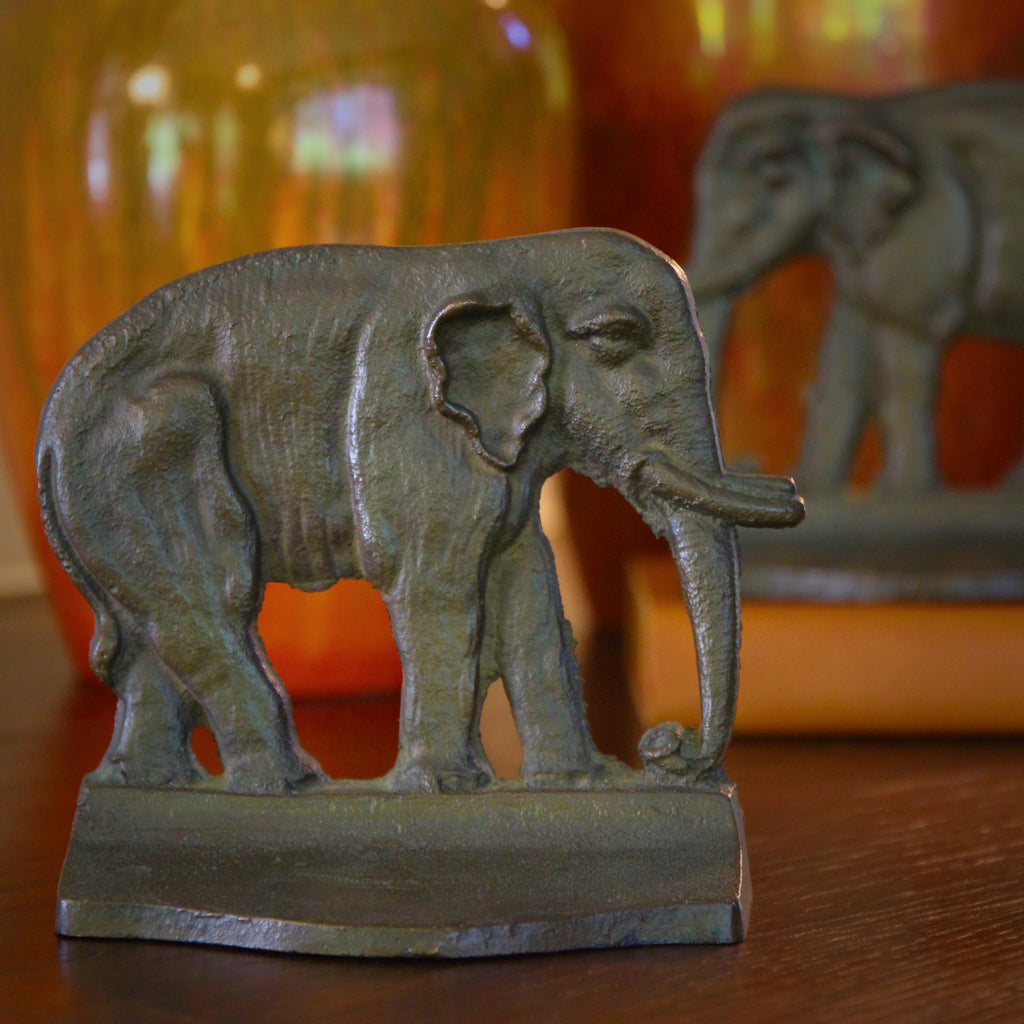
Lest some of my friends (well...let's make that relatives) across-the-aisle feel a bit left-out, here's an elephant—the lumbering mascot (with a long memory) of the Grand Ol' Party. The population of elephants is on a steep decline. In the wild, at least, this breaks my heart. So I'll always have a soft spot for the peaceful pachyderm. And I will always try to keep a nice selection of elephant bookends for my like-minded customers. Note that this pair of bookends is "mirrored"—that is, cast from two different moulds which allows the pair to face each other. Please click on the photo above to learn more about this handsome pair of bookends.
In just a fortnight, our modern day jousters will appear before the judges—and we, The People, will render the score. May the better team win! (And by "win," I mean receive the most votes.)
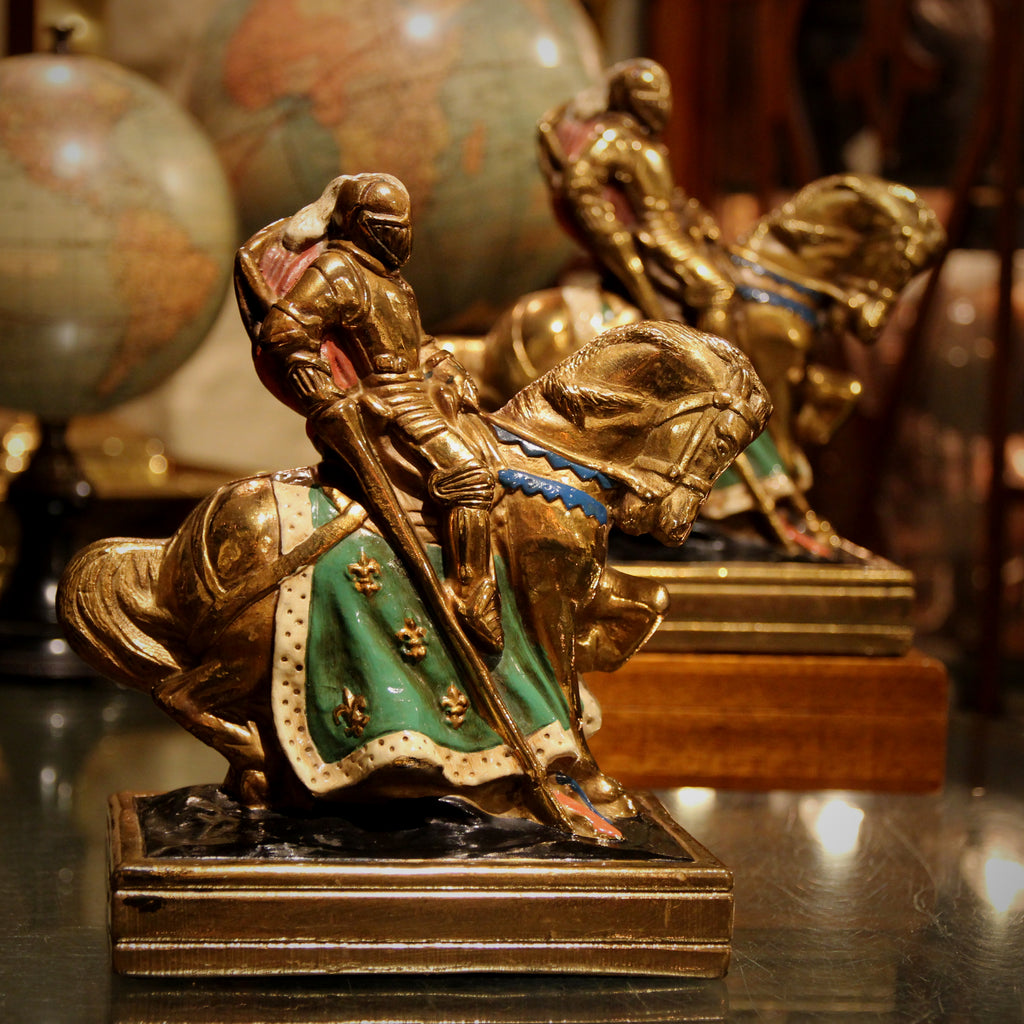
These bookends, made in the 1920's or 1930's, are bronze clad, patinated and hand-painted with touches of vibrant color. They capture all the energy, tension and anticipation of a great match to come. Please click on the photo above to learn more about them.
Is that a distant drum beat? Boom, boom, boom. I've been hearing it for weeks. Boom, boom, boom. Election Eve comes in two weeks. Boom, boom, boom. Get that ballot in! And then, get ready to dance!
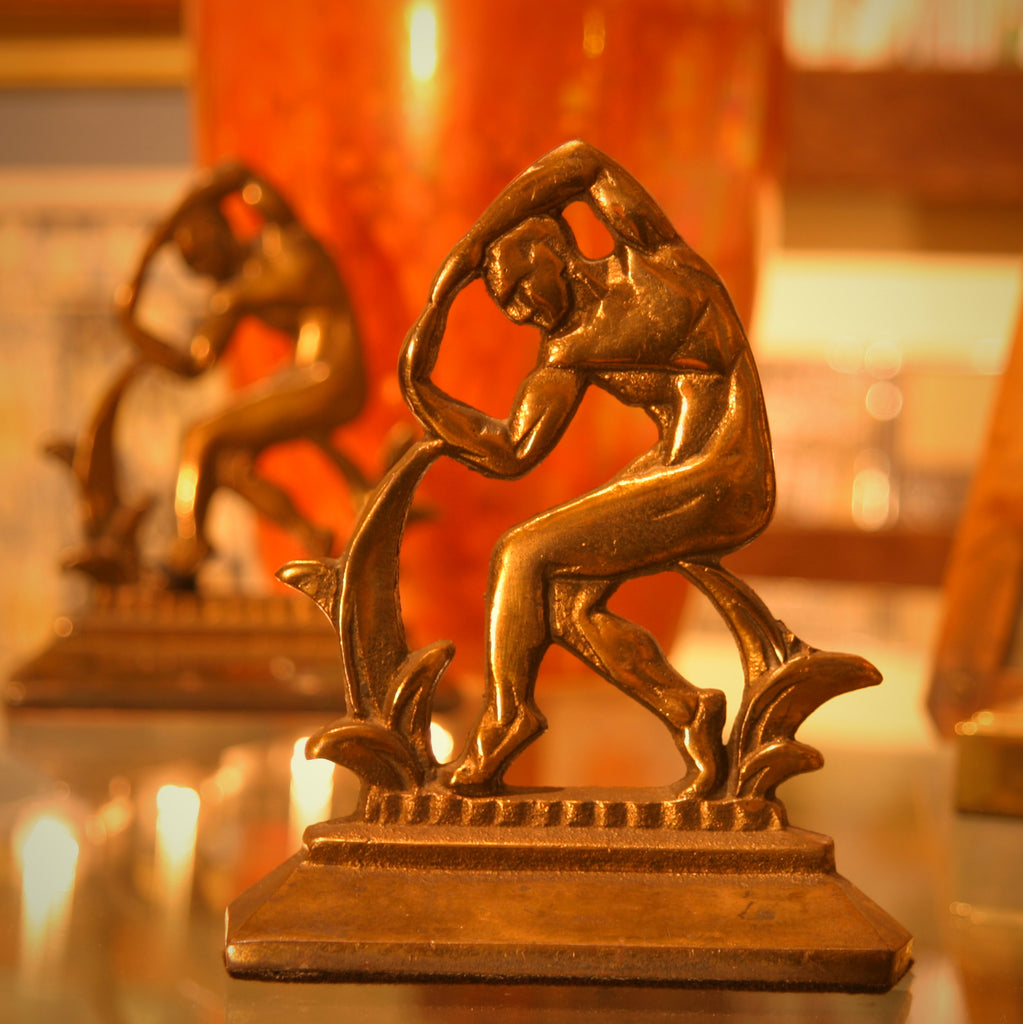
These cast iron bookends scream Art Deco! A dancer flexes on his foliated stage—a healthy measure of Radio City Music Hall and a generous touch of Nijinsky in Afternoon of a Faun. I Please click on the photo above to learn more about them.
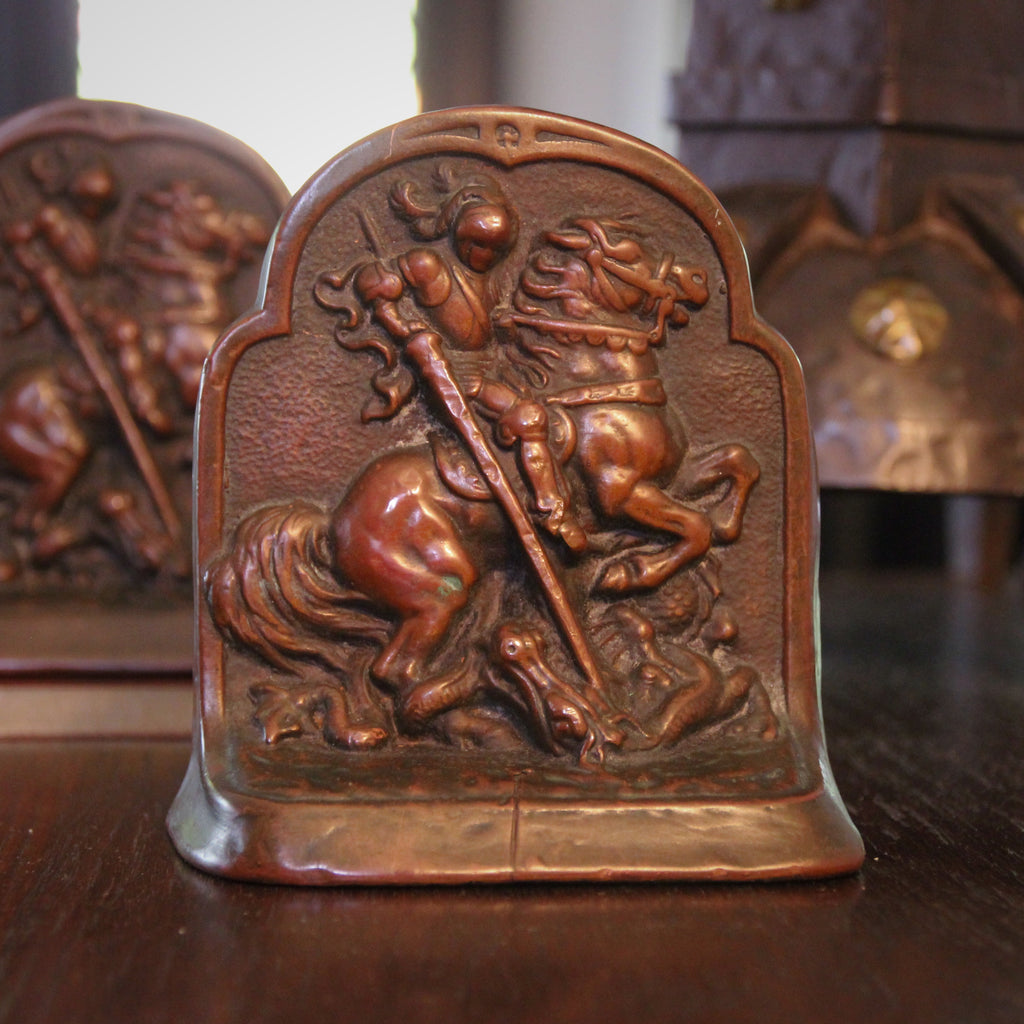
Saint George was an early Greek Christian who was born in Cappadocia (modern day Turkey) to a Roman Army soldier. He died on 23 April 303. Legend tells us of a fearsome dragon that demanded human sacrifices. The people, attempting to placate the dragon, had offered-up a young maiden as his next meal. This is when Saint George came along, slaying the dragon, saving the woman, and setting the captive people free. But the myth of Saint George did not become popular until many centuries later. The first known written record of the legend is from the 11th Century. As the Crusades ramped-up, and soldiers from different countries came together in the Holy Land, the story of Saint George and...
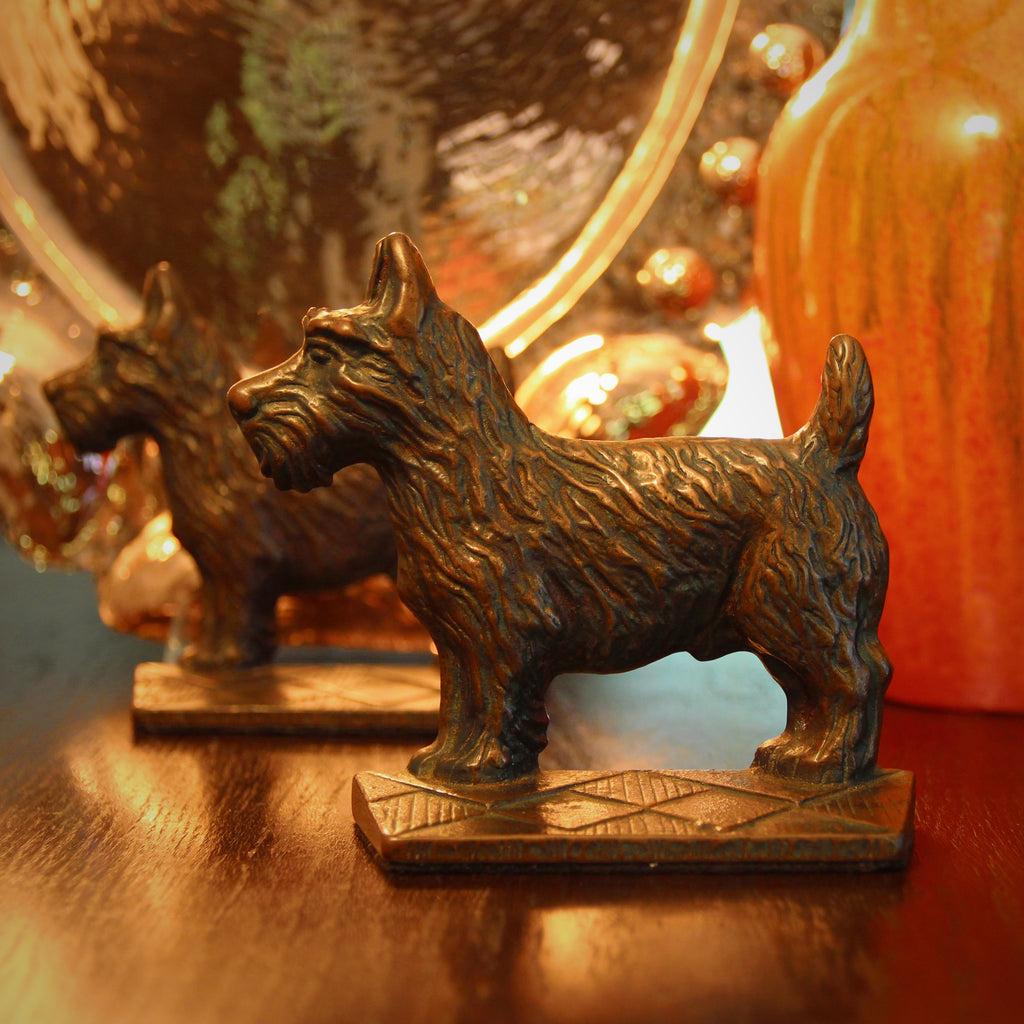
"Fala" was President Roosevelt's beloved black Scottish Terrier, perhaps the most famous of White House pets. Fala often traveled with the president, whether by auto, train, boat or plane. The press (and political cartoonists) loved to share Fala's stories of life in the White House. The dog was such a popular Democrat that even the opposition party attacked him when they could. Republicans complained bitterly that Fala once had been left-stranded during a trip with FDR to the Aleutian Islands—requiring the president to send a US Navy destroyer back to collect the little rascal. FDR made short work of his Republican critics; soon after, at a Teamsters' dinner and speech (which was radio-broadcast nationwide), Roosevelt pummeled the opposition for fabricating "libelous statements about my...
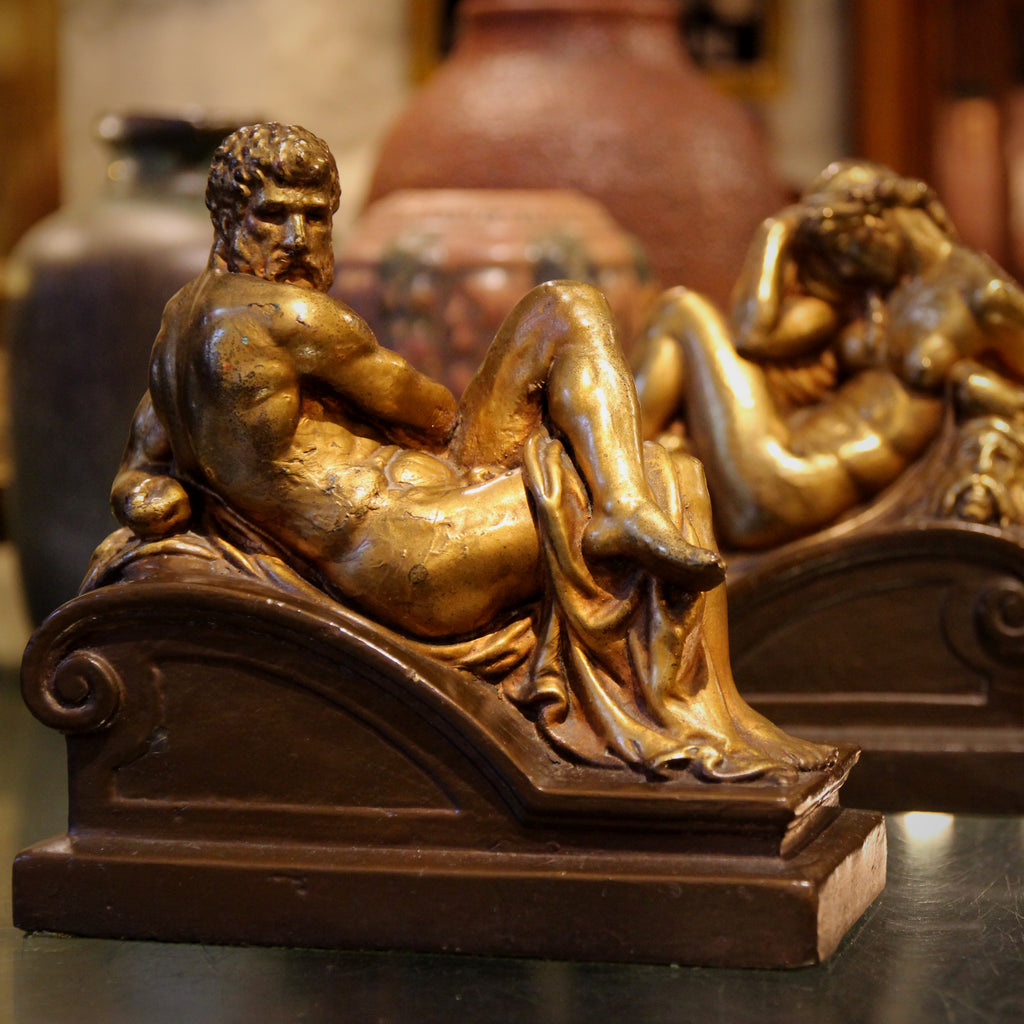
Michelangelo was in high demand. Just because the Pope had conscripted him for four years to paint the ceiling of the Sistine Chapel (plus another five years to paint The Last Judgement), it did not follow that other rich patrons would surrender their final wish: an impressive, custom-carved, Michelangelo Buonarotti tomb! Popes, cardinals, bankers and kings stood in-line, waiting for Il Divino to start chiseling. Michelangelo designed many ambitious (and over-the-top) tombs for his fervent patrons. Alas, the artist rarely finished many of his complete original designs. Nevertheless, just the pieces of tombs which he created are masterpieces—amongst the greatest works of any human hand (ever). His Pietà—so beautiful it makes the heart race—was carved by the 24 year old artist for...
The tension is growing—by leaps and bounds—as the candidates stump, the pundits parse, and the votes are submitted by mail or early voting. It should all come to a crescendo on 3 November (20 days from today!). But that may not be the end of it! Mailed-in ballots will need to be counted. And there is always the chance that a candidate (or his party) may contest the results. How much more can you take?
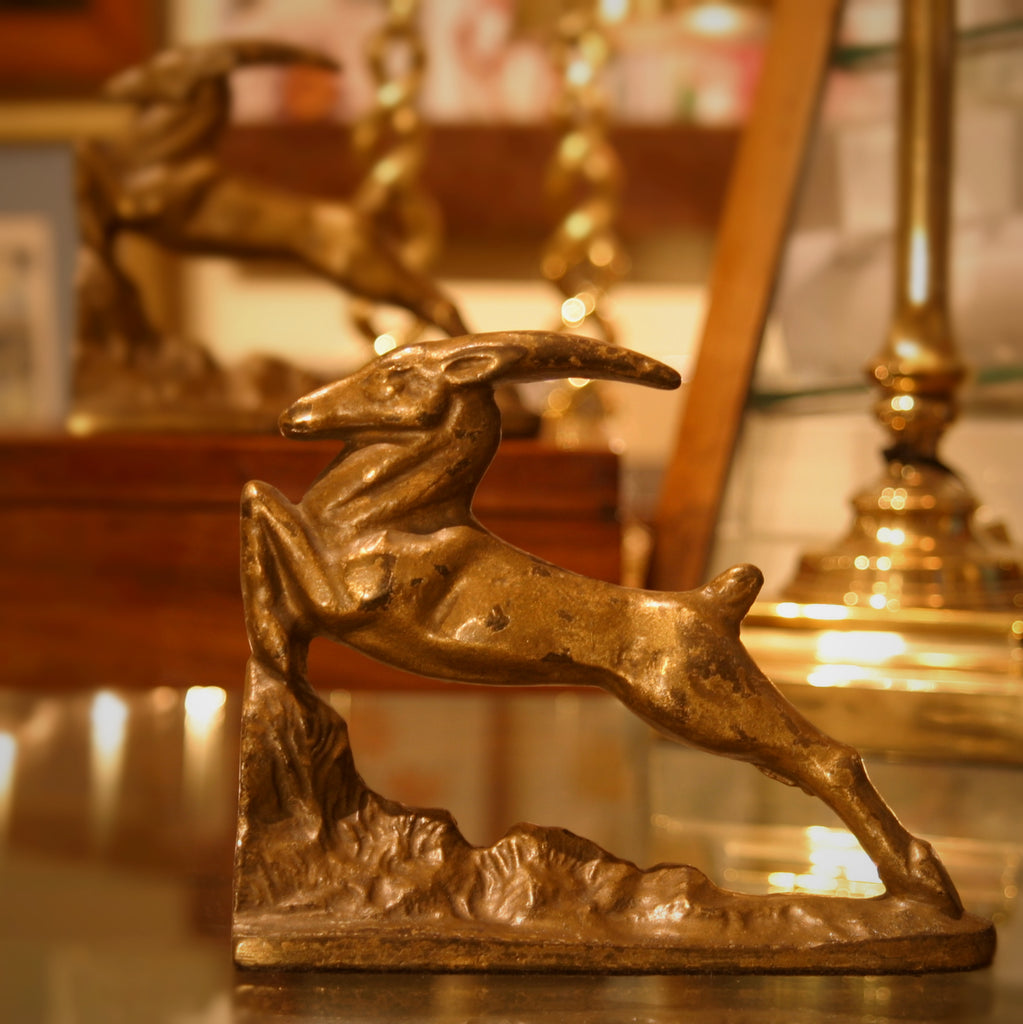
An athletic gazelle leaps into action—ready to hold-up your precious tomes. Made in the 1920's, this handsome pair of bookends is big on Art Deco style. Click on the photo above to learn more about them.
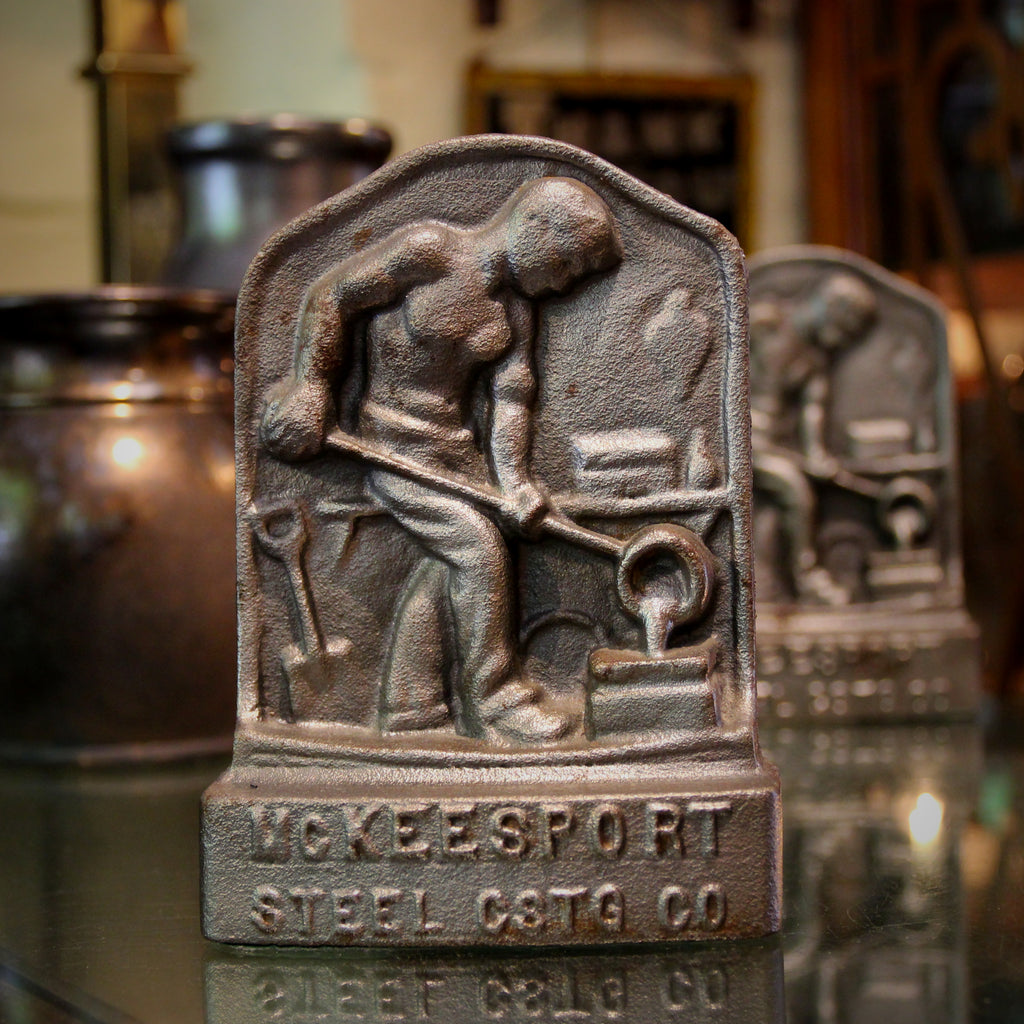
In the Late Nineteenth and Early Twentieth Centuries, Pittsburgh was one of the engines of America's national economic growth. It was the height of American Industrialism and Pittsburgh was the heavy hitter. Great fortunes were made in The Steel City—Carnegie, Frick, Mellon, Scaife, Heinz, Westinghouse—and they were fortunes which endowed other American cities (like New York and Washington, DC). There were big companies, like US Steel, which (at its peak) employed hundreds of thousands of employees. But there were many hundreds of smaller companies which serviced the giants or further-processed the raw material produced by the behemoths. Such a focus on industry came at a great cost. It was terribly polluting. It perpetuated a "caste system" that insured there always would be many more low-paid, interchangeable...
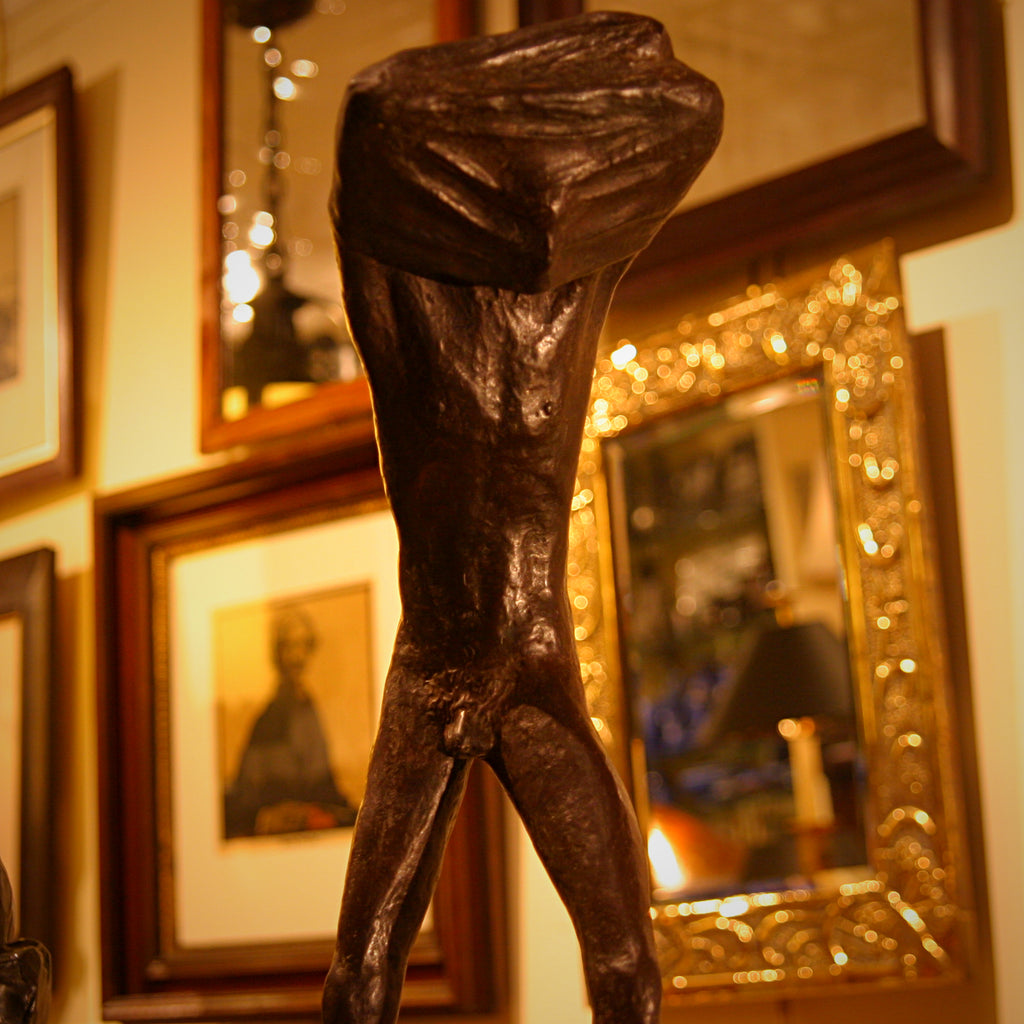
Today is National Coming-Out Day. Every 11 October—since 1988—the day has been celebrated to encourage members of the LGBT community to come-out to friends, family and colleagues. Since homophobia and bigotry fester in conditions of deception, lies and silence, coming-out is a powerful way to educate the broader community that gay people are contributing and valued members of the society at large. How can bigots remain bigoted when they know and love openly gay friends, colleagues, children, siblings, parents or other family members? The bronze sculpture, shown above, was created by artist Luke Gwilliam in the 1950's. It portrays a lithe man, removing his tight garments—perhaps symbolic of a gay person freeing him/herself from the binding restraints of a restrictive society....
On this day in 1845, the United States Naval Academy was founded in Annapolis, Maryland. The Academy's motto, Ex Scientia Tridens, is the Latin for the phrase "From Knowledge, Sea Power." It's comforting to know that some US leaders still appreciate the important link between knowledge and power! 33 miles from Washington, DC, the Academy admits 1,200 "plebes" each year (also called "Midshipmen") and graduates about 1,000 students as new officers, mostly for the US Navy or Marine Corps. A prospective student must be 17 to 23 years of age, unmarried, without children, and be of good moral character. Applicants are tested for physical, intellectual and emotional fitness and must have the recommendation of their state's US Senator, Representative or Delegate. The...
We are in the middle of "World Space Week"—held each year from the 4th to the 10th of October. In 1999, the United Nations dedicated this week to the "international celebration of science and technology and their contribution to the betterment of the human condition." 95 countries observe the commemoration.
The rocket, shown above, is actually a cast-bronze bank. It can be opened (with a screwdriver) and will really make a sci-fi statement on your desk or bookshelf. Please click on the photo above to learn more about it.
No Lion! Election Day is only four weeks from today!
If you're not yet registered, do so! And if you are, send-in that ballot. Every vote makes a difference! (No Lion!).
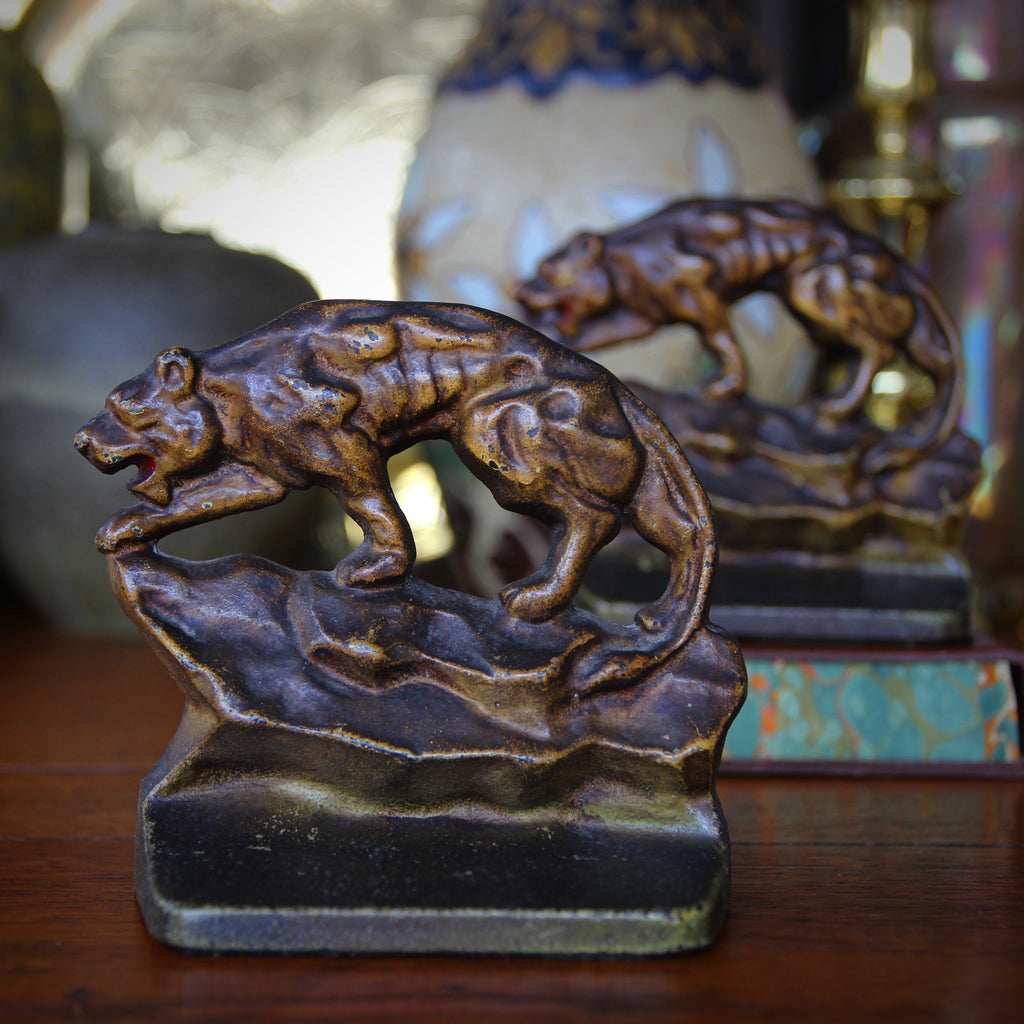
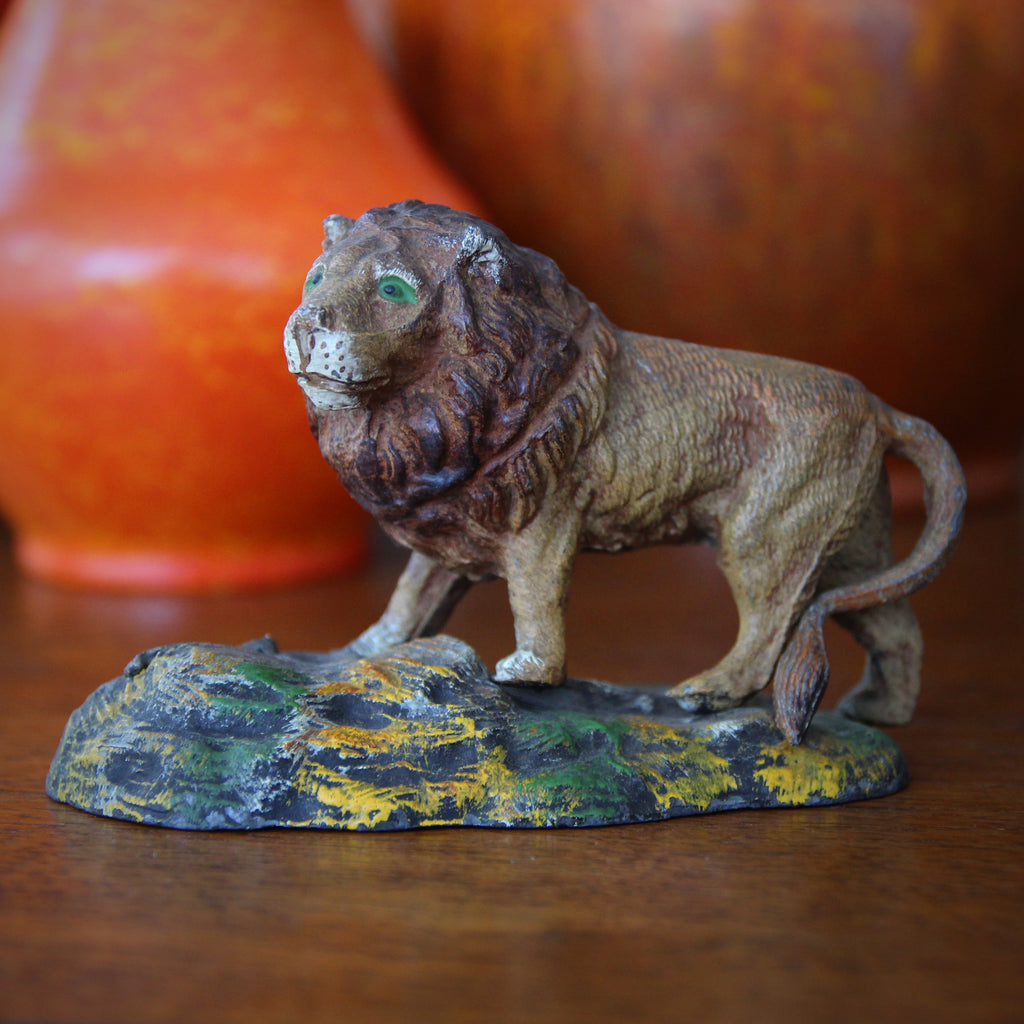
This spelter sculpture shows a lion atop a mountaintop. It has been hand-painted and you may learn more about it by clicking on the photo above.
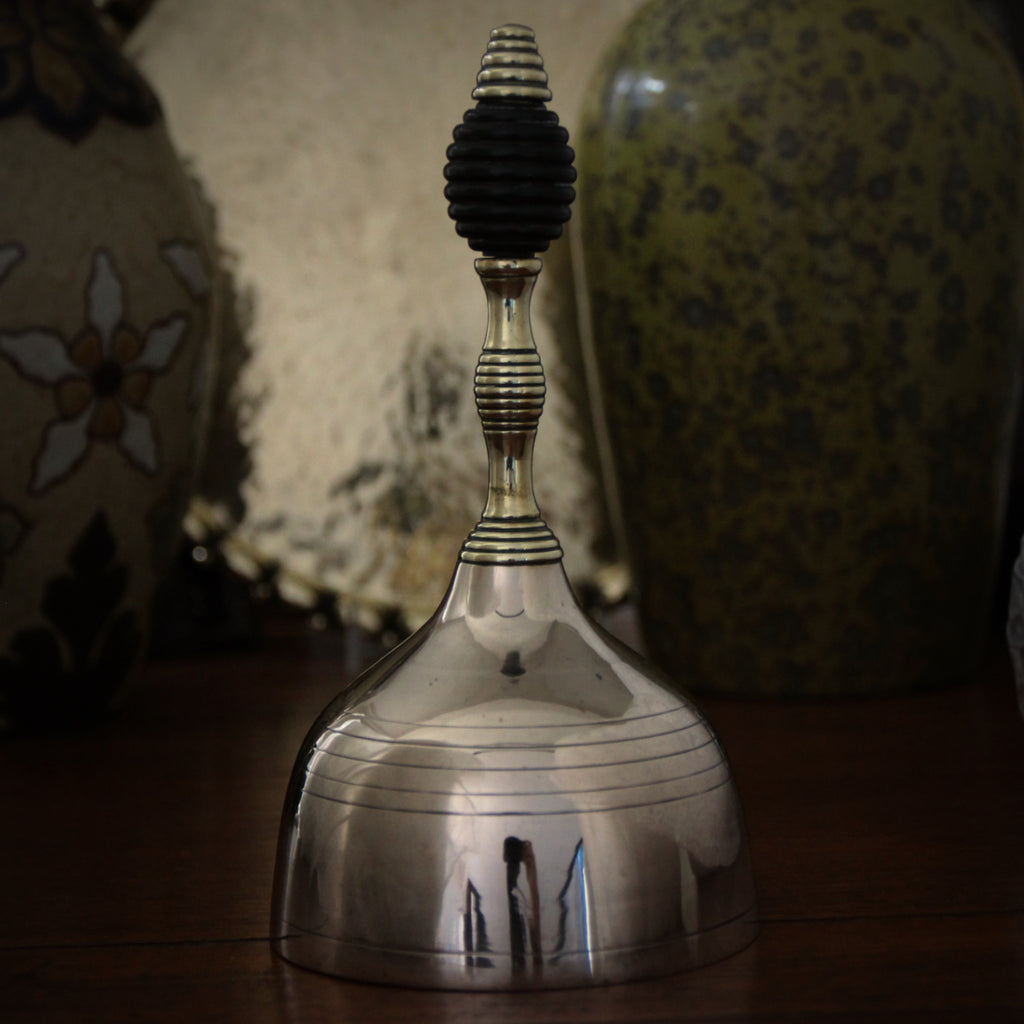
Today we celebrate UNESCO's World Teachers' Day—and remember those wonderful teachers who taught us, formed us and made us who we are today. Besides one's parents, no one provides a greater influence on one's life than does his or her teachers. Oh, how I loved going to school—and how sad I was to say goodbye (and thank you) to a beloved teacher. Even today, more than 50 years later, I can remember so clearly certain moments in the classroom. They are memories—and lessons—which will remain with me all my days. The school bell. shown above, was made in England in the late Nineteenth Century. Its Aesthetic Movement design extends up the shaft to a nicely-turned ebonywood final atop the beautifully...
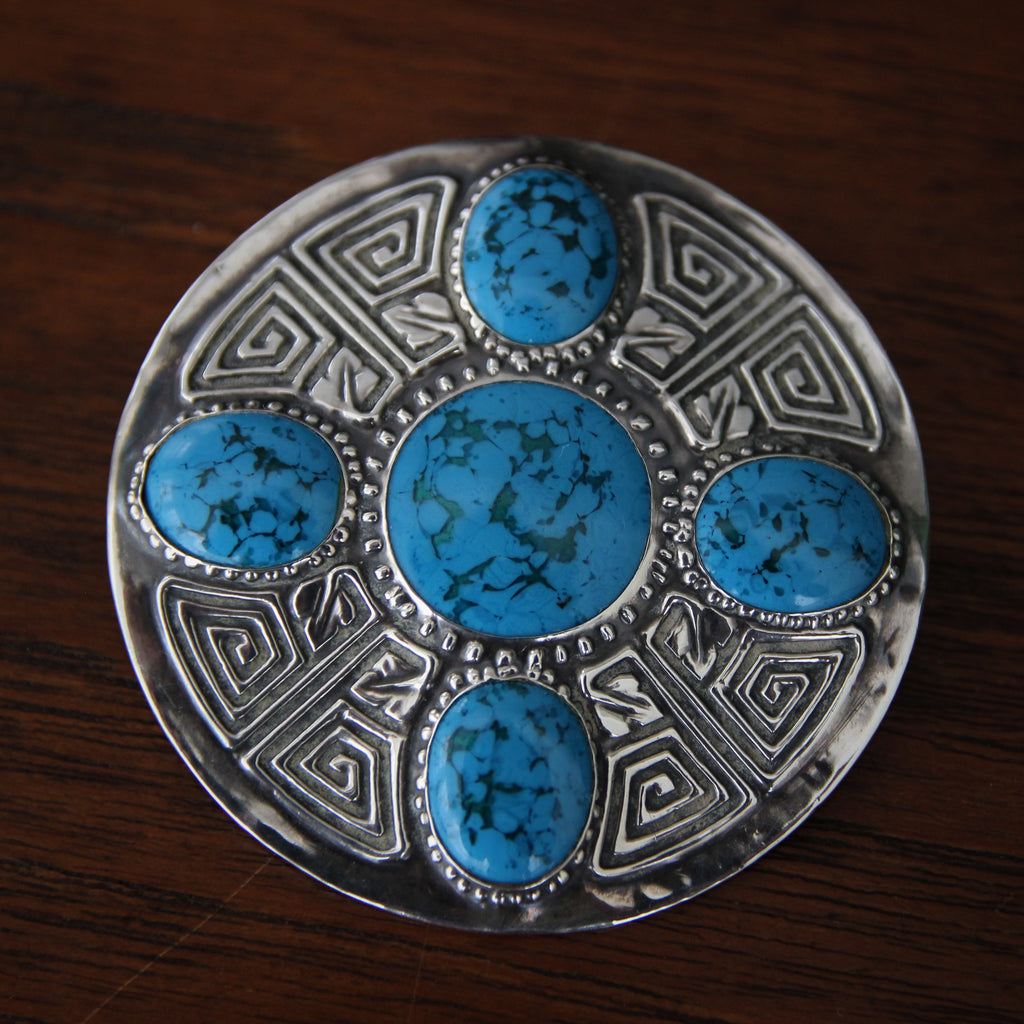
Celtic design—though extremely broad and highly varied—usually refers to the craft-like, graphic style of interlacing patterns and unbroken "plaited" (braided) designs. Early Celtic artworks have been recovered as early as the Iron Age (which began approximately 800 BC) and, later, was highly influenced by Roman art and craftwork (especially tilework) during their occupation of the British Isles (beginning around 55 BC). Centuries later, the British Arts & Crafts movement sought historic aesthetic sources to tap, thus freshening-up their design and reviving regional cultural pride. Celtic patterns and graphics (from Ireland, Scotland, Cornwall and Wales) provided an ample vein for designers seeking fresh inspiration. (British Arts & Crafts designers also mined Medieval literature and Gothic handwork.) The brooch above, made in England in the 1910's, has a silver front, embellished...
For the last four years, Election Day 2020 seemed interminably distant. Now—suddenly!—we look-up and we're just a month (and a tick) away from The Big Day! By 1 December, hopefully, all the mail-in ballots should be accurately counted and the winner declared.
Tonight, we begin the first of four rounds of presidential (and vice-presidential) debates. May the best* candidate win!
Last night we lost a great American, Supreme Court Associate Justice Ruth Bader Ginsburg. Though standing a mere five-foot-one, she towered as an intellectual and judicial giant—and she changed the course of life for millions of grateful Americans. She will be honored with solemn ceremonies at the United States Supreme Court and within the United States Capitol. She will lie-in-state at both "temples"—upon the very catafalque which bore the casket of Abraham Lincoln in 1865.
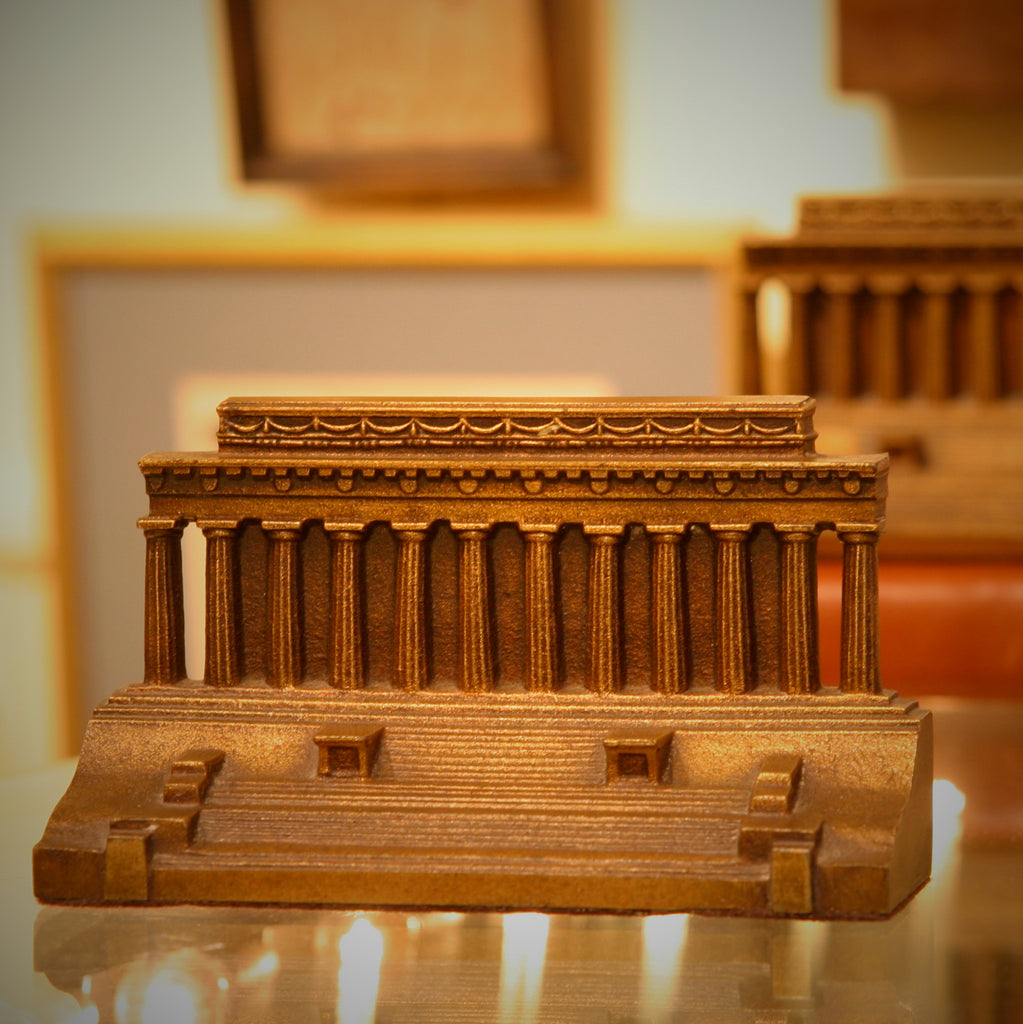
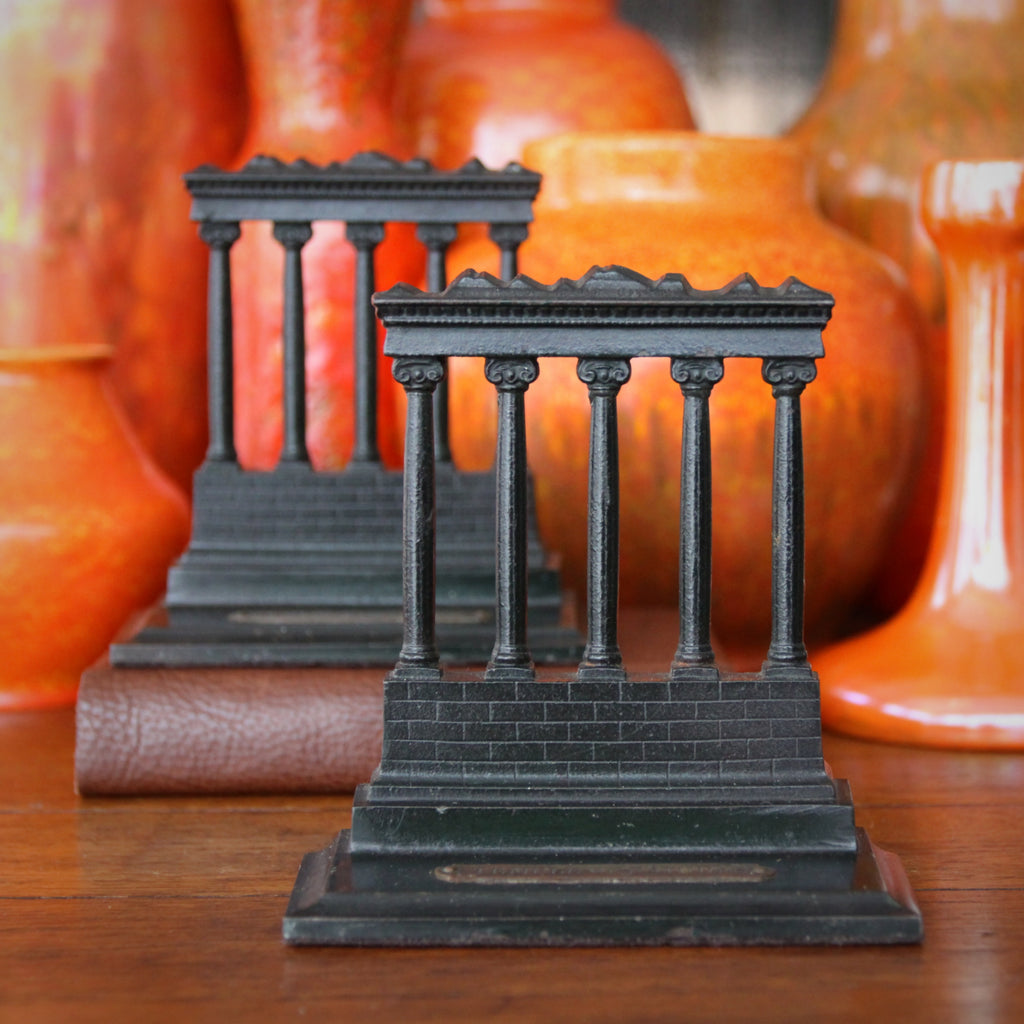
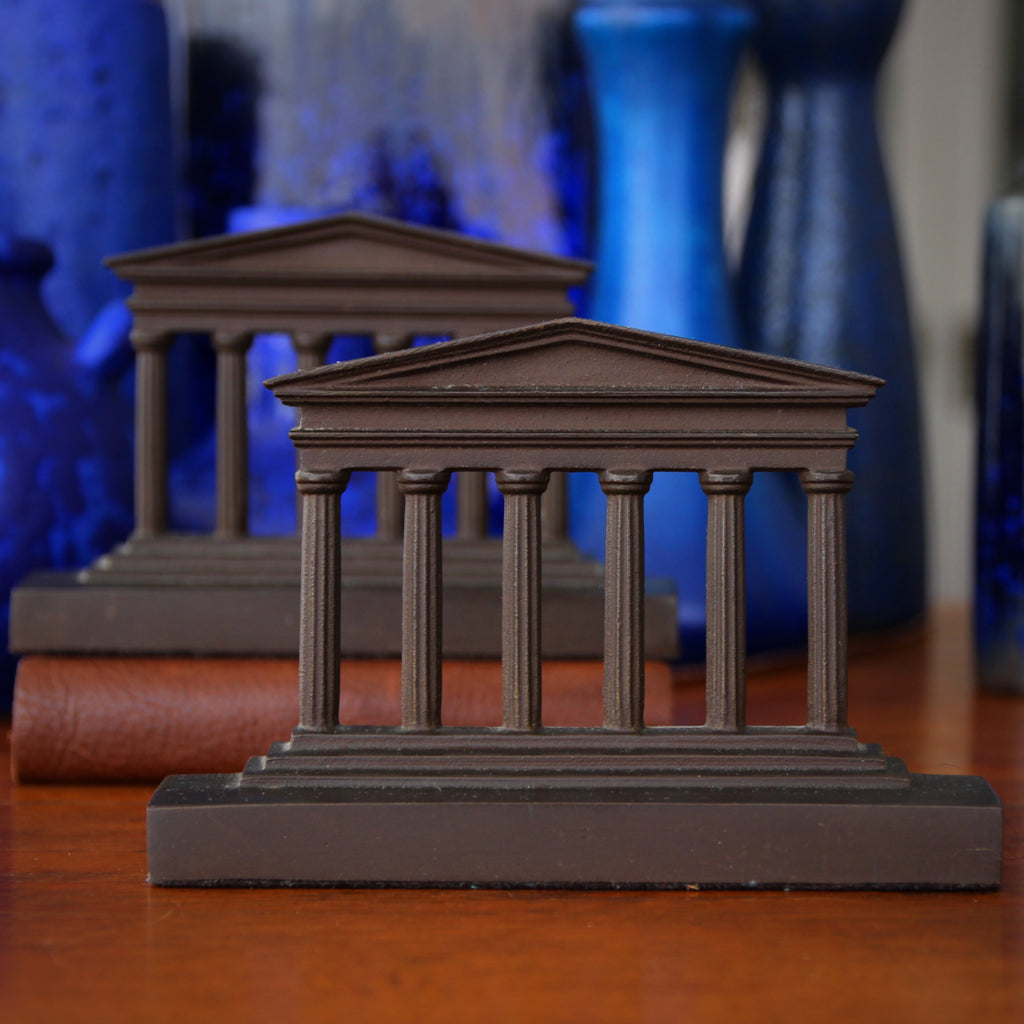
The bookends shown above, made in the 1920's, portray a Neo-Classical "temple"—not unlike the Parthenon in Athens or the US Supreme Court in Washington. Click on the photo above to learn more about them.